
Brown Pelican (50 Pesos)
PDFGeneral information

Description
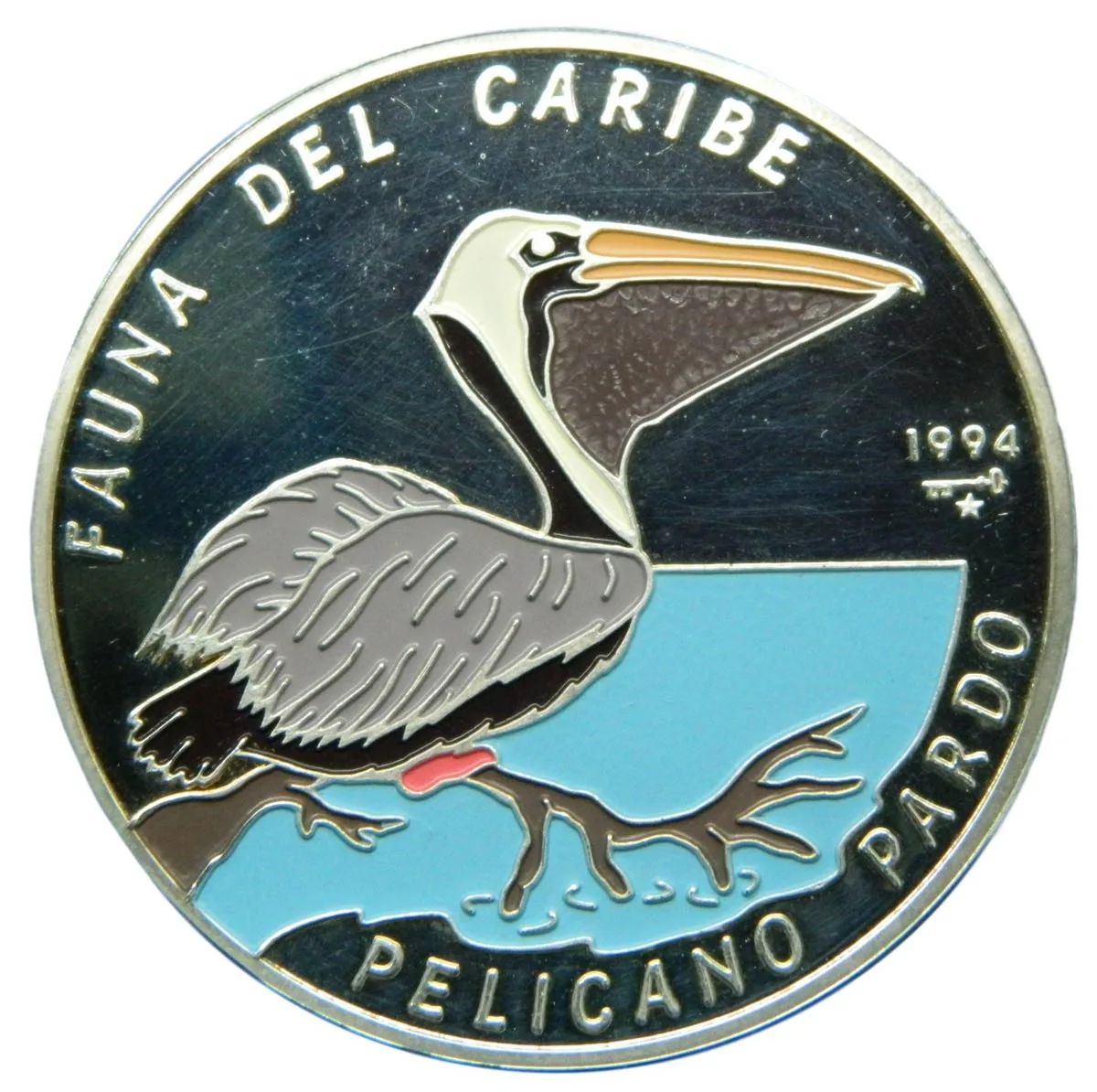
The brown pelican is a bird with a particular character: confident, patient and able to catch fish so that the most experienced fishermen would envy it. The 1994 coin from the Cuban collectible programme shows the brown pelican Pelecanus occidentalis, "pelícano pardo" or "alcatraz", against the sea; FAUNA DEL CARIBE is above, PELICANO PARDO below, and the year and the mint's mark are at the right. The design was engraved by the medallist Rigoberto Peláez Alcázar.
The brown pelican is the smallest member of the family but the only one (along with the Peruvian pelican) that hunts by diving from a height: spotting a school of fish, the bird plunges head first, often turning over in the air. The fall is accompanied by a splash, and the pelican disappears under the water for a moment, then surfaces with prey in its throat pouch. The usual height of a dive is three to ten metres, though some attacks begin much higher.
The throat pouch, the largest of any bird, holds up to three gallons of water with fish, so after a dive the pelican spends a long time draining the water with its head tilted. The Caribbean diet is small schooling fish: scaled sardines, anchovies, sardinellas. The wingspan is about two metres, and the bird lives about forty years.
For Cuba the pelican is part of the seascape. A chain of birds over the waves, pelicans sitting on quays and boats, colonies on mangrove islets: a picture familiar to everyone. The bird became a subject for painting and stories and, in 1994, for a coin. The large format of the disc let the engraver render the plumage, the shape of the bill and pouch and the splash of water in more detail.
The conservation of the species is one of the notable stories of nature protection: because of pesticides that thinned eggshells, brown pelicans had vanished from a large part of their range by the middle of the twentieth century, but after DDT was banned and nesting sites protected the species recovered. In depicting such a bird, the coin reminds us that what is beautiful can be saved.
Anyone who has seen a pelican up close remembers it for a long time: the enormous bill with its leathery pouch, the attentive eye, the dense plumage that it constantly tidies by combing it with the bill. The bird hardly fears people and often approaches fishing boats for a handout. On the coin this trustfulness becomes calm of image, and the precision of the engraving lets one see the details for which such a large coin deserves a loupe.
Obverse
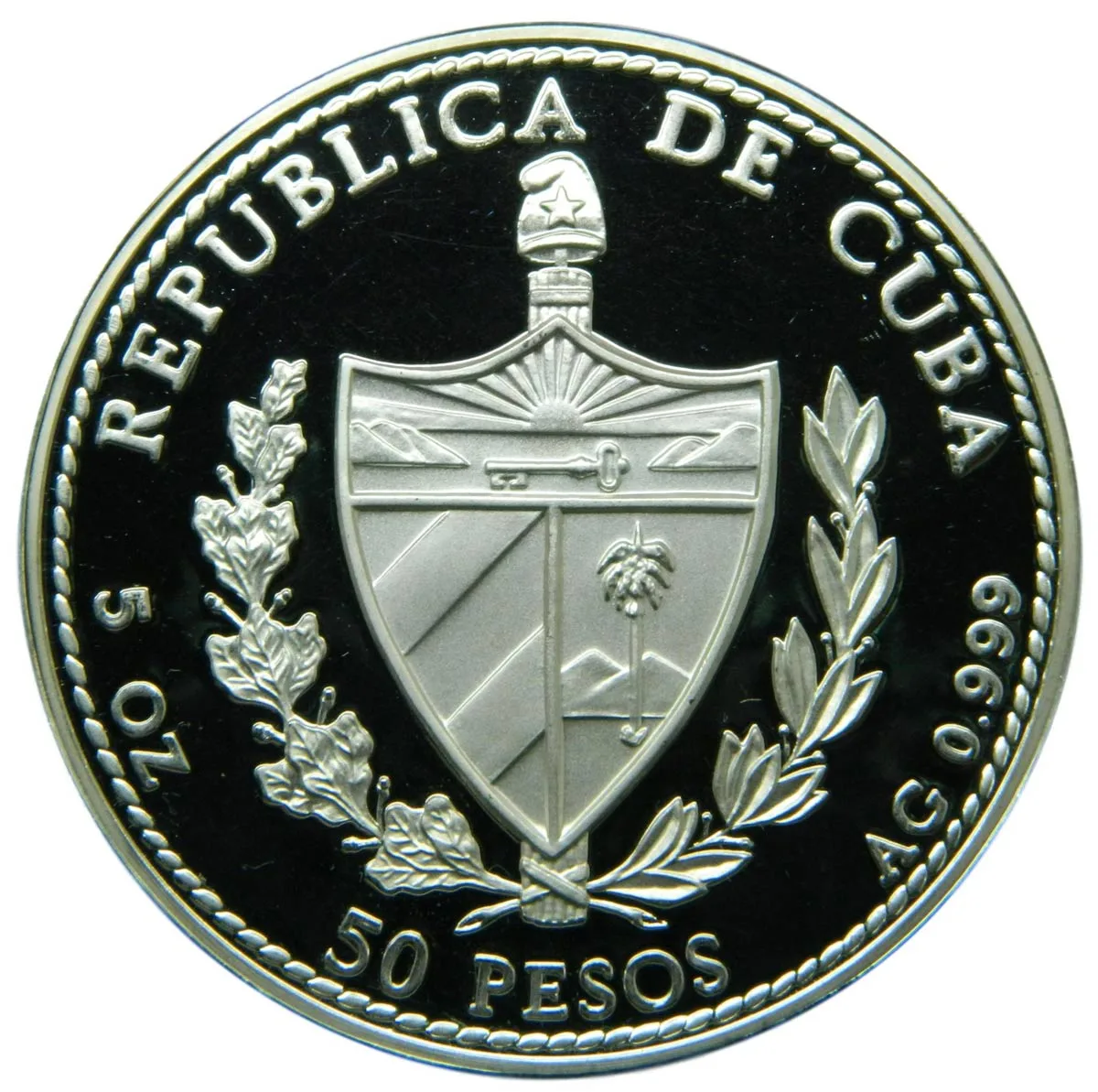
The obverse bears the country's arms, a shield with key, palm, mountains and rising sun among laurel and oak branches; REPUBLICA DE CUBA arcs above and 50 PESOS stands below. The design of this emblem as used on Cuban coins is credited to Charles Edward Barber.
Reverse
A brown pelican against sea and sky; FAUNA DEL CARIBE along the upper arc, PELICANO PARDO below, and the year 1994 and the mint's mark at the right. The large field gives the engraver room for detail: individual feathers, the curve of the pouch beneath the bill and splashes of water can be seen. The colouring is applied by hand, and the tones of the plumage are unique on each specimen.