
Dolphins (10 Pesos)
PDFGeneral information

Description
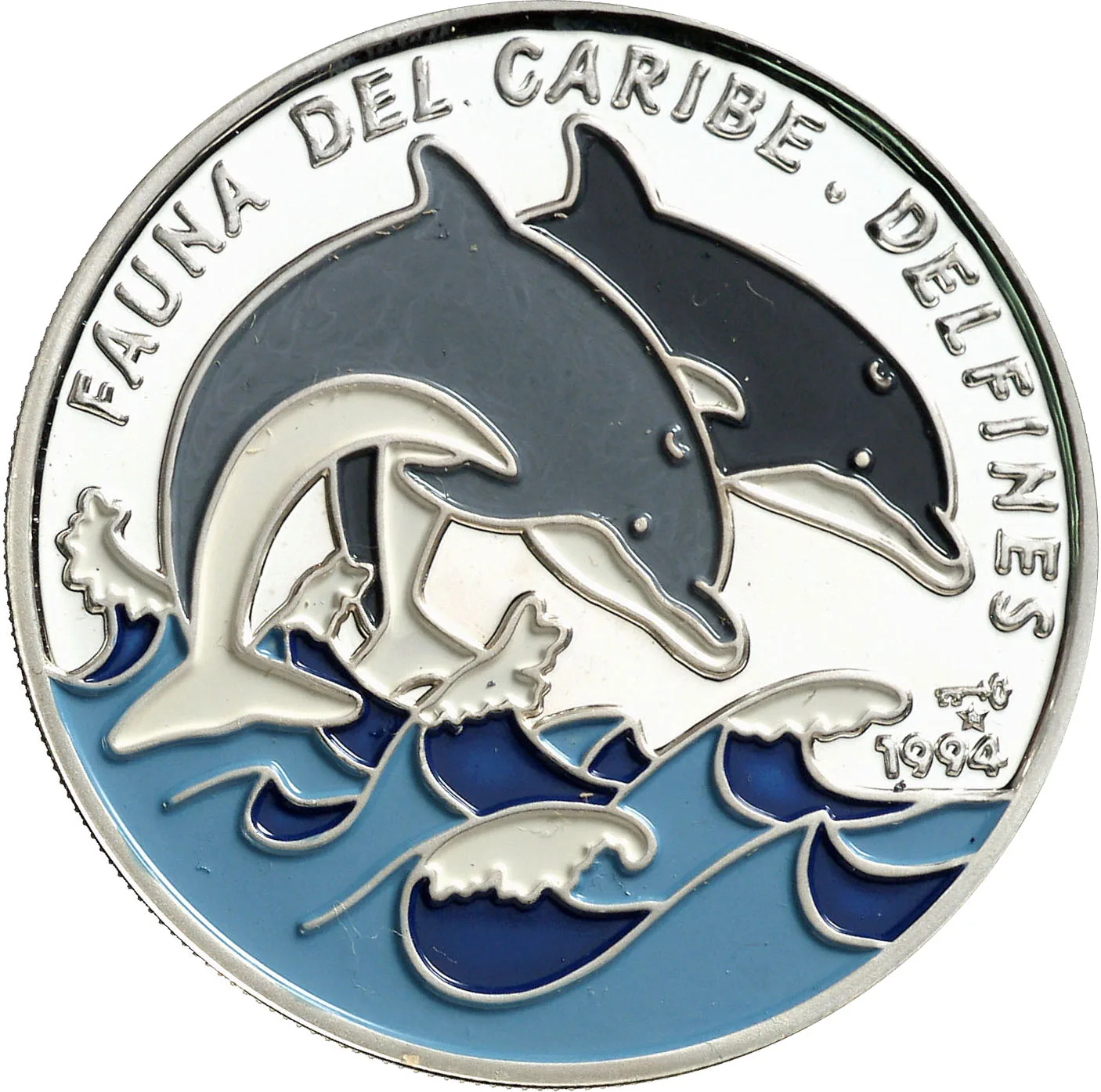
The dolphins of Cuban waters are the theme of this 1994 coin, the middle one of three showing the same design. Its reverse shows two dolphins leaping from the waves with the legend FAUNA DEL CARIBE — DELFINES; the designer was the engraver Gianna Díaz Suárez. Of all the inhabitants of the Caribbean Sea the dolphin is perhaps the closest to people, and on a Cuban coin it serves as a symbol of the archipelago's living nature.
The animal is the bottlenose dolphin (Tursiops truncatus). According to a general survey of marine mammals in the Cuban exclusive economic zone, eighteen species of cetaceans and sirenians are confirmed in the country's waters, but only two are regularly and commonly found close to shore: the bottlenose dolphin and the Antillean manatee. The coastal ecotype prefers shallows of about two to thirty metres near mangroves, coral reefs and seagrass, entering bays and channels between the coral islands.
Observations in northern Matanzas province, around the Hicacos peninsula, Varadero and Cárdenas Bay, gave a density of about 1.28 animals per square kilometre; groups rarely exceeded eight, and photo-identification distinguished 128 individuals, with the local group estimated at 100–150 dolphins. Each dolphin is recognised by the shape and nicks of its dorsal fin, as a person is by a fingerprint.
Dolphins are top predators of the coastal zone, and their well-being depends directly on the state of reefs and fish stocks. Threats in the region include bycatch in gill nets and longlines, shipping noise, pollution and live capture. Globally the bottlenose dolphin is listed by the IUCN as Least Concern (2018), whereas the Mediterranean population, for example, was assessed as vulnerable in 2012 and the Black Sea subspecies as endangered: the fate of the species is decided at the level of individual waters.
For a coin issued as a collectible this subject is a sort of reminder: beside precious metal and colourful painting stands the image of an animal that needs protecting. The dolphin is shown mid-leap, and the picture is recognisable at a glance: this is how a dolphin looks off the coast when it surfaces for a breath of air.
Obverse
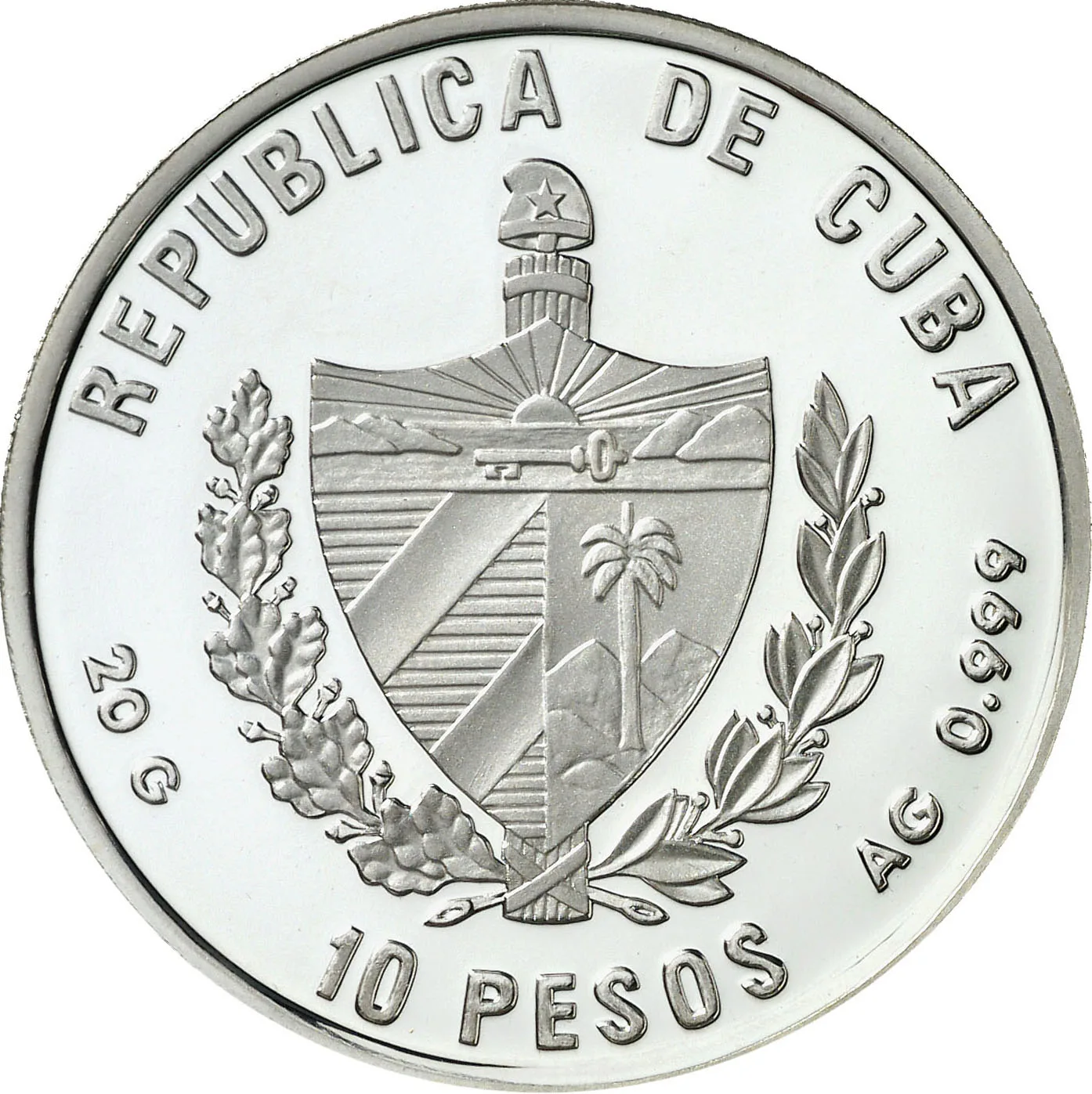
The official side carries the national arms of Cuba: a shield with the sun over the sea, a palm and mountains, a key and branches of laurel and oak. The arc above reads REPUBLICA DE CUBA, with 10 PESOS beneath. The pattern of the arms for Cuban coins was made by Charles Edward Barber, chief engraver of the US Mint.
Reverse
Two dolphins leap from the waves; the legend FAUNA DEL CARIBE — DELFINES runs along the arc, with the year 1994 and the mark of the mint, Empresa Cubana de Acuñaciones, at lower right. The picture is painted by hand, so the shades of blue and grey differ from one specimen to the next; on the mirror field the coloured image looks especially contrasty, and the waves, in relief and matt, create volume, and the dolphins seem to burst out of the coin's plane towards the viewer, as in life.