
Dolphins (50 Pesos)
PDFGeneral information

Description
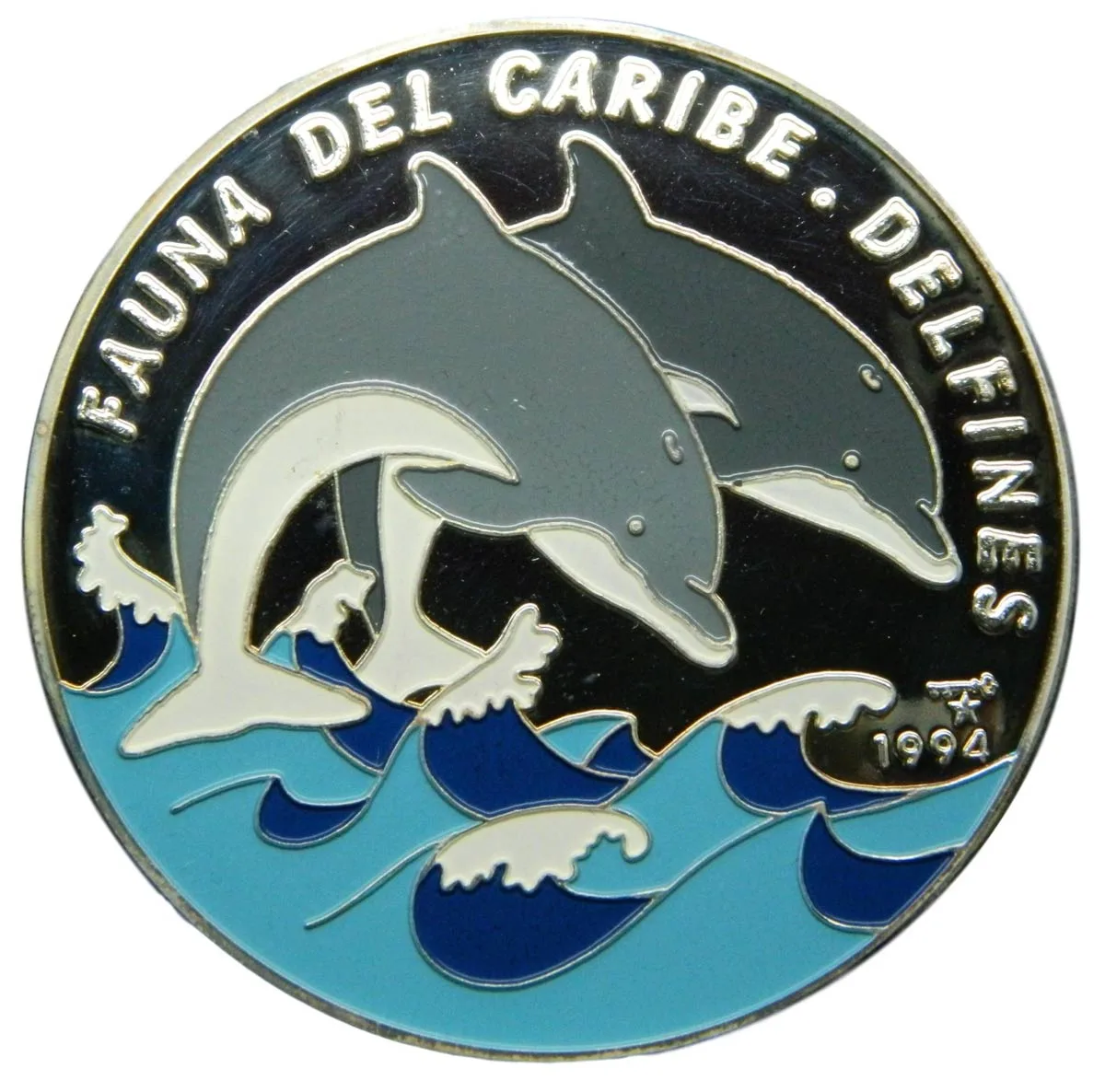
A dolphin's leap over a wave is the most memorable image in marine fauna, and the engraver Gianna Díaz Suárez transferred exactly that to a Cuban coin of 1994. On the reverse two dolphins break out of the water, and the legend FAUNA DEL CARIBE — DELFINES runs along the arc. The leap here is no ornament but an accurate detail of behaviour: these animals breathe air through a blowhole on the top of the head, so they must reach the surface.
A coastal dolphin's usual breathing pause lasts tens of seconds, though much longer breath-holds are known; a bottlenose can dive hundreds of metres, although coastal individuals keep to the shallows almost all the time. The body is adapted to fast swimming: skin without hair or sweat glands, a thick layer of blubber that serves both as insulation and for streamlining, and heat loss through the fins. In a burst a bottlenose reaches a speed of several tens of kilometres an hour, which lets it lift its body above a wave: the animals "fly" over the water just as on the coin.
The bottlenose is a social predator: it hunts schooling fish, cephalopods and crustaceans, willingly accompanies ships, and its communities are built on long-term bonds and individual recognition of relatives by voice. The signals the animals exchange include whistles, each dolphin having its own "call sign" to which it responds, and echolocation clicks.
Dolphins breed slowly: pregnancy lasts about twelve months, the calf is born about a metre long and stays with its mother for years, the animals reach maturity only at five to six, and they live at least forty years, some females more than sixty. Because of this slow cycle populations recover with difficulty, and any decline is felt for a long time.
Globally the species is classed as Least Concern (IUCN 2018), but some local populations are assessed more strictly. The dolphin on the Cuban coin is a reminder of this difference between the species as a whole and the groups that live off particular shores, including the coast of the island.
In Cuban everyday life dolphins are familiar to every coast dweller: they can be seen from Havana's seafront and in the channels between the cays. They often accompany fishing boats and launches, and their play alongside the hull gives people a joy that is hard to put into words. This closeness between animal and human made the dolphin one of the best-loved images in collectible fauna, and explains why the leap became the compositional centre of this coin.
Obverse
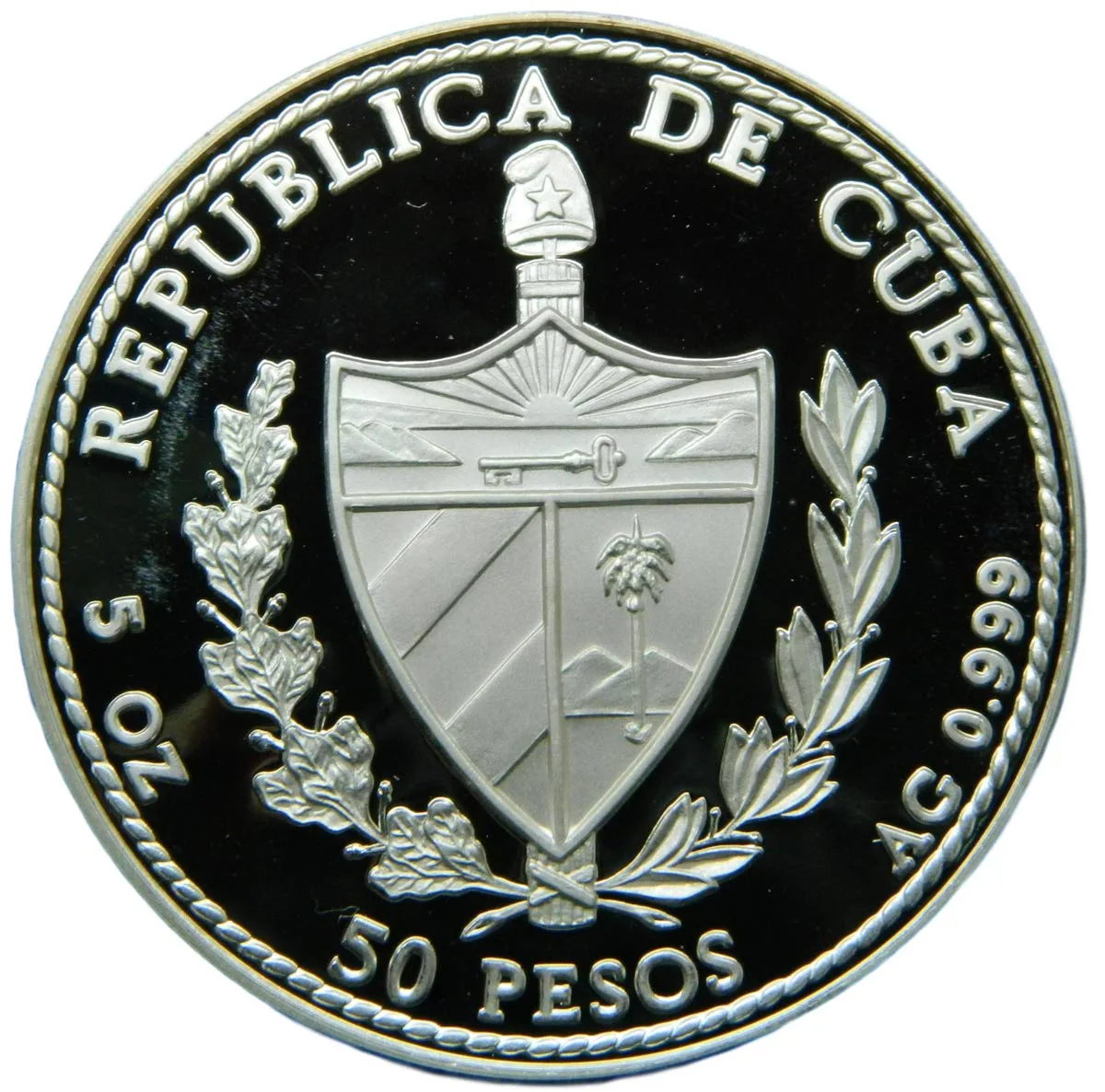
The obverse bears the country's arms, a shield with key, palm, mountains and rising sun among laurel and oak branches; REPUBLICA DE CUBA arcs above and 50 PESOS stands below. The design of this emblem as used on Cuban coins is credited to Charles Edward Barber.
Reverse
The reverse: two dolphins leaping over waves, with the legend FAUNA DEL CARIBE — DELFINES along the arc and the year 1994 and the mint's mark at lower right. The broad field of this large coin let the engraver show more water and foam than on the smaller coins of the design; the colour painting was applied by hand and is unique on every specimen, while the shine of the mirror ground sets off the matt figures of the animals.