
Flamingos (50 Pesos)
PDFGeneral information

Description
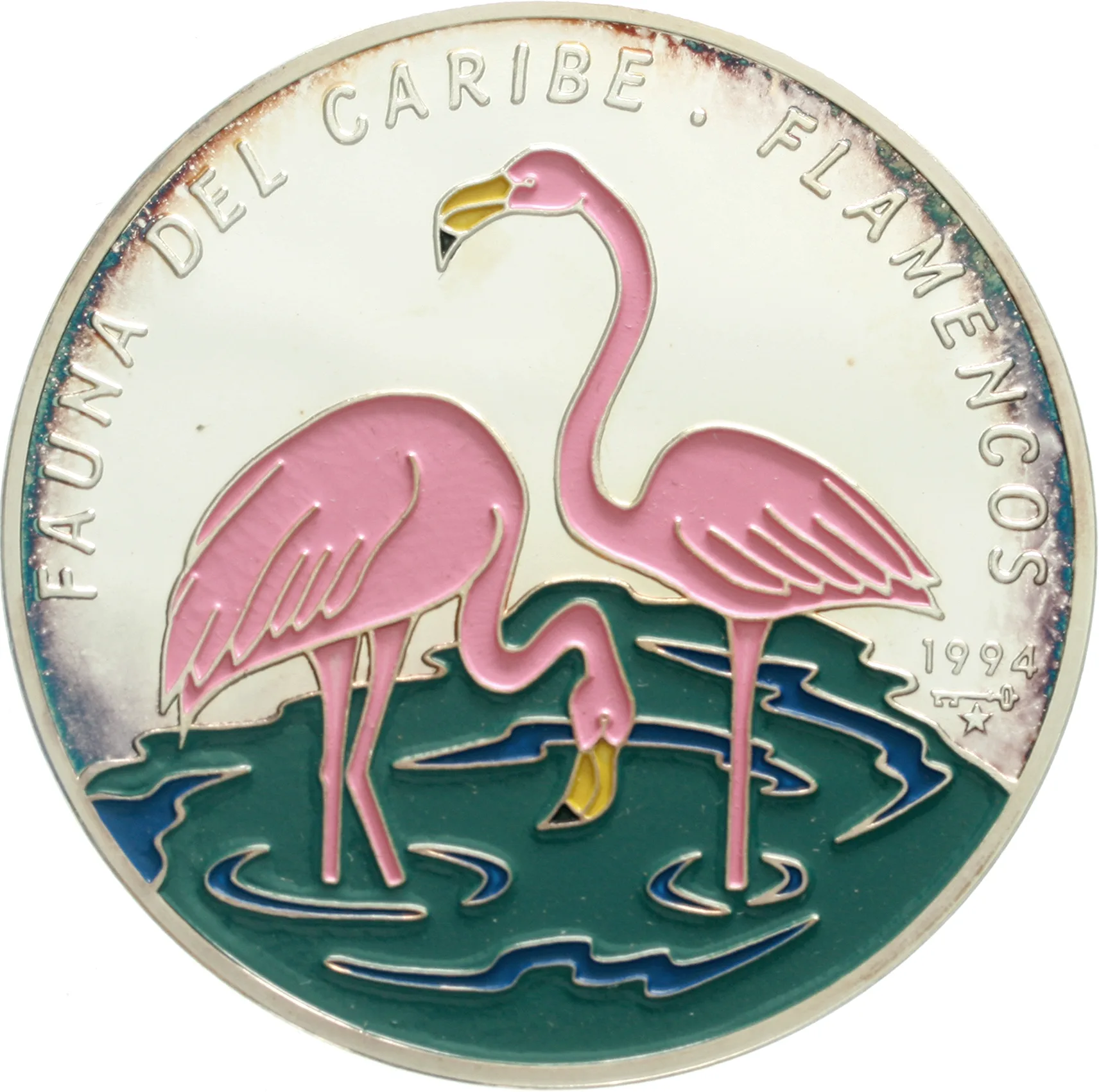
The largest coin of the Caribbean Fauna series is devoted to the most beautiful bird of the island. The flamingo on the 1994 coin is not an isolated portrait but a scene: the birds wade in the shallows, their thin legs are reflected in the water, and their necks are bent in characteristic S-curves. The inscription FAUNA DEL CARIBE · FLAMENCOS runs around the rim, with the year and the mint's mark. The design was made by the Cuban medallist Alejandro Ramos Figueredo.
The American flamingo (Phoenicopterus ruber) is one of the symbols of the Caribbean. In Cuba it nests in saline lagoons and on mangrove coasts, and the most visible colonies are tied to protected areas of Camagüey province and the south of the island. The pink plumage is a trace of food: carotenoids from crustaceans, algae and insect larvae that the bird strains from the water with its bill held upside down.
Flamingos are social birds. Colonies number thousands, and courtship looks like a well-coordinated dance: birds turn their heads in sync, raise their wings and march like a single organism. The nest is a low mud tower with a hollow at the top in which the female lays a single egg. The chick is born grey and gets its pink colour only after two or three years.
Flamingos can stand on one leg for hours, and ornithologists see in this a way to save heat and strength: the tucked leg does not cool in the water, and a special system of ligaments lets the bird avoid straining its muscles. This habit has made the flamingo a recognisable image of the tropics and one of artists' favourite birds.
Preserving the lagoons where flamingos nest is part of Cuba's conservation policy. The large coin let the engraver spread the composition to its full width and convey what on small ones remains a silhouette: the curve of the neck, the structure of a feather, the splash of water around the legs.
Flamingos are not for nothing called birds that "paint" the lagoon: at sunset pink silhouettes on golden water seem painted in watercolour. Observers note that a flock in the air looks even more spectacular: raising their wings, flamingos reveal black flight feathers hidden at rest, and the pink mass turns into a black and pink wave. The coin shows the birds in their most usual state, calm, slow and busy searching for food, and in this lies its particular charm. This is just how flamingos are remembered by those who have seen them even once in Cuban lagoons.
Obverse
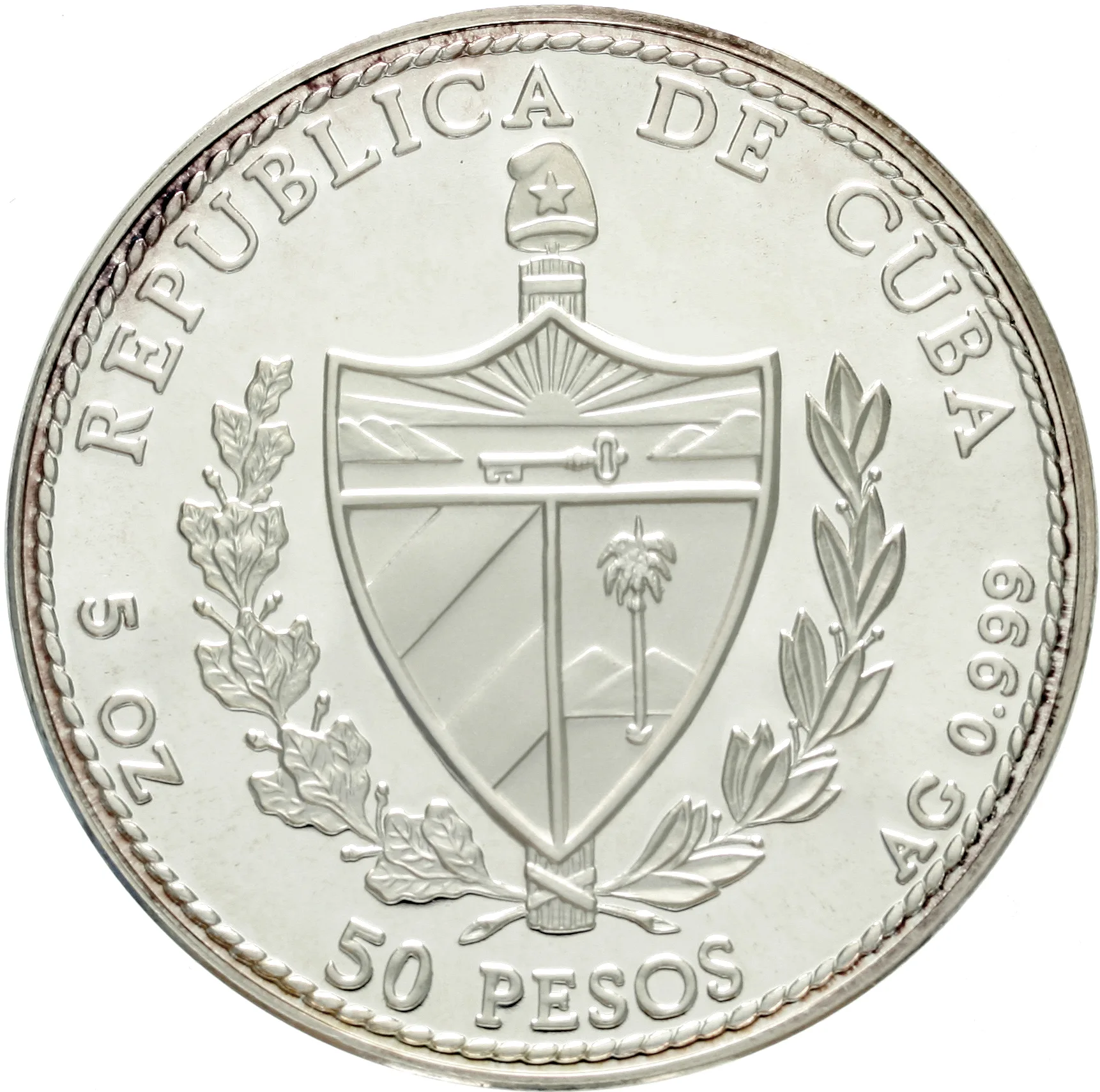
The obverse bears the country's arms, a shield with key, palm, mountains and rising sun among laurel and oak branches; REPUBLICA DE CUBA arcs above and 50 PESOS stands below. The design of this emblem as used on Cuban coins is credited to Charles Edward Barber.
Reverse
Flamingos wade in the shallows, reflected in the water; FAUNA DEL CARIBE · FLAMENCOS runs around the rim, with the year 1994 and the mark of the Empresa Cubana de Acuñaciones mint at the right. The large field allowed feathers and water to be worked in detail, and the hand colouring in pink and white differs slightly on each specimen.