
Fokker Dr.I (1 Peso)
PDFGeneral information

Description
In the spring of 1917 the British Sopwith Triplane appeared over the Western Front — small, nimble and unexpectedly dangerous. German pilots, used to the superiority of the Albatros biplane, suddenly faced a machine that turned faster and climbed more swiftly. The answer came from the Dutchman Anthony Fokker, who had built an aircraft factory in Germany: his engineer Reinhold Platz designed a triplane of their own, whose first flight took place on 5 July 1917. The production Fokker Dr.I received the designation Dr — Dreidecker, “three-decker” — and by autumn began to reach the front.
The aircraft was small, light and very manoeuvrable. Three wings gave lift on a small span, and so the machine climbed superbly and made tight turns. In close combat these qualities decided everything. But the triplane had weaknesses too: in speed it was inferior to the newest enemy fighters, and in the autumn of 1917, after wing failures, it had to be withdrawn from the line for a time. The structure was strengthened and the aircraft returned, though in 1918 faster types replaced it.
Nevertheless the Dr.I remained in history because Manfred von Richthofen flew it — the pilot nicknamed the “Red Baron”. It is the red triplane that became the symbol of German aviation of the First World War; the colour of the aircraft was his personal sign, and many in the squadron followed the commander’s example. In April 1918 the baron was killed after taking off on yet another mission in the red triplane, and this machine became a monument of the era.
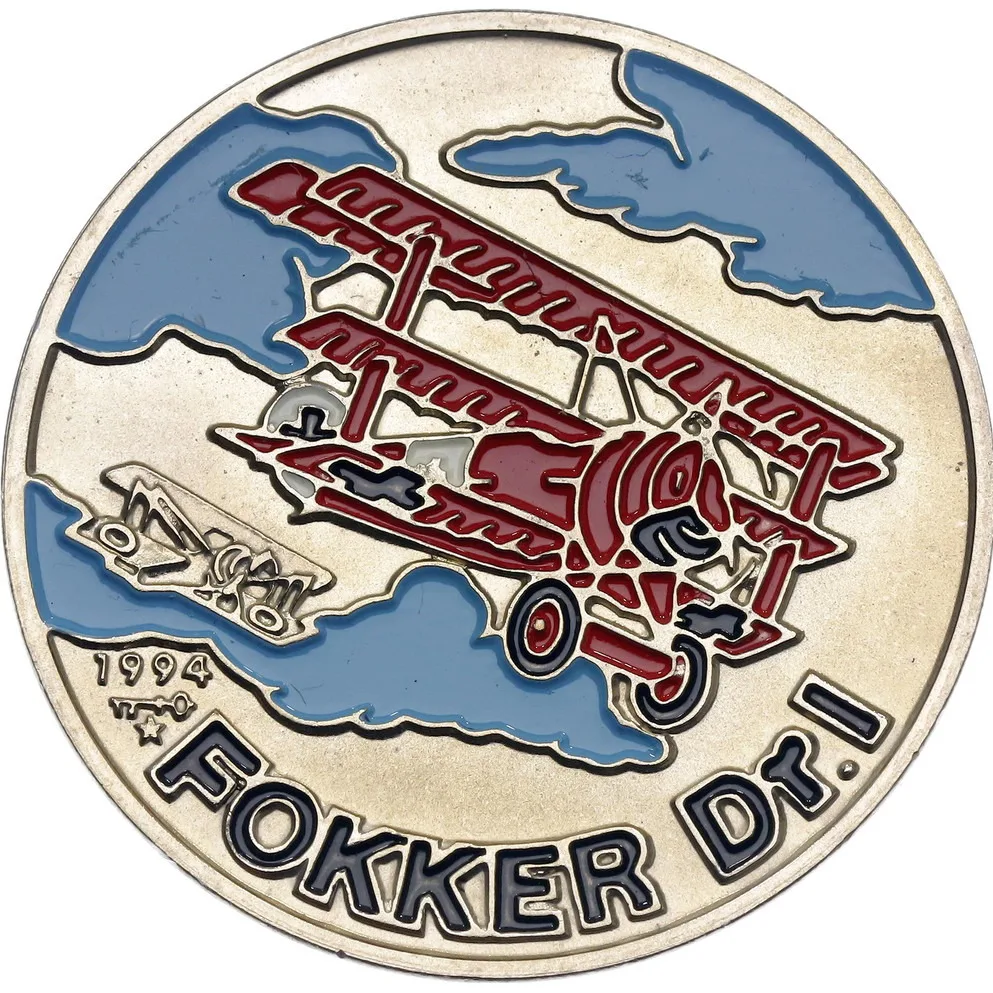
The coin with the Fokker triplane came out in 1994 in the Cuban series “Famous Aircraft”. The series tells of aviation the way collectors speak of it: through three outstanding machines — two First World War fighters and an Italian flying boat of the 1920s. The issue was intended for collectors rather than for payments and, thanks to its colour painting, turned into a miniature poster of the history of aviation.
It is interesting that the Fokker triplane was not a favourite of all pilots. Many thought it hard to handle: the machine was so manoeuvrable that it demanded subtle movements of the stick, and an inexperienced pilot easily lost control of it. But masters who had mastered the triplane did incredible things in it, and their stories gave the aircraft the reputation of a virtuoso’s weapon — which is just what the coin captured.
Obverse
The artistic side is a red triplane in banking flight against a hand-painted pale-blue sky with cloud outlines. The aircraft is shown in relief, and the three wings are easy to make out. In the lower part is a small graphic drawing of the same triplane, executed in lines on the metal, with the year 1994 and the mint mark below; the name FOKKER Dr.I runs along the lower arc. The composition recalls a poster of early twentieth-century air races.
Reverse
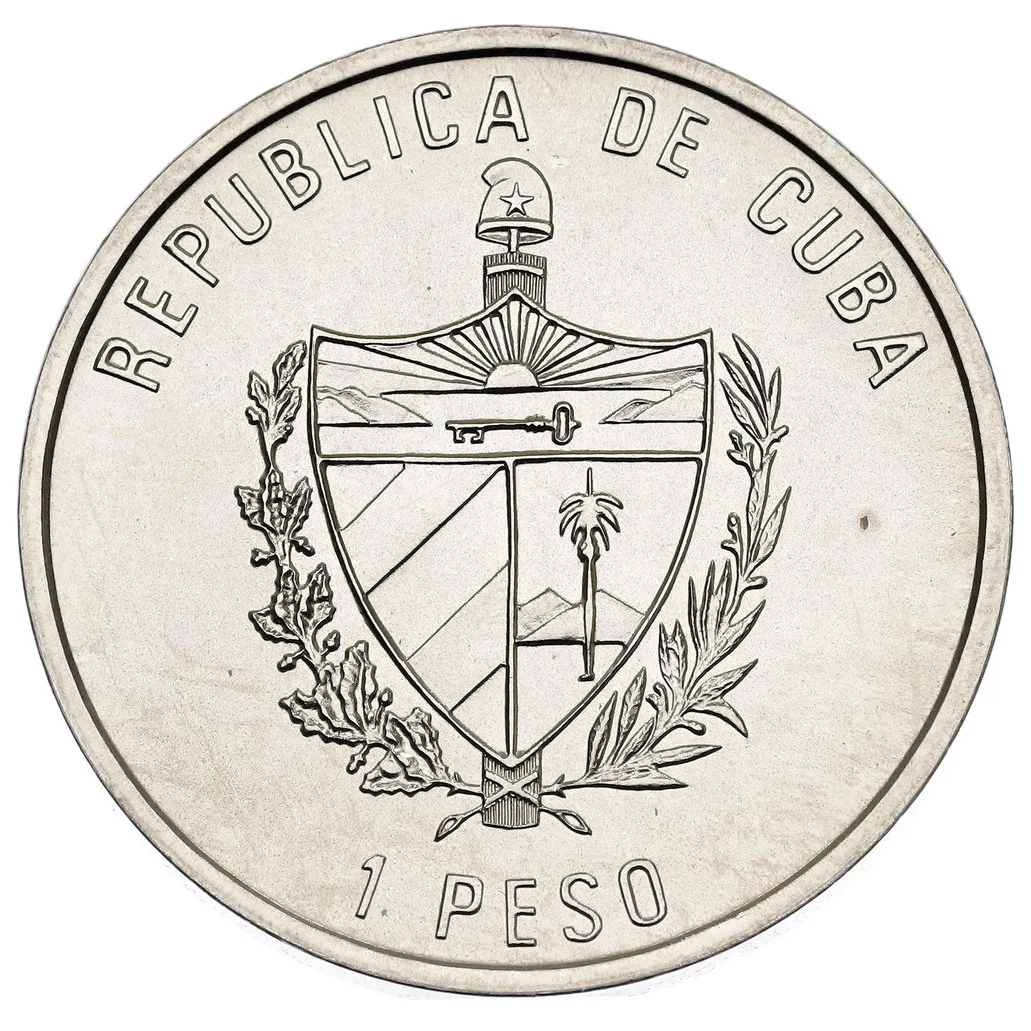
The reverse is the official side common to all coins of the “Famous Aircraft” series: the national arms of the Republic of Cuba in a drawing that goes back to Charles Edward Barber’s work. A shield with a landscape, a key, a royal palm and a rising sun is surrounded by oak and laurel branches and topped with a fasces bearing a Phrygian cap and a star. The inscription REPUBLICA DE CUBA runs along the upper arc, and below the arms the coin’s denomination is marked. The strict heraldry balances the bright painted scene on the other side.