
Yellow Grouper (10 Pesos)
PDFGeneral information

Description
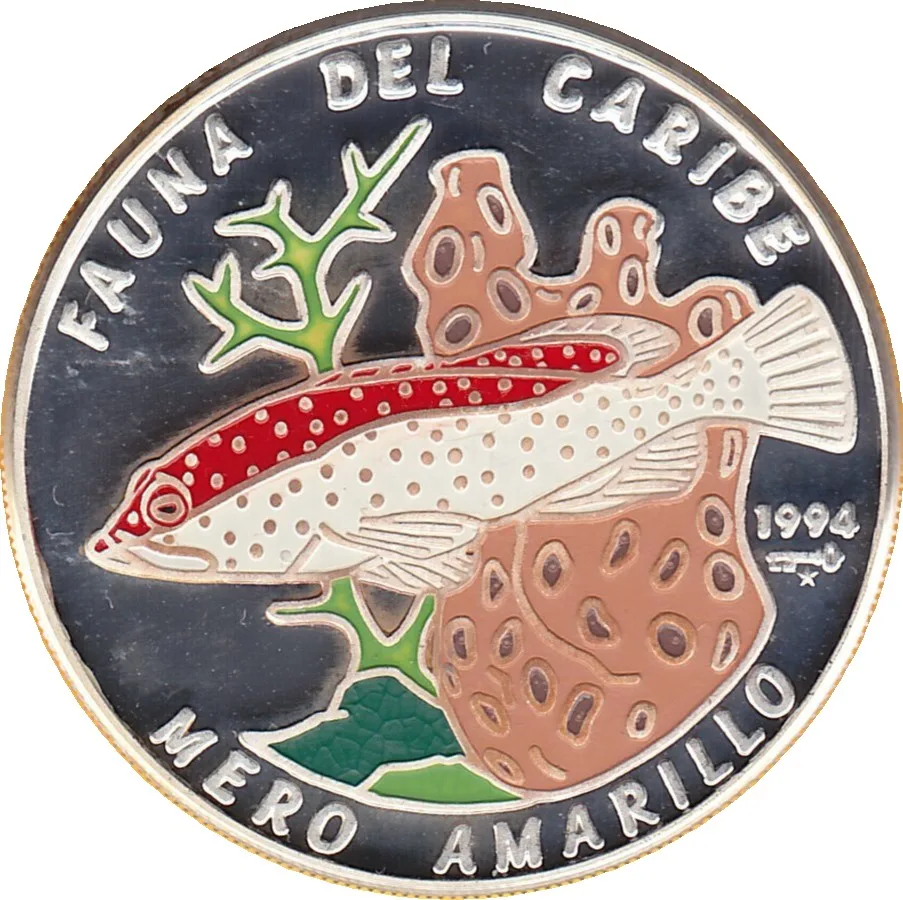
This 10-peso coin with the yellow grouper is the middle-sized issue of the design. On the reverse the fish swims in front of a coral: FAUNA DEL CARIBE above, the animal's name MERO AMARILLO below, and the year 1994 at the right. The design was made by the Cuban engraver Alejandro Ramos Figueredo, and the same master made the flamingo design for the Cuban programme, so his hand is visible on six coins at once.
The Spanish mero amarillo, "yellow grouper", is the everyday Cuban name for groupers of the family Serranidae, in some modern systems Epinephelidae. It is most often linked with Mycteroperca venenosa, also known as mero aleta amarilla, guacamayo, cuna de piedra and arigua; but in Caribbean usage "yellow mero" is also applied to other fish with yellow fins, for example Hyporthodus flavolimbatus or Mycteroperca interstitialis. The coin does not specify which species the engraver had in mind, and this should be borne in mind in describing it.
On the reef the grouper holds the top step of the food chain. It lies in wait by crevices and coral heads for small fish, crustaceans and squid; its mouth works like a pump: by opening it sharply the fish creates a current of water and draws the prey in whole. Adults reach a metre in length, while juveniles hide in seagrass beds, where there are fewer predators.
The life of groupers is closely tied to reefs and to seasonal gatherings. In certain months the fish assemble in large groups to spawn, and it is in such periods that they are most vulnerable: the gathering places are known to fishermen. Many grouper species in the Caribbean have suffered from overfishing, and protecting spawning sites has become one direction of reef conservation. So the image of a grouper on a collectible coin is also a sort of portrait of the reef, which rests on such predators.
For Cuba the grouper is a fish known to cooks, fishermen and divers alike: it can be met at reefs on the southern and northern coasts. The coin conveys its appearance just as it is remembered: a broad head, a powerful body and bright fins, whose shade on collectible specimens turned out individual thanks to hand painting.
Anyone diving at Cuba's reefs will almost certainly meet a grouper: it does not fear people and often swims up, studying the visitor with large eyes. This trust is not weakness but the habit of an owner of territory used to no one challenging him. The coin conveys exactly this impression: the calm assurance of a fish that knows its place on the reef.
Obverse
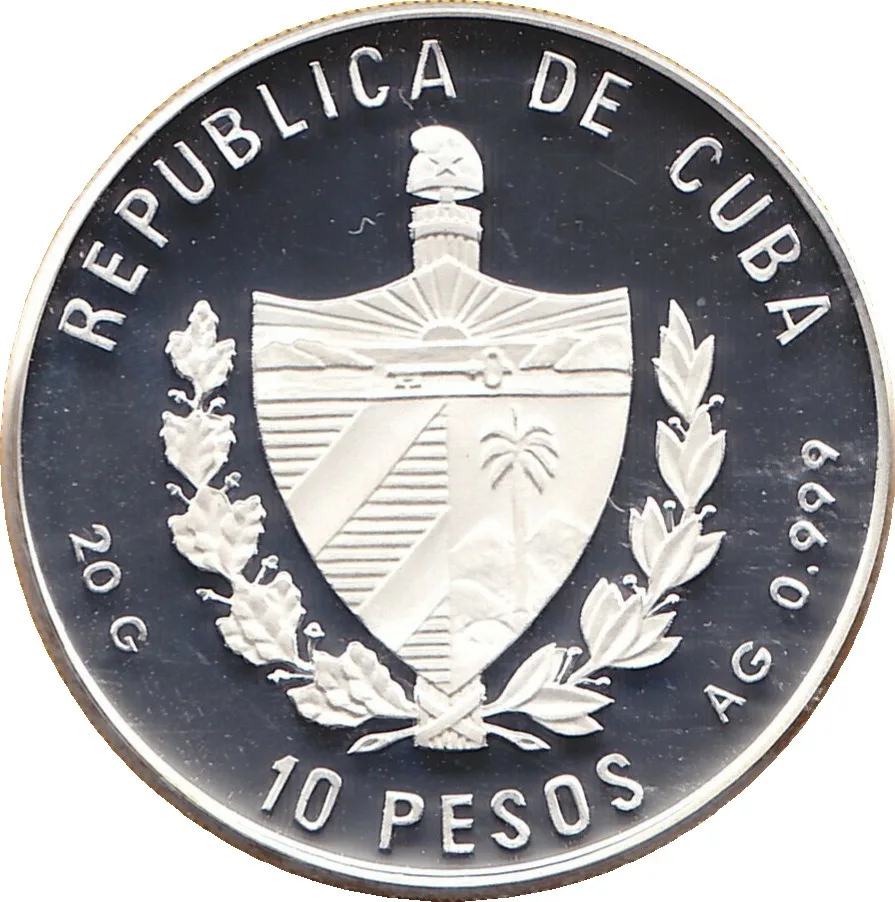
The official side carries the national arms of Cuba: a shield with the sun over the sea, a palm and mountains, a key and branches of laurel and oak. The arc above reads REPUBLICA DE CUBA, with 10 PESOS beneath. The pattern of the arms for Cuban coins was made by Charles Edward Barber, chief engraver of the US Mint.
Reverse
The grouper swims in front of a coral head; along the upper arc is FAUNA DEL CARIBE, below is MERO AMARILLO, and at the right the year 1994 and the mark of the mint, Empresa Cubana de Acuñaciones. The colour painting is applied by hand: the yellow, orange and green shades on the fins differ slightly on each specimen, and the shiny ground makes the fish's figure stand out in relief and contrast.