
Yellow Grouper (1 Peso)
PDFGeneral information

Description
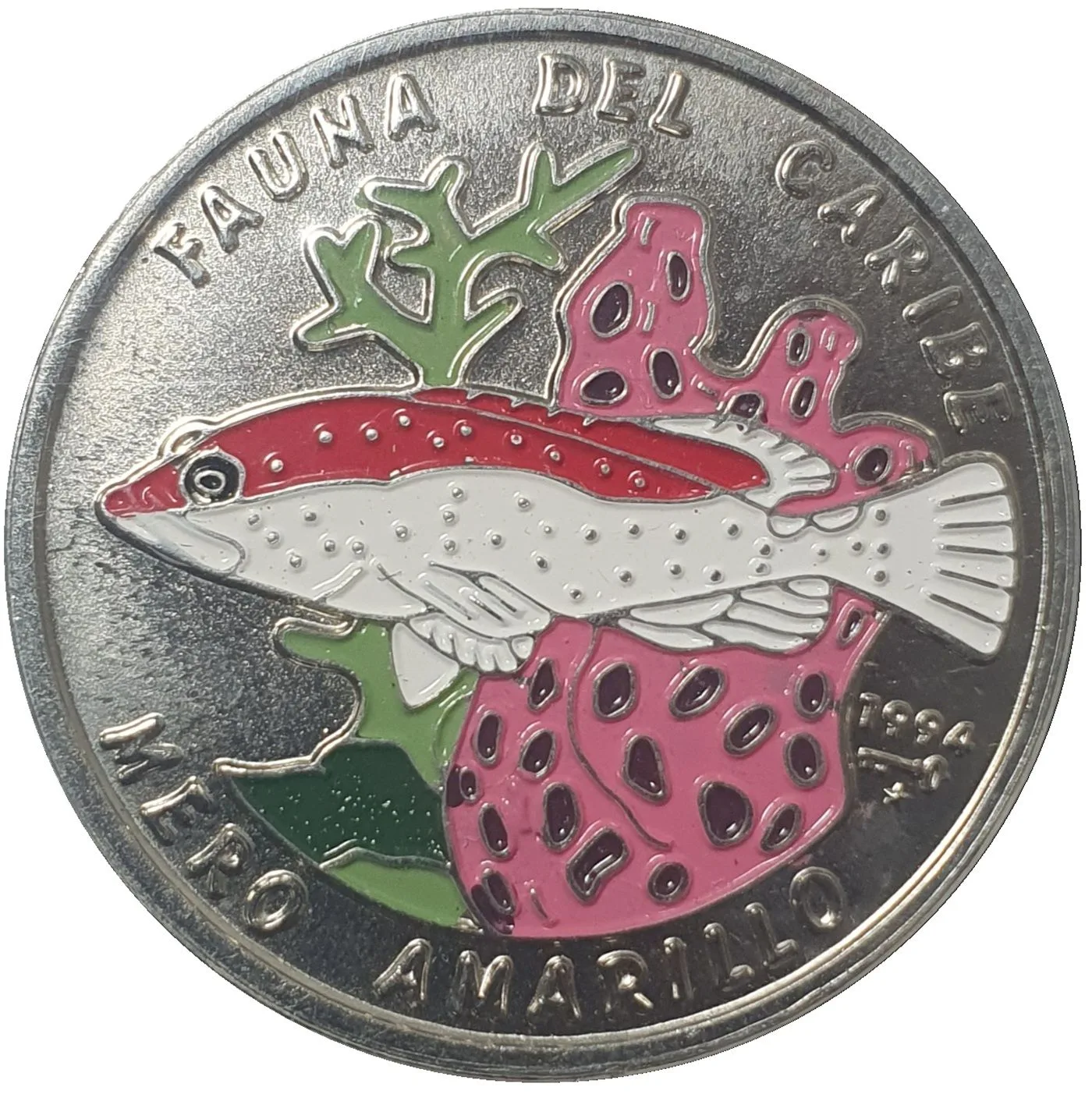
The grouper is one of the masters of the Caribbean coral reefs: a massive fish with a large mouth that stands motionless for long periods by rocks and coral heads and then seizes prey with a sudden lunge. On the Cuban coin of 1994 the yellow grouper swims against a coral; the inscription FAUNA DEL CARIBE runs along the upper arc, the animal's name MERO AMARILLO below it, and the year at the right. The engraver of this side was Alejandro Ramos Figueredo.
The Spanish mero amarillo, "yellow grouper", is the everyday Cuban name for groupers of the family Serranidae (some modern classifications place them in Epinephelidae), the large predators of the reef. Most often the name is taken to mean Mycteroperca venenosa, described by Carl Linnaeus in 1758 as Perca venenosa; in Spanish it is also called mero aleta amarilla, guacamayo, cuna de piedra and arigua, and in English yellowfin grouper.
However, in the Caribbean "yellow mero" is also used for other species with yellow fins, for example the yellowedge grouper Hyporthodus flavolimbatus and the yellowmouth grouper Mycteroperca interstitialis. Which species served as the engraver's model the mint does not document: the coin bears only the words MERO AMARILLO, so it is more correct to speak of the Cuban name than of a single indisputable scientific one.
A good deal is known about the life of the yellowfin grouper. It is a predator of coral and rocky reefs found from about two to one hundred and thirty-seven metres, usually at 5–35 metres; juveniles grow up in seagrass beds. The fish reaches a metre in length, with about fifty centimetres usual. The species is a protogynous hermaphrodite: individuals first mature as females and later some become males. Groupers gather to spawn in particular places at particular times, which makes them vulnerable to fishing.
For Cubans the grouper is a familiar fish both on the reef and at the table. Grouper meat is valued, but in some species from warm waters ciguatera occurs, a poisoning caused by toxins of reef algae that accumulate in predatory fish; this is why the Latin species name Mycteroperca venenosa means "poisonous". The coin shows the fish as a diver sees it: a massive, calm and wary master of the reef, patiently waiting for prey among the corals while the life of the reef goes on around it, with shoals flashing past and branching corals swaying.
Obverse
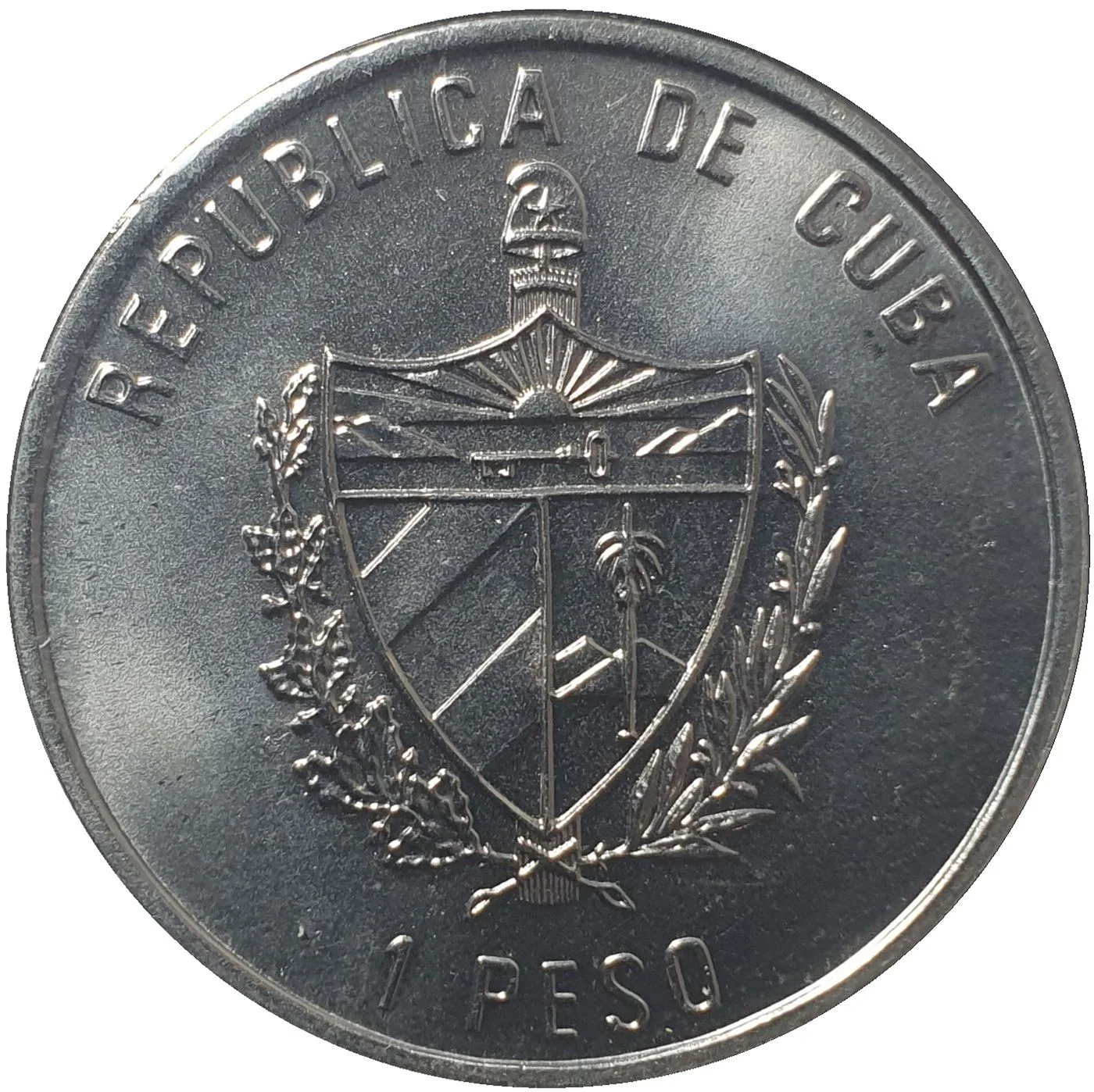
The coat of arms of the Republic of Cuba: a shield with a rising sun, a key, a palm tree and mountain peaks, framed by laurel and oak branches; above it, along the arc, REPUBLICA DE CUBA, and below the value, 1 PESO. The design of the arms on Cuban coins goes back to the American engraver Charles Edward Barber.
Reverse
A grouper swimming against a coral; along the upper arc is FAUNA DEL CARIBE, below it the animal's name MERO AMARILLO, and at the right the year 1994 and the mint's mark. The painting was applied by hand, so the shades of yellow, orange and green on the fins and head differ slightly from specimen to specimen; the coral in the background underlines the fish's habitat.