
Lucky Luke — Jolly Jumper (mini medal)
PDFGeneral information

Description
Jolly Jumper is Lucky Luke's horse, created by Morris on 7 December 1946 and nicknamed “the fastest horse in the West”. In the first albums he was an ordinary horse: he did not talk and had no defined character, although he could already pull a stagecoach single-handed. With the arrival of René Goscinny he gained a personality: a witty, ironic and well-read white stallion with a yellow mane who considers himself far smarter than most of the people around him and readily teases even his cowboy. Their meeting is told in the album “Kid Lucky”: an orphaned boy saves a foal from coyotes, takes it along and names it Jolly Jumper because it jumps so high. According to French Wikipedia, in intelligence and coat colour the horse recalls Silver and Topper, the white horses of classic film cowboys.
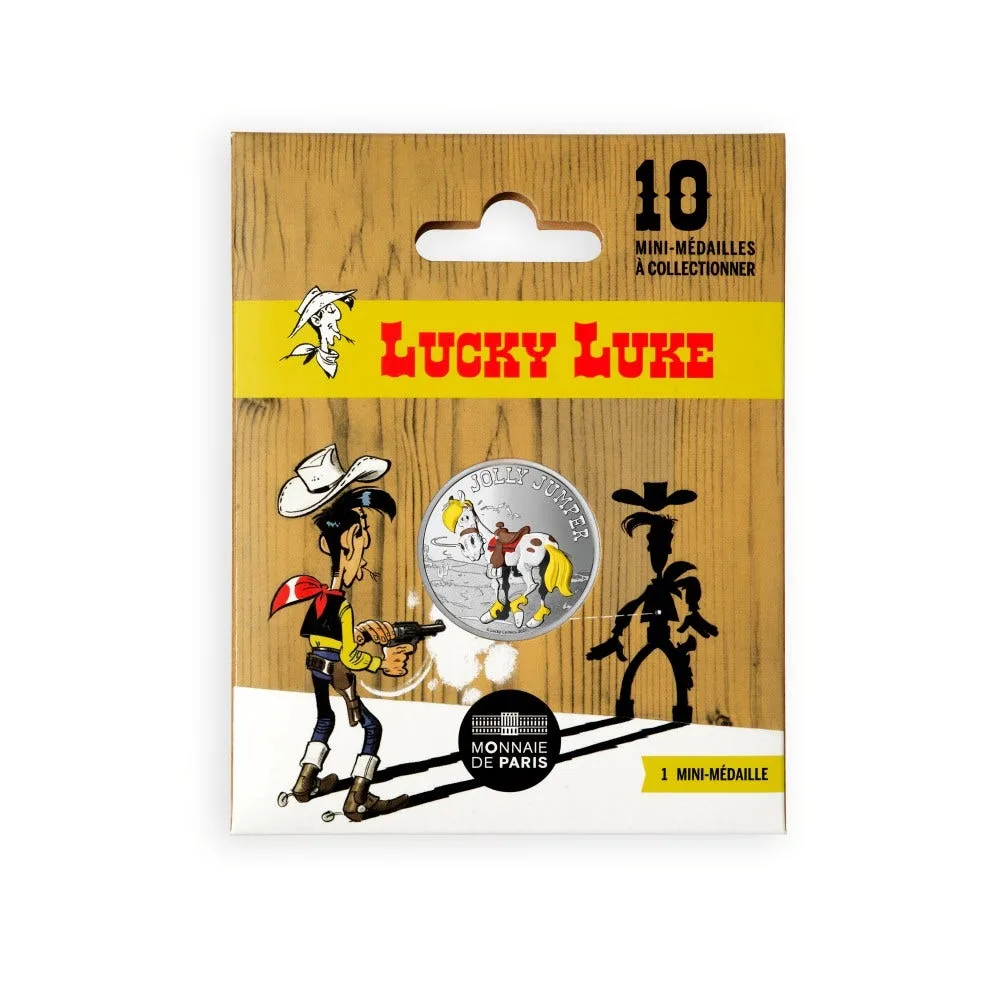
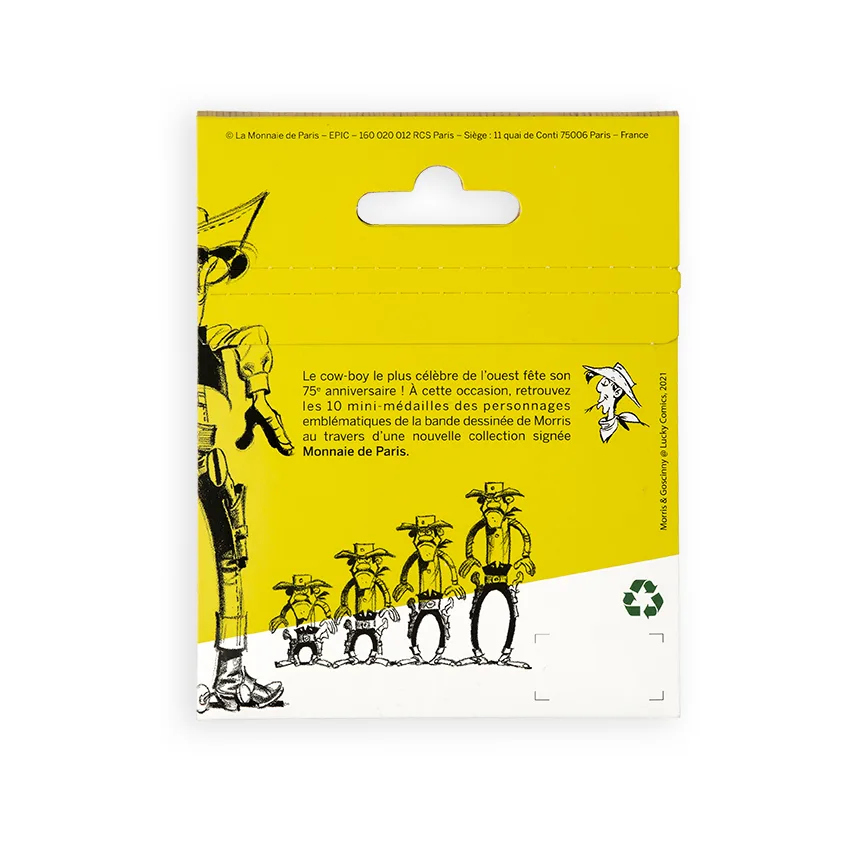
The mini medal is struck in cupronickel, 34 mm in diameter, weighing 17.7 g, in circulation-type (“courante”) quality, with a mintage of 20,000 pieces per character according to the Monnaie de Paris. The nine-character collection was released in three waves during 2021 (with the following ones in April and June after the launch); each medal is packed in a cardboard “cartelette” with elements of the Lucky Luke universe, and the mint offered a collector album for storing the whole collection, with an exclusive “Morris” medal.
From the ninth story onward Morris worked with a number of scriptwriters, the most famous of whom was René Goscinny, co-creator of Asterix and Le Petit Nicolas. Their collaboration lasted about twenty years and is considered the golden age of the series: under Goscinny Jolly Jumper acquired a character of his own and the main heroes found their recognisable comic manner. The magazine carrying the stories changed over time: Spirou from 1946 to 1967, then Pilote, later Tintin, Spirou again and Pif Gadget. A series that started as a string of simple visual gags became a parody of the western genre full of references to American history.
The popularity of the comic went far beyond bookshelves: feature-length animated films and TV series, live-action films, video games, toys and board games have been based on Lucky Luke. A separate series about the dog Rantanplan ran from 1987 to 2011, and the Dalton brothers got their own film (2004), a Xilam animated series (2009) and Joe Dassin's song “Les Dalton” (1967). The Monnaie de Paris chose for the commemorative issue subjects every reader of the series knows: the duel with his own shadow, the sunset over Colorado, the four bandits in striped suits.
After Morris's death on 16 July 2001 the drawing of the series has been handled by Achdé (Hervé Darmenton, born 30 July 1961 in Lyon); the scripts are written by Jul and the colours done by Mel. New albums are published by Lucky Comics with Dargaud, and stories have again appeared in Spirou magazine since 2010. By 2021 the series counted 80 albums, and according to French Wikipedia total sales exceeded 300 million copies in dozens of languages. In French and Belgian society the very name “Lucky Luke” has become a synonym for speed — the hero is said to shoot faster than his own shadow.
Obverse
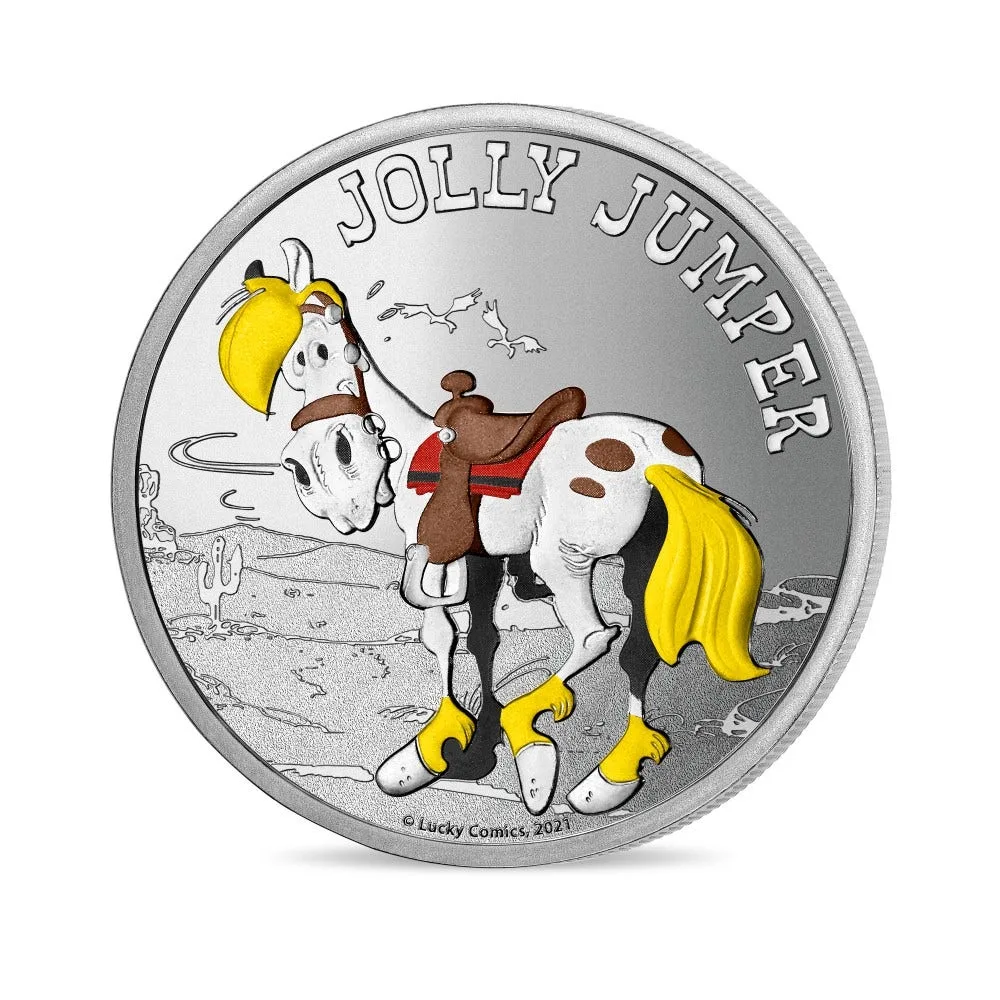
The obverse shows Jolly Jumper trotting against an engraved desert background with cacti and mountains. The horse is white with a yellow mane and yellow lower legs, wearing a brown saddle with red trim; the inscription “JOLLY JUMPER” is at the top and “© Lucky Comics, 2021” at the bottom.
Reverse
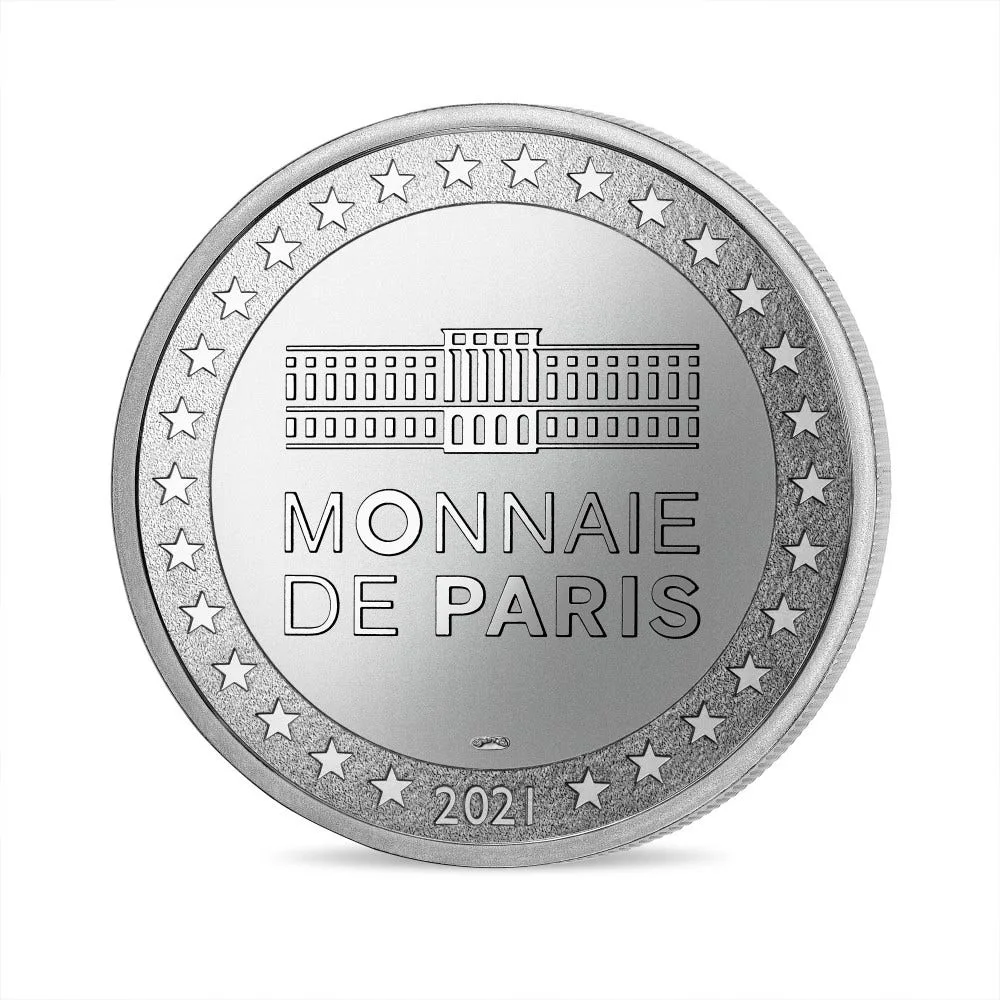
The reverse is the same on every medal of the collection: the Monnaie de Paris building in the centre, ringed by twenty-eight stars interrupted by the year of issue; the design echoes the official side of euro coins and underlines that the medal was struck at the state mint.