
Lucky Luke — Sunset over Colorado (gold 1/2 oz, 100 euro)
PDFGeneral information


Description
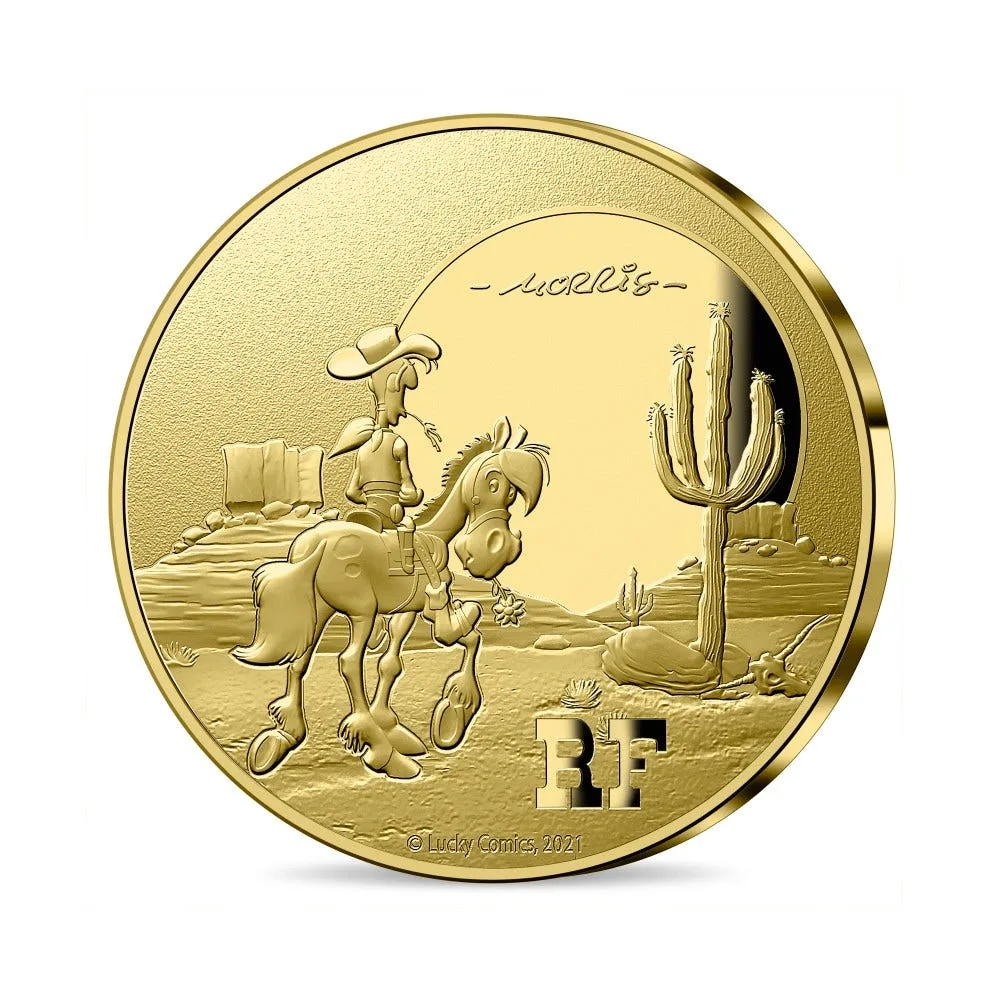
The 100-euro gold coin reproduces the most recognisable closing image of the series: Lucky Luke on Jolly Jumper riding towards the setting sun of Colorado while the horse hums a tune. The drawing is a direct reference to the last picture of the albums, where the lone cowboy sets out again, leaving the latest defeated bandits behind. The coin was issued for the hero's 75th anniversary and uses Morris's original artwork, with the author's signature “MORRIS” placed in the field itself. It is the most expensive issue of the collection — 1,675 euros at the mint's price, with the mintage limited to 250 pieces.
The coin is struck in .999 gold, weighing 15.55 g (1/2 oz), 31 mm in diameter, with a plain edge, in “Belle Épreuve” (proof) quality, with a mintage of 250 pieces; the mint's price was 1,675 euros and the issue is sold out.
The Lucky Luke series is a Belgian humorous western created by the artist Maurice De Bevere, known as Morris. The first story, “Arizona 1880”, appeared in L'Almanach Spirou 1947, the annual issue of Dupuis's Spirou magazine; the hero's birthday is counted from 7 December 1946. In 1948 Morris travelled to the United States with Jijé and André Franquin to see the settings of the Wild West and to meet American comics artists; he stayed there for about six years while continuing to send pages to Spirou. The first album, “La Mine d'or de Dick Digger”, came out in 1949 on a script by his brother Louis De Bevere.
The popularity of the comic went far beyond bookshelves: feature-length animated films and TV series, live-action films, video games, toys and board games have been based on Lucky Luke. A separate series about the dog Rantanplan ran from 1987 to 2011, and the Dalton brothers got their own film (2004), a Xilam animated series (2009) and Joe Dassin's song “Les Dalton” (1967). The Monnaie de Paris chose for the commemorative issue subjects every reader of the series knows: the duel with his own shadow, the sunset over Colorado, the four bandits in striped suits.
From the ninth story onward Morris worked with a number of scriptwriters, the most famous of whom was René Goscinny, co-creator of Asterix and Le Petit Nicolas. Their collaboration lasted about twenty years and is considered the golden age of the series: under Goscinny Jolly Jumper acquired a character of his own and the main heroes found their recognisable comic manner. The magazine carrying the stories changed over time: Spirou from 1946 to 1967, then Pilote, later Tintin, Spirou again and Pif Gadget. A series that started as a string of simple visual gags became a parody of the western genre full of references to American history.
Obverse
The obverse is the artistic side: Lucky Luke on Jolly Jumper before the setting sun of Colorado. The foreground has a saguaro cactus, a small cactus, rocks and a cow skull, with a mesa in the distance. The signature “- MORRIS -” is at the top centre, “RF” and “© Lucky Comics, 2021” at the lower right. The metal is not coloured.
Reverse
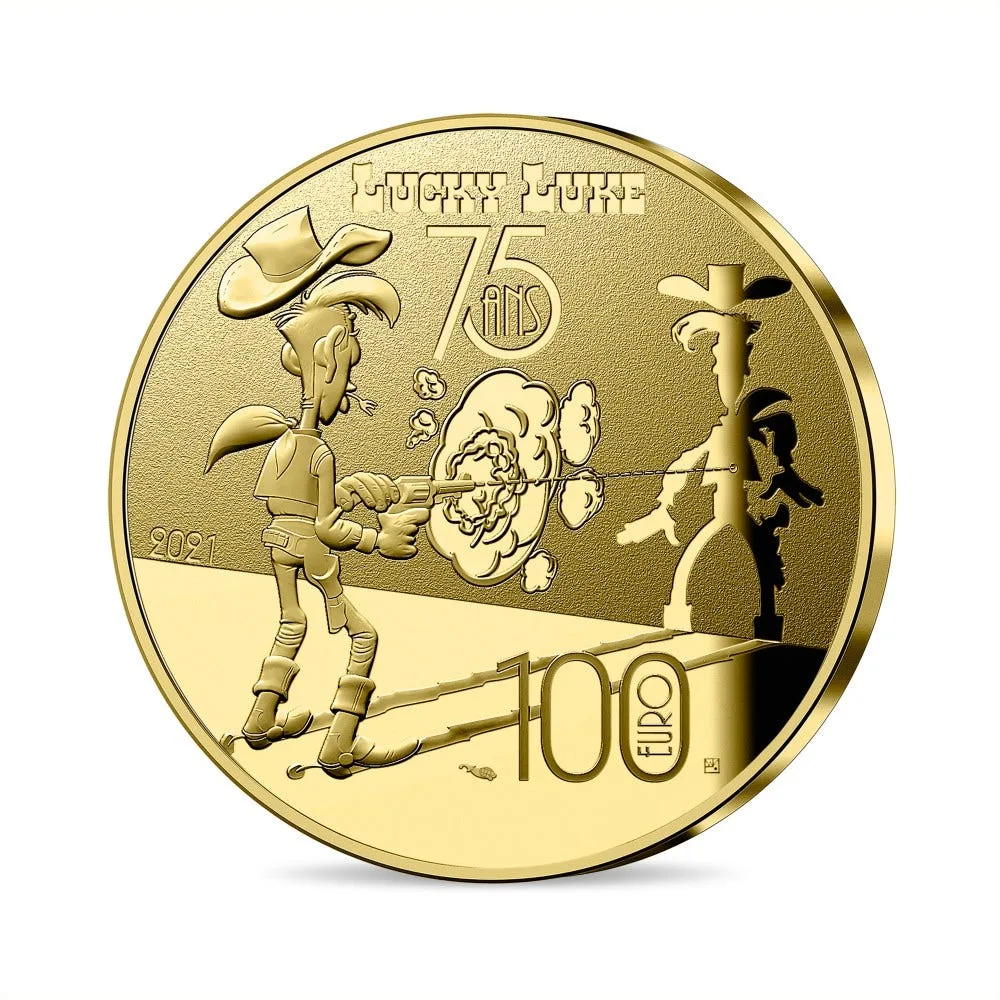
The reverse — the official side — repeats one of the most famous pages of the comic: Lucky Luke duels with his own shadow and proves once again that he is the fastest gun in the West. The inscription “75 ans” (the character's 75th anniversary), the face value and the year of issue are also placed here.