
Loki and Heimdall (Geminus, 2 × 1 oz)
PDFGeneral information


Description
Two gods whom the Eddas set against one another are Loki and Heimdall. One was born among giants yet sits at the table of the Aesir; the other is the whitest of the Aesir, son of Odin and nine mothers, set to guard Asgard. One lives by deceit, shape-changing and the bold word, the other by keen hearing, clear sight and fidelity to his post. In the Lokasenna the schemer bursts into the gods' feast and insults them one after another, and among others Heimdall remarks that Loki is drunk and ought to fall silent. The scene shows the lineup in advance: the guardian tries to keep order, while Loki breaks it. Their old enmity goes back to the tale of Brisingamen, Freyja's jewel. Loki stole it, Heimdall in the shape of a seal fought him and returned the treasure to its owner. But the chief prophecy about them concerns the end of the world. The Voluspa tells of a time when the world will break apart: the seasons will change, oaths will be violated, kinship will be torn. Then Fenrir and Loki himself will break free, the ship Naglfar will sail, and Heimdall will raise Gjallarhorn, whose sound carries through all the worlds. The gods and the warriors of Valhalla will march out onto the plain, and Loki and the guardian, as tradition has it, will meet as equal adversaries. Symmetry matters here. They are not merely enemies but mirror images of one another: chaos and order, lies and vigilance, darkness arriving from the sea and light waiting on the shore. Each is defined through the other, and neither makes sense alone. It is no accident that Scandinavian tradition foretells for them a shared fate rather than the victory of one over the other. Mythology thus speaks of balance: the twilight of the gods is not the triumph of evil but the collision of two principles, after which the old order disappears. Yet Ragnarök is not the final point. A new green earth rises from the sea, surviving gods return, and a pair of humans hidden in the branches of Yggdrasil begins a new world. The meeting of Loki and Heimdall is therefore not just a story of enmity but the beginning of a cycle in which destruction and rebirth cannot be separated. For a Norseman the prediction also carried an ethical meaning: even mighty gods have no power over fate, and no cunning can cancel an appointed hour. Loki, who spent his life evading answers, and Heimdall, who spent his life on watch, arrive at the same threshold. The Eddas do not hide that the outcome is known, and still both walk out onto the field, because in Norse terms valor lies precisely in that.
Obverse
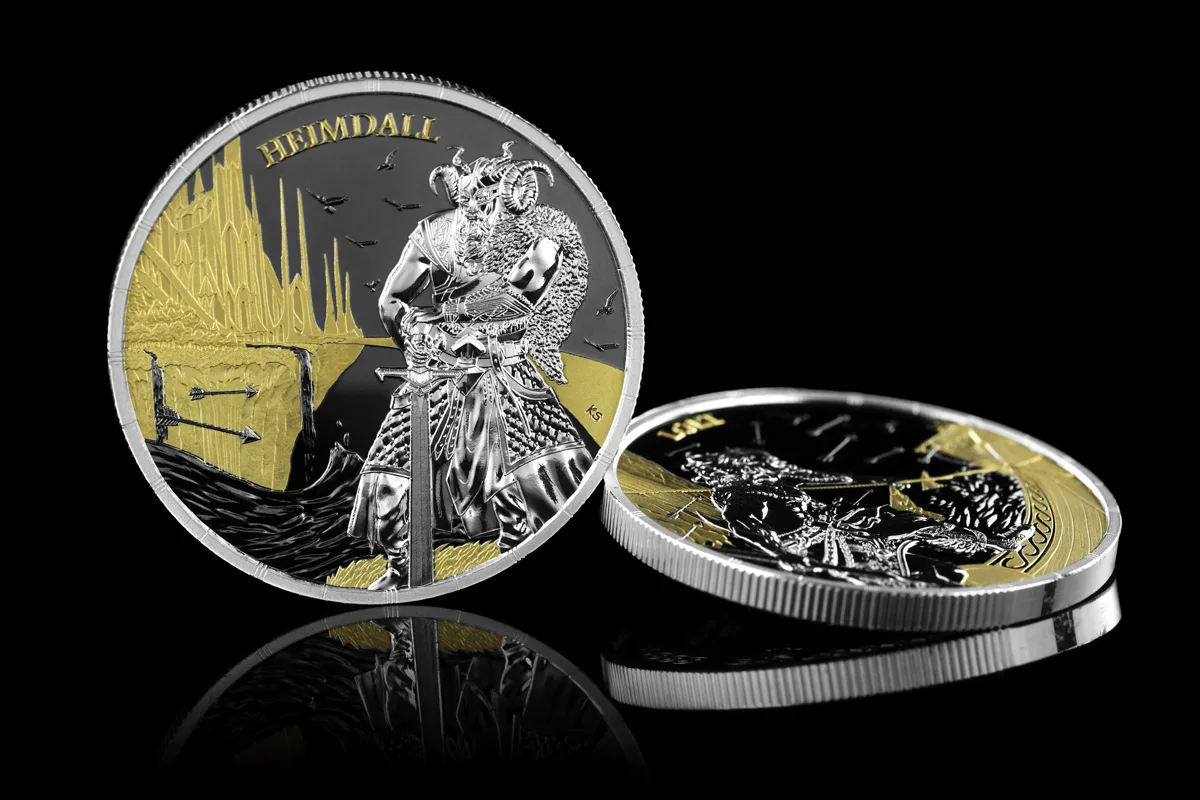
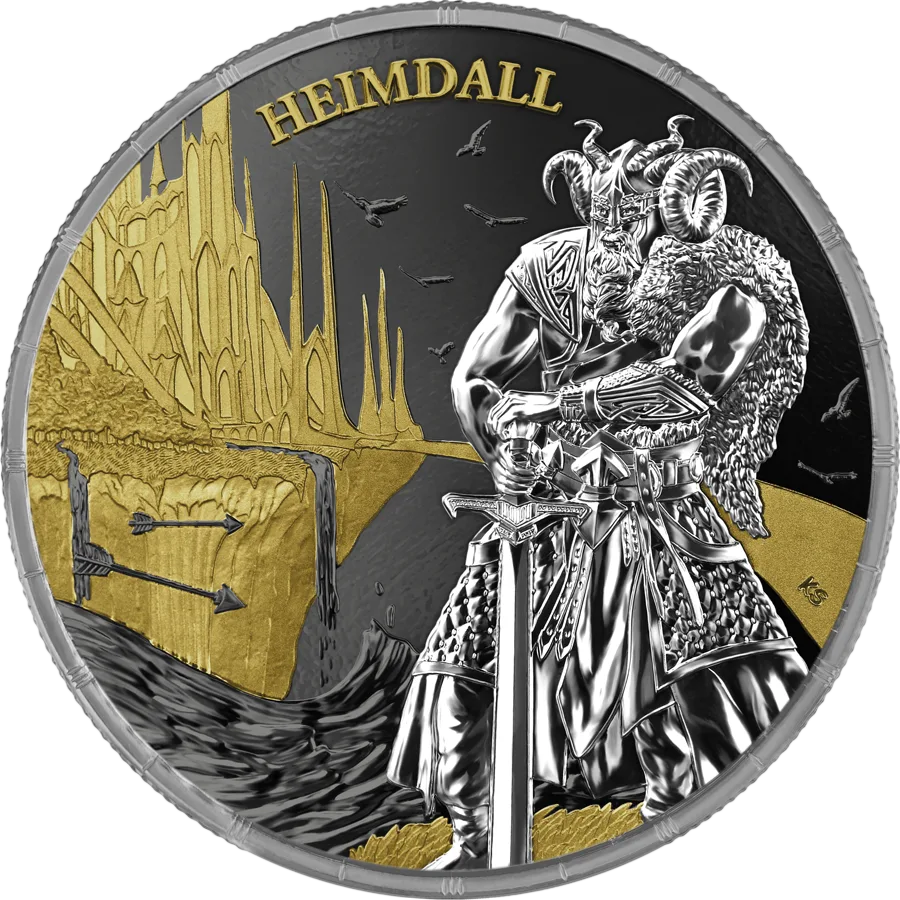
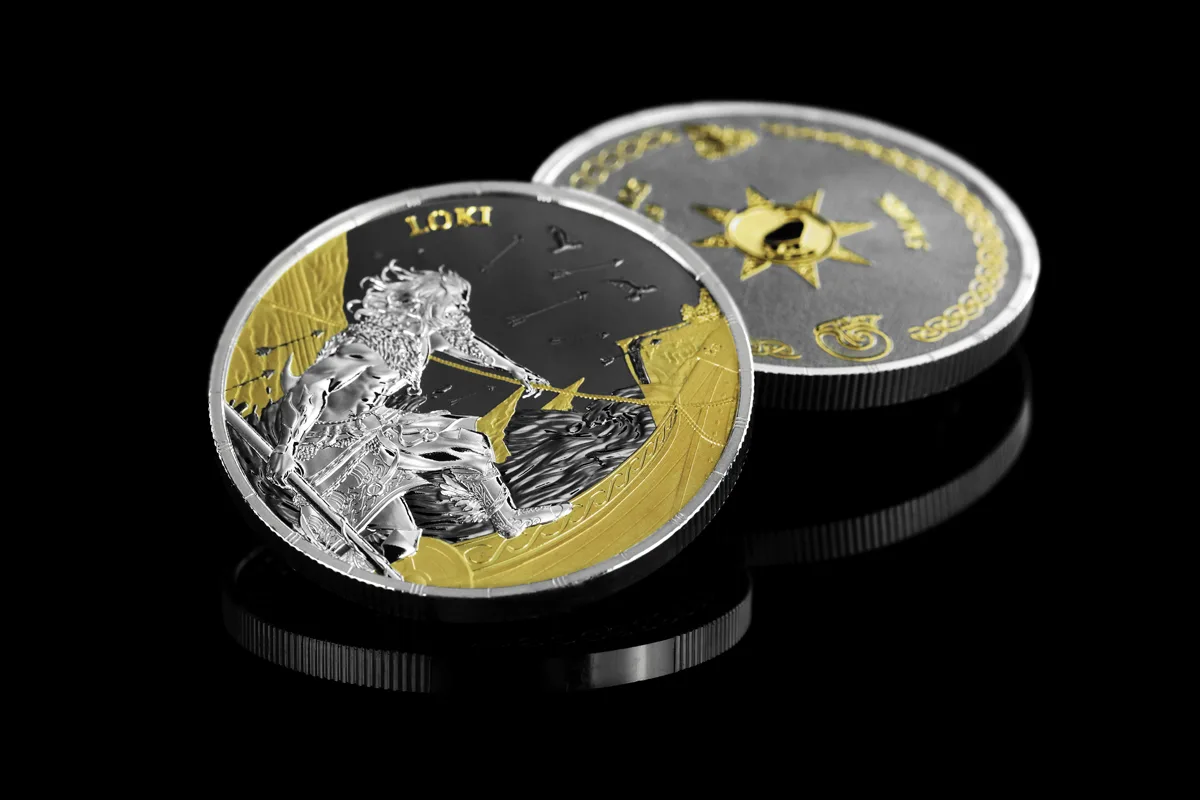
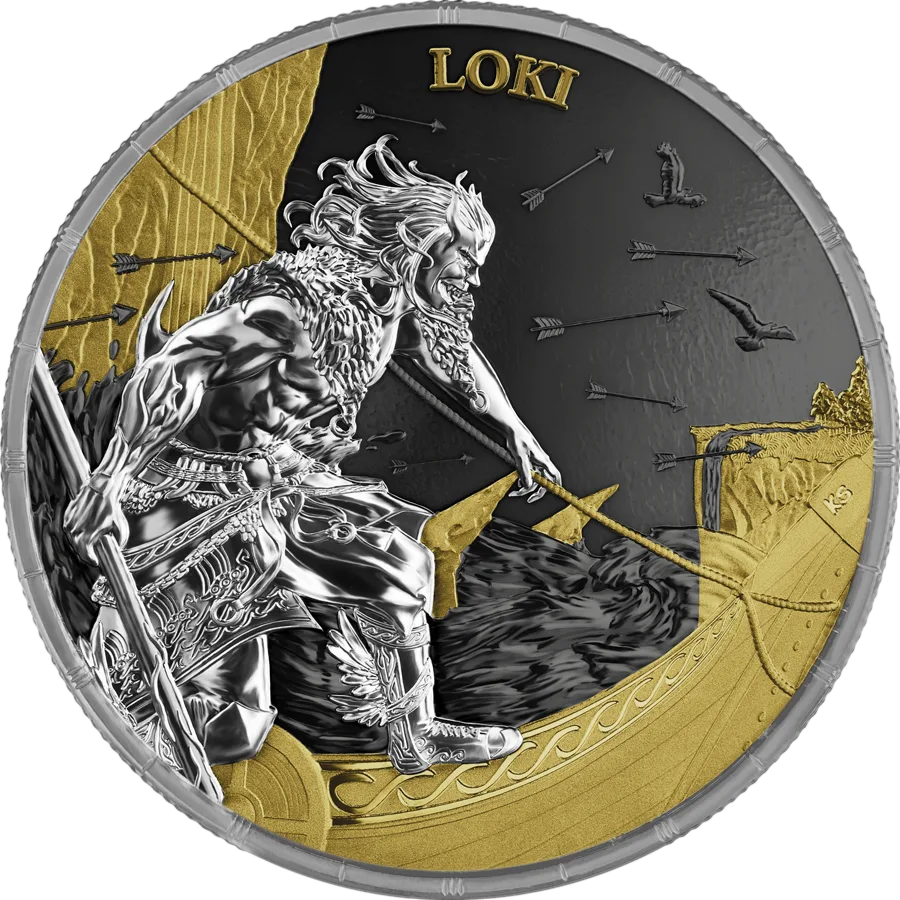
The two coins of the set are conceived as a mirror opposition: on one Loki, the cunning deceiver, rushes into battle with fiery determination; on the other Heimdall, the vigilant guardian, stands ready to defend the light. Placed side by side they form a single battle scene and only together show the whole picture. The heroes are set off by golden accents and blackening on a ruthenium field, and the silver relief of the figures reads against the dark ground. Each coin bears the hero's name and runes.
Reverse
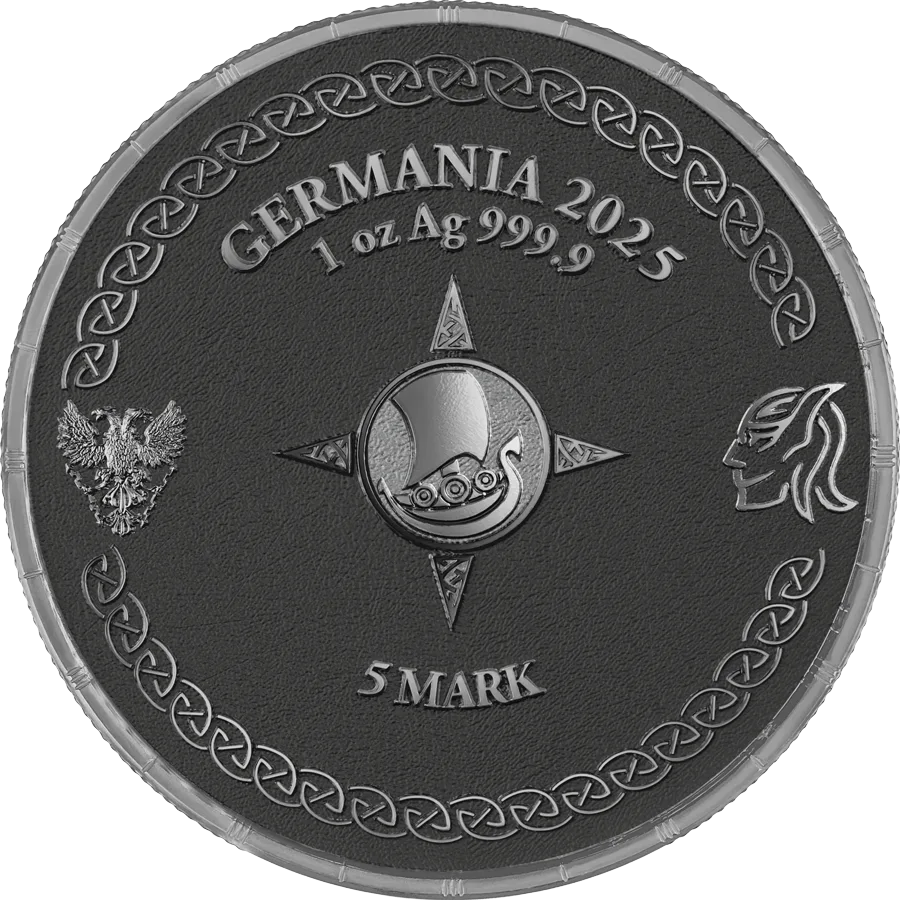
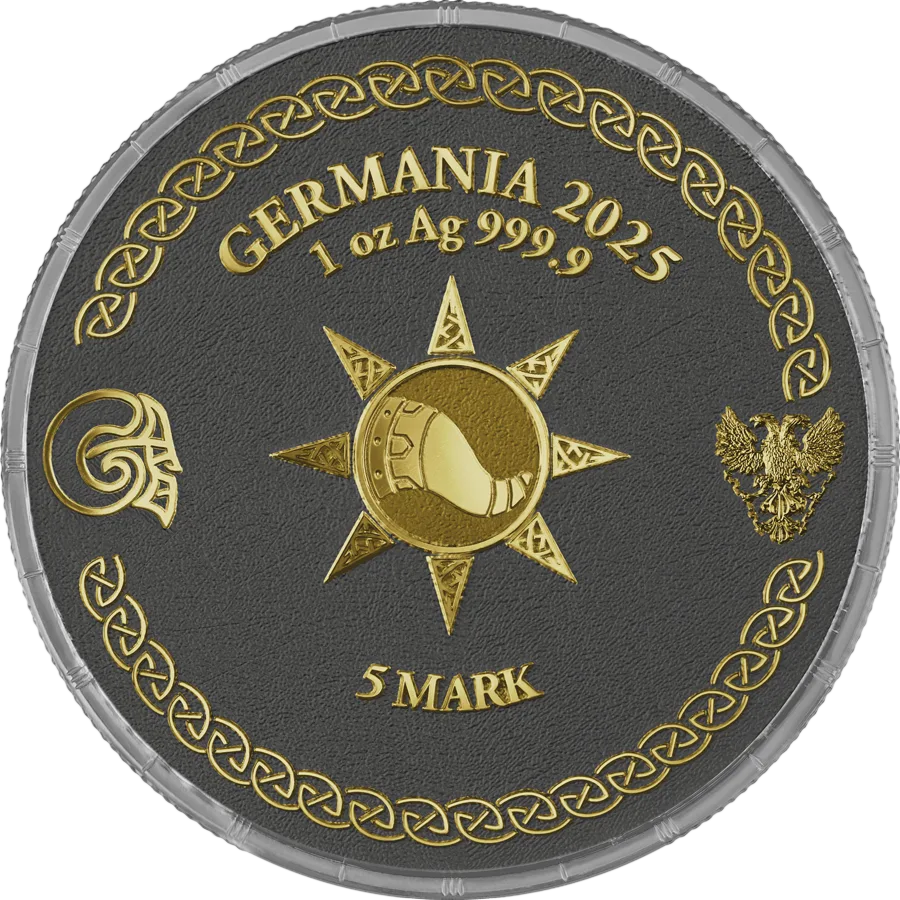
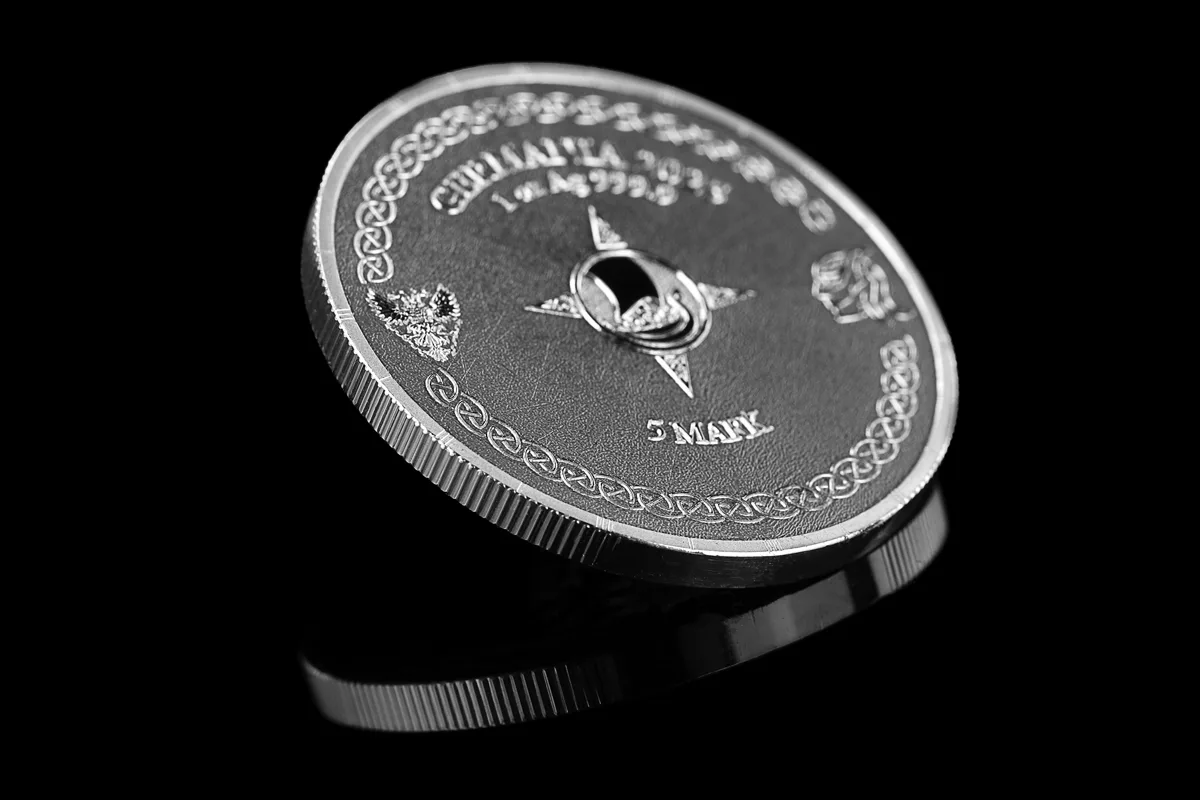
The two reverses are shown together in the double capsule: on one the ship of Loki, on the other the horn of Heimdall, both beneath the double-headed eagle of the Germania Mint, and both dated 2025. The two official sides are kept in the same strict style, and the golden and dark tones echo the colours of the obverses. The design is by Kinga Sabatowicz.