
Sirko (nickel silver)
PDFGeneral information
Description
The plot of the old dog and the wolf is one of the oldest in the European fairy tale. In the international index of tale types it is listed as number 101, “The Dog and the Wolf (Bear)”: by agreement with the dog, the wolf steals a child or a sheep and lets the dog take back the prey, and for this the old dog gets his keep from his master. The researcher Leonard Kolmachevsky believed that all variants developing this episode go back to Aesop’s fable “The Dog and the Wolf”. The plot is found among the East Slavs: 22 Ukrainian variants, 7 Belarusian and 3 Russian are known, and even some peoples of the Russian East, such as the Bashkirs, know it. Leo Tolstoy retold the fable in his own way, and in 1982 the Soviet cartoon “Once Upon a Time There Was a Dog” was made from the Ukrainian tale “Serko”.
The Ukrainian tale names its hero Sirko, a name long given to grey dogs, although in other versions the dog is called Serko. The idea is this: service is never useless, and a kindness done in time comes back. The old dog is driven out when his strength is going, and there is truth in that, understood by anyone who has seen village life. But the tale is not cruel: it finds a way out where no one is wronged, and the wolf, though dangerous, proves capable of friendship and gratitude.
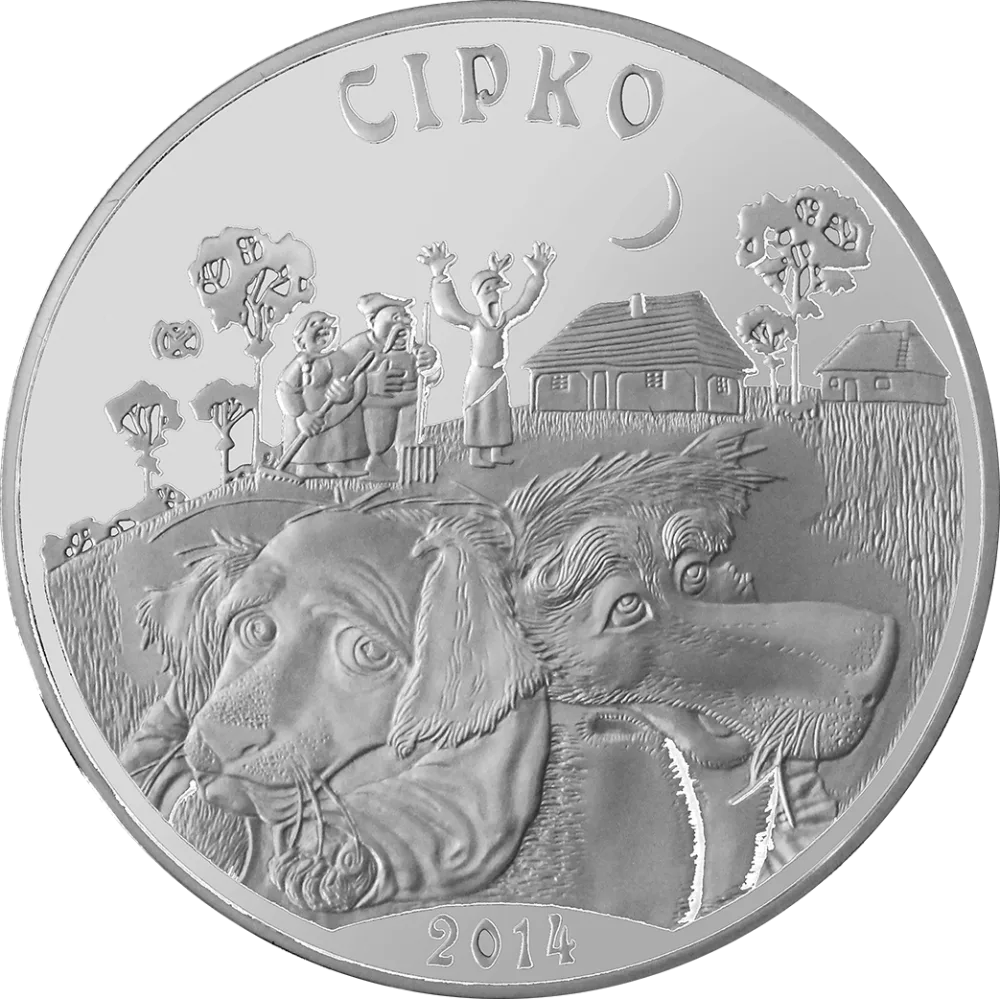
The hero unexpectedly turns out to be an actor playing a double game. First he stages an attack with the wolf, then he hides the wolf under the wedding table, and this resourcefulness lets him win back his place at the table. Such a scene suits a coin well, because it is told in several vivid pictures: the field and the haystack, the cottage and the feast, the wolf under the table and, at the end, a calm parting remark. It is no wonder that the issuer’s short note on the coin comes down to three words: kindness, friendship, support.
The base-metal 50-tenge coin came out on 19 December 2014 and is meant for the mass collector. Its design repeats the silver 500-tenge coin issued the same day, but this coin is intended not for a gift box but for those who gather a full row of fairy-tale heroes and want the tale of Sirko in an ordinary version. It is just such a coin that most often reaches the hands of children and beginning collectors.
Ukrainians are one of the long-established and numerous communities of Kazakhstan; their songs, proverbs and tales have sounded here for generations, so the tale of Sirko has become for the republic not a borrowing but part of the shared heritage. The base-metal issue makes that heritage tangible: a coin that can be held in the hand and shown to a child tells the same story that was told by the stove in a Ukrainian cottage.
Obverse
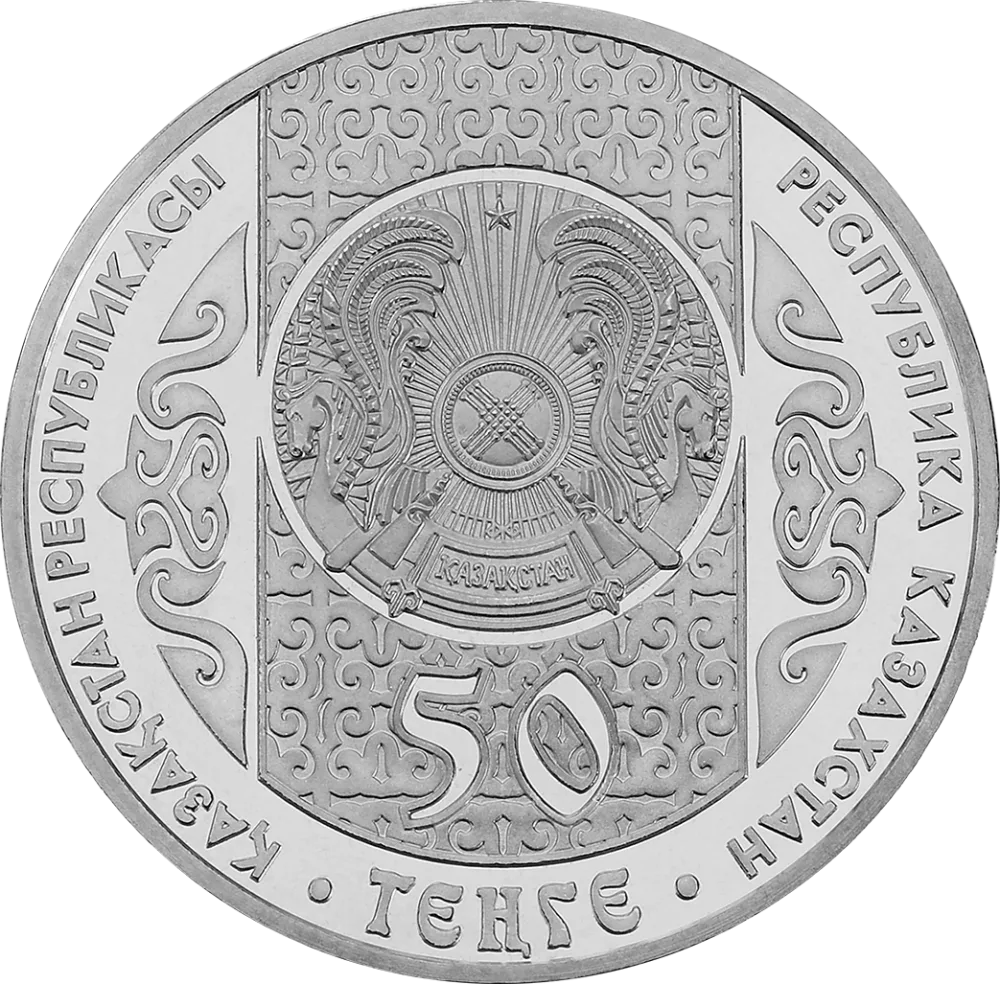
The reverse, official side of the coin follows a common pattern. At the centre against a national ornament is the State Emblem of the Republic of Kazakhstan: a shanyrak flanked by two winged tulpars, a star above it and a ribbon reading QAZAQSTAN. Around the rim the country’s names are struck in two languages, QAZAQSTAN RESPÝBLIKASY and REPUBLIC OF KAZAKHSTAN, and below is the denomination: the figure 50 and the word TENGE.
Reverse
On the story side two animal heads are shown in close-up: on the left a shaggy one with long fur, drooping ears and round, anxious eyes, on the right one with a long muzzle, ruffled fur and a half-open mouth. Behind them on a hill spreads a Ukrainian village: white cottages under thatched roofs, trees with round crowns and, among them, three small figures of villagers, one of whom has thrown up his arms. A thin moon hangs over the roofs. Above the composition the name SIRKO is struck with the Ukrainian dotted I, and at the bottom the year 2014.