
500 Years of the Crown 2026 Gold Proof
PDFGeneral information
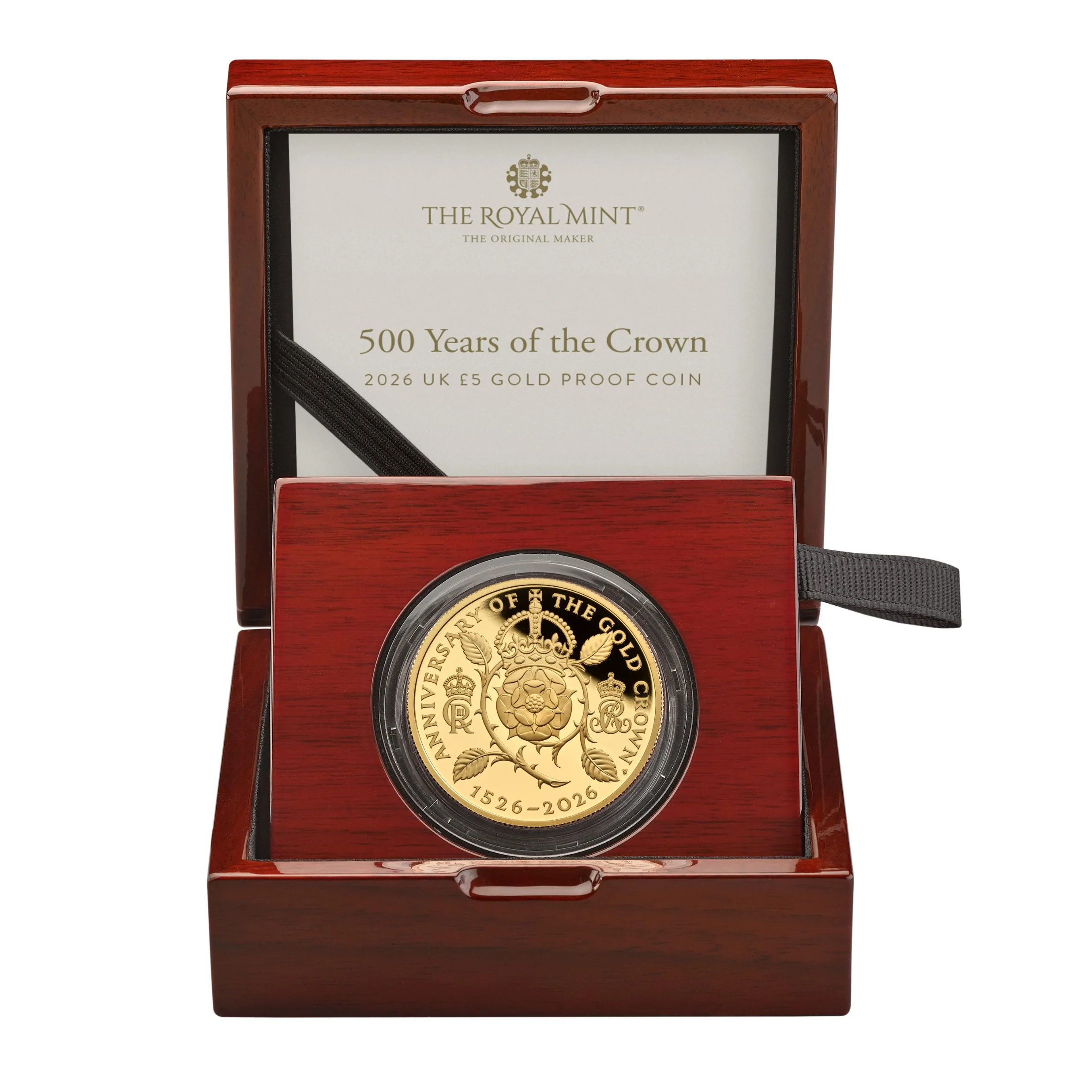


Description
The words “gold crown” in the title of the issue are no metaphor. In 1526, under Henry VIII, the Royal Mint struck precisely gold coins: first the “Crown of the Rose” at four shillings and sixpence, then the “Crown of the Double Rose” in 22-carat gold, equal to five shillings. Such gold was called “crown gold”, and in English coinage it was kept for centuries. Later the same gold went into sovereigns, and the tradition has survived to this day.
Of the four issues of the present anniversary the gold one is the only one whose metal matches that of the 1526 original. So it reads as a direct descendant: the same 22 carats as the “Crown of the Double Rose”, and the same idea. The original had no royal portrait: it showed the double Tudor rose with the legend “RUTILANS ROSA SINE SPINA” — “a shining rose without a thorn”. It was a diplomatic sign joining the red and white roses of the dynasty after the Wars of the Roses: Henry VII married Elizabeth of York in 1486.
The later fate of the crown is well known. From 1551, under Edward VI, a silver crown appeared; gold ones were struck until 1662; later the silver one left circulation and remained in a commemorative role. Since 1990 five pounds has been the modern crown. But the golden line was never broken: the Royal Mint issues gold commemorative crowns for collectors, and the present one ties the anniversary to its very source.
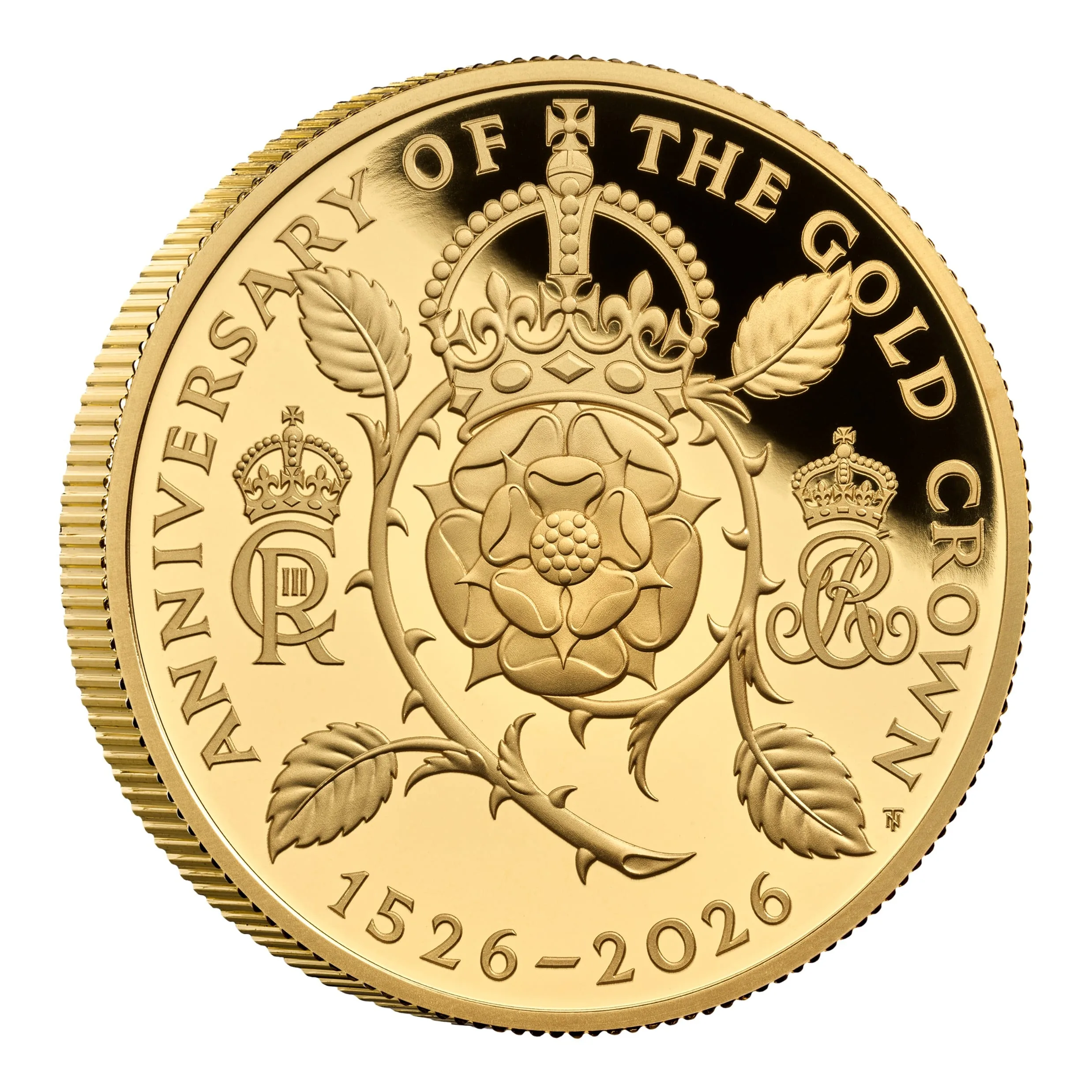
The design was created by the medallist Timothy Noad. He revisited the 1526 composition and combined Tudor heraldry with the modern face of the monarchy: a crown above a rose, the king’s cyphers, the dates “1526–2026” and five roses around the edge — one for each century.
The time of honest gold under Henry VIII proved short. Eighteen years after the crown appeared, in 1544, the king plunged into costly wars and launched the “Great Debasement”: more and more cheap metal was mixed into the alloy. The crown of 1526, however, was struck before that, in full-value gold — hence the special regard for it in the anniversary year.
The mint that issues this coin is one of the oldest in the world: by its own chronology it traces its history to 886, to the time of Alfred the Great. Today it works at Llantrisant in Wales, having moved from the Tower of London in the 1970s. The crown has remained a constant symbol of English coinage: over five centuries kings, portraits and alloys change, but the word stays.
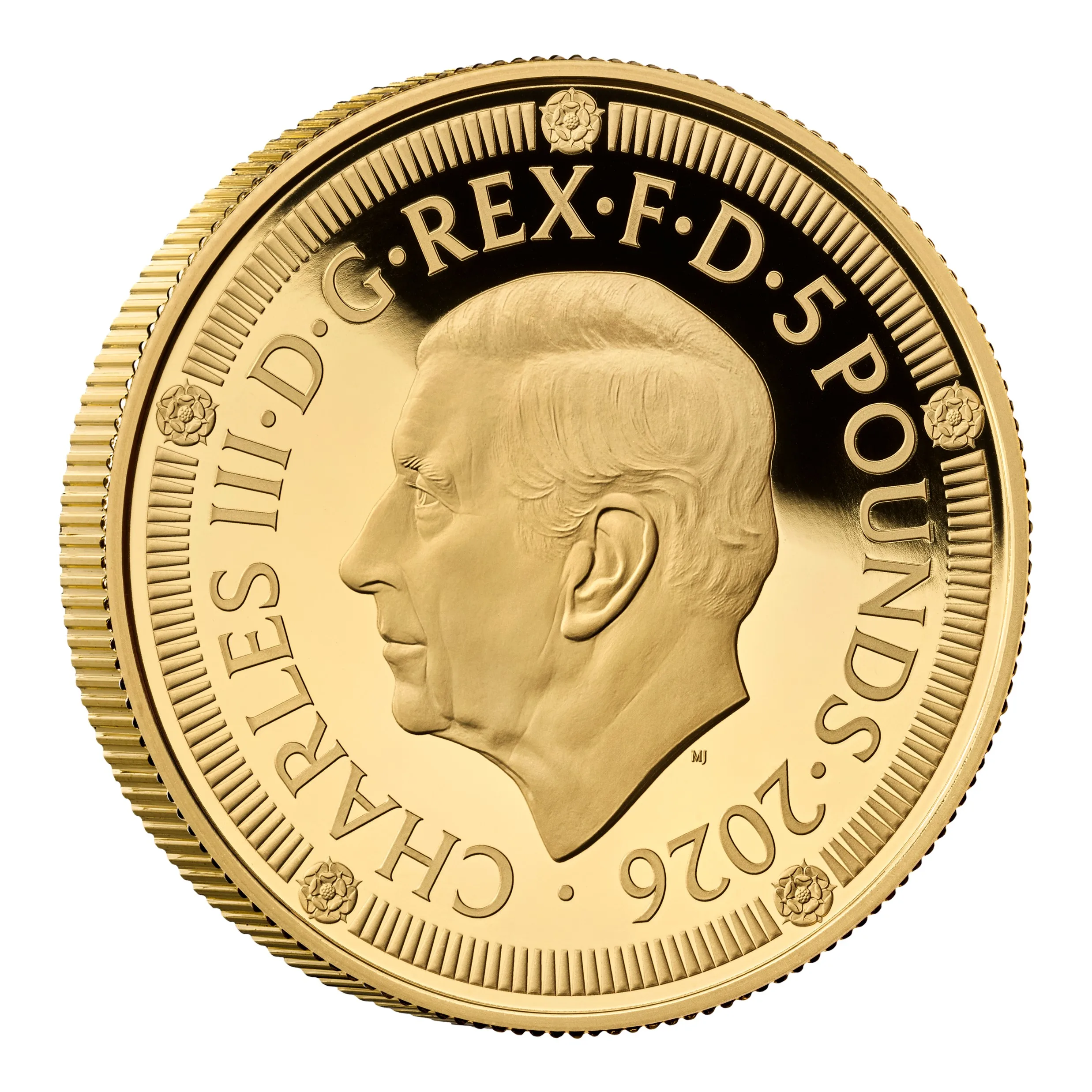
The king’s likeness on the reverse is the work of the sculptor Martin Jennings, author of well-known statues of John Betjeman and Philip Larkin. His Charles III has appeared on British coins since 2022.
Obverse
The artistic side is a Tudor rose under a crown. A double flower with a beaded heart is surrounded by a thorny stem and four large veined leaves. On the left is the cypher of Charles III (letters C and R), on the right a second cypher with flourishes; both are crowned. The legend “ANNIVERSARY OF THE GOLD CROWN” reads along the arc, with “1526–2026” below. The beaded border is elongated and recalls early striking. In gold, the frosted relief of the rose glows warmly on the mirror field — just the tone the original crowns had.
Reverse
The official side shows King Charles III in profile, a portrait by Martin Jennings. Around it runs the legend “CHARLES III D G REX F D” and the year 2026. On the outer edge are five roses, one for each century after 1526, separated by a beaded border; beside the portrait at the bottom is the monogram “MJ”. This side turns a collector’s piece into a royal portrait, as it was five hundred years ago on the gold of Henry VIII.