
Australian Inventions ($2)
PDFGeneral information
Proof
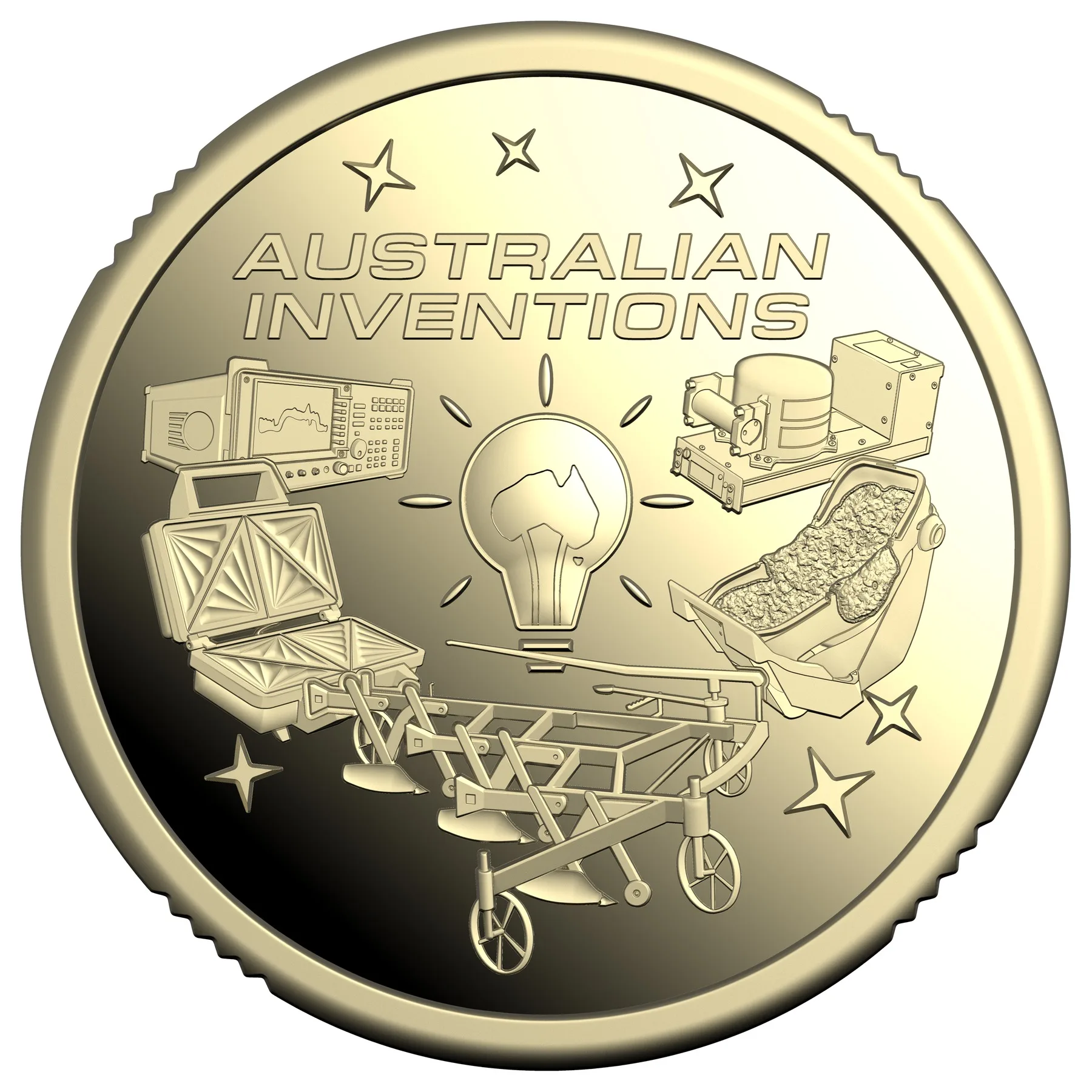
Версия в качестве proof (зеркальный фон) той же монеты $2 «Australian Inventions»; тираж ограничен 10 000. Металл, диаметр и рисунок те же, что у обиходной версии. Поставляется отдельно в футляре Королевского монетного двора Австралии.

Description
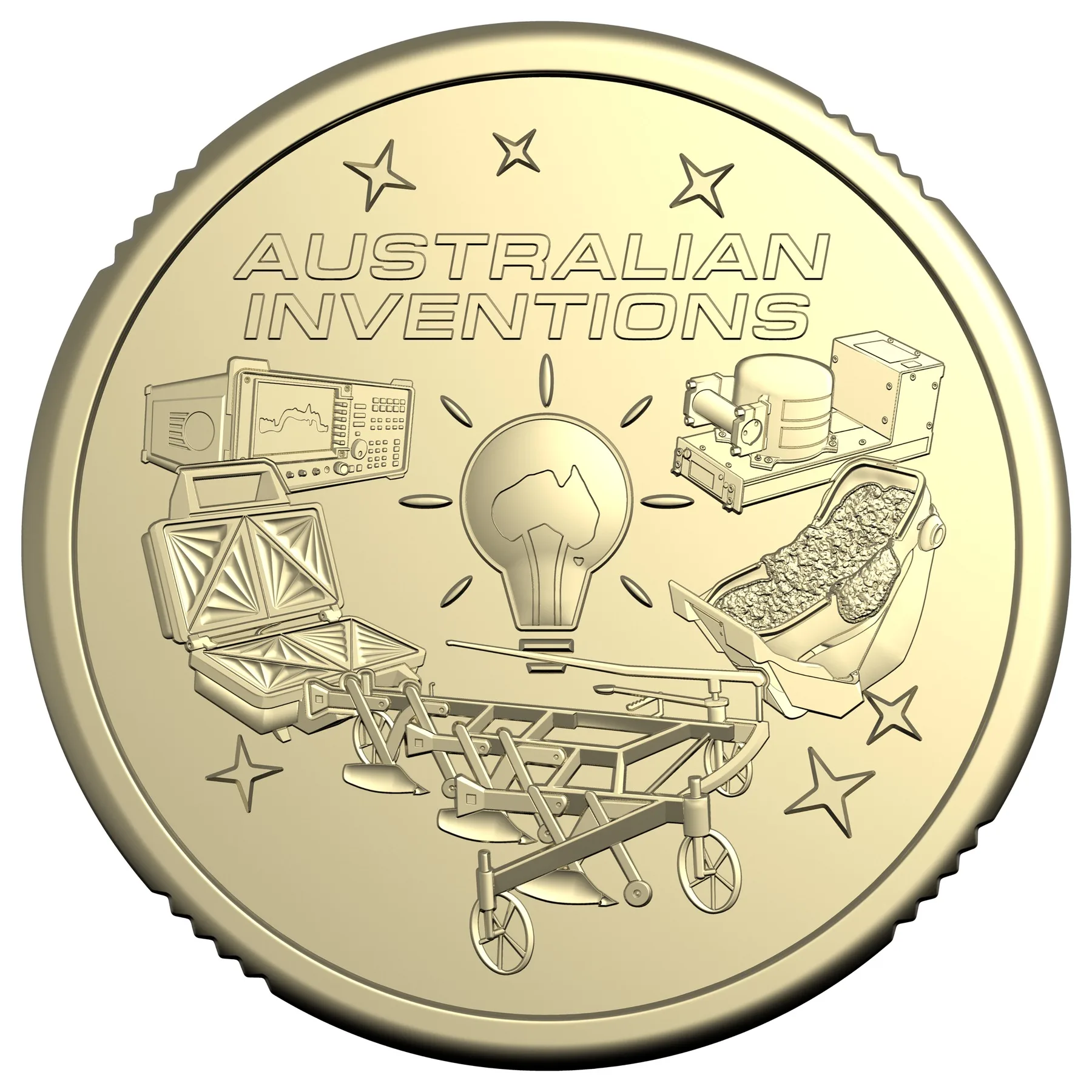
The $2 coin sums up the collection: its reverse gathers all five subjects — WLAN, the jaffle maker, the stump jump plough, the baby capsule and the flight recorder — while at the centre glows a light bulb with the outline of Australia inside and the words “Australian Inventions”. The coin was issued for circulation: the Mint released it with the newsXpress network as change, and it could be found at store tills, while collectors received the same coin in a separate slot of the folder with the five dollars. A light bulb is the familiar symbol of an idea and became the common emblem of the whole Bright Ideas campaign. The picture reflects the main thought of the collection: big changes are often born from solving a problem that stood right in front of the inventor. For newsXpress the coin became a way to draw into the subject not only collectors but ordinary customers, who could find it among the change when buying a newspaper or magazine; the network’s chief executive Mark Fletcher named the stump jump plough his favourite invention of the set and noted that Australian ideas are often born not in a laboratory but while solving a problem that stands right in front of a person. “Bright Ideas” is a Royal Australian Mint collection released on 8 October 2026 in partnership with the newsXpress newsagency network. Five Australian inventions that changed everyday life — the stump jump plough, the jaffle maker, the black box flight recorder, the baby safety capsule and high-speed WLAN technology — each received a $1 coin. A sixth coin, the $2 “Australian Inventions”, gathers all five subjects around a light bulb and works as a circulation coin: it was handed out as change in newsXpress stores and slipped into the folder alongside the five dollars for collectors. The face of the campaign was author and presenter Tim Ross, whose book “What a Ripper!” explores everyday objects that shaped Australia.
The $2 coin is struck in aluminium bronze (92% copper, 6% aluminium, 2% nickel); diameter is 20.5 mm, thickness 3.2 mm, weight 6.6 g; the edge is smooth with four short reeded segments of five grooves each. The issue is dated 8 October 2026. The proof version is a separate variety of this coin with a mintage of 10,000, and the version with the light bulb privy mark belongs to the seven-coin set (15,000). The collection is sold in several formats. The main one is a folder of five $1 coins with an extra slot for a $2 coin, which is placed into the folder at the point of sale; the number of such sets is limited to 35,000. For collectors who want varieties the Mint produced a seven-coin set in a folding keepsake box in which all coins carry a light bulb privy mark, as well as a $2 proof coin with a mintage of 10,000. In every tenth five-coin $1 set the usual black box is replaced by its coloured version with an orange recorder. The coins are struck at the Mint in Canberra, and the obverse with the portrait of King Charles III by Dan Thorne is common to all denominations of 2026.
Obverse
The coin shows a montage of the five Australian inventions around a glowing light bulb and the inscription “AUSTRALIAN INVENTIONS”. The design is by the Mint artist I. Fong.
Reverse
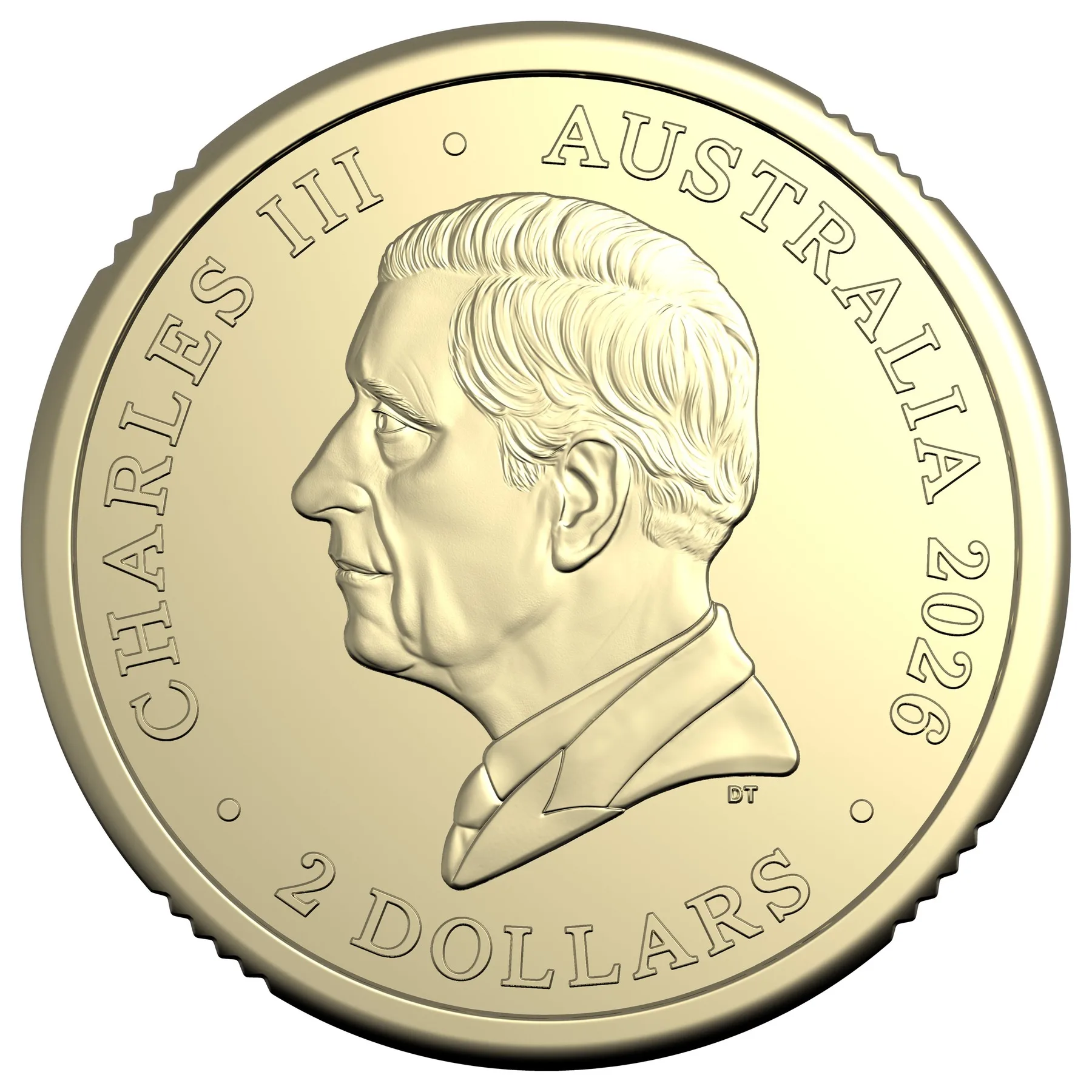
This is the portrait side, the obverse in the Mint’s terminology. It shows an uncrowned portrait of King Charles III facing left, the inscriptions “CHARLES III” and “AUSTRALIA 2026”, “2 DOLLARS” and the initials “DT” of the portrait designer Dan Thorne.