
Black Box Flight Recorder
PDFGeneral information
Цветная
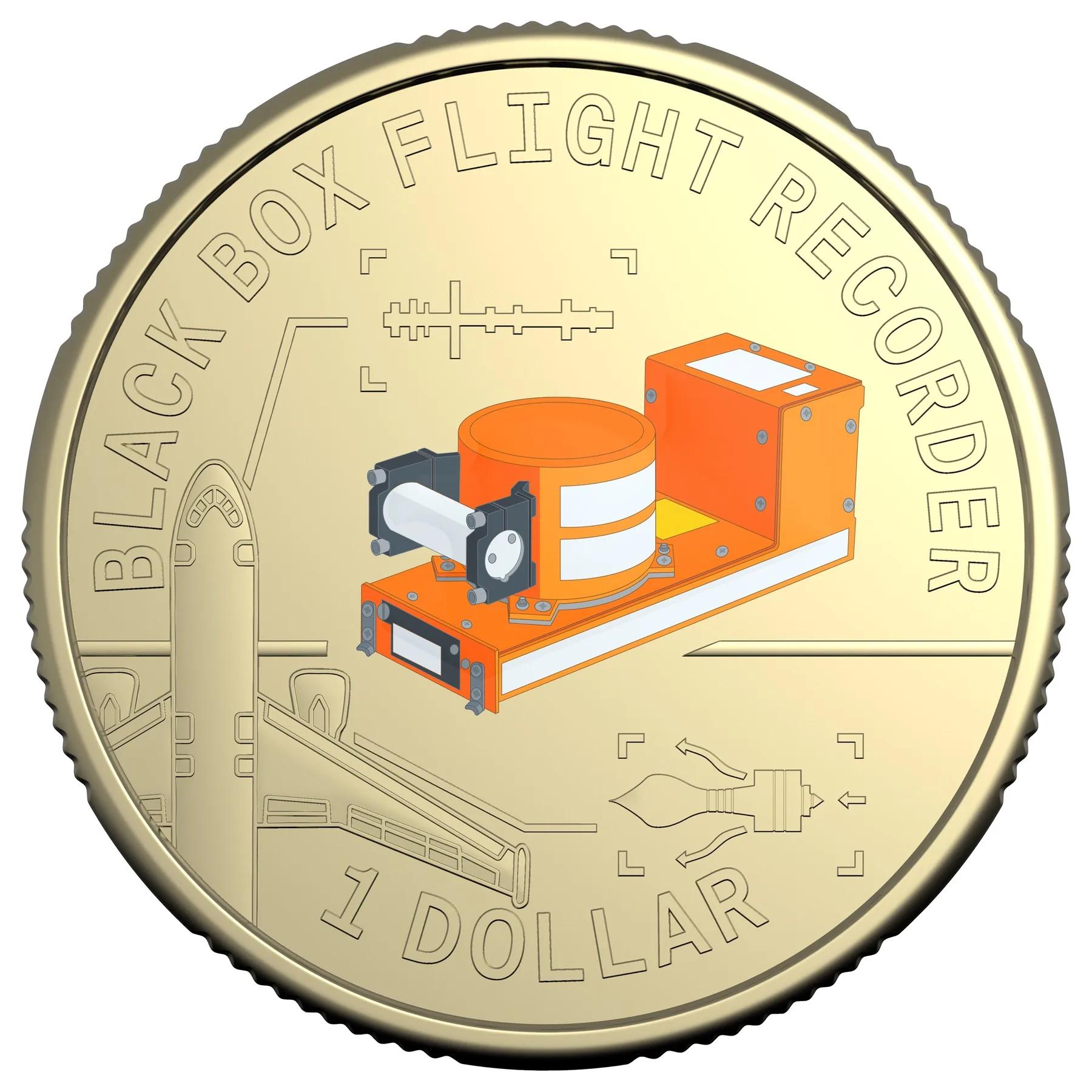
Цветная версия «чёрного ящика»: бортовой самописец выполнен в оранжевом цвете. Встречается в каждом десятом пятимонетном наборе-тубе $1 и входит в семимонетный набор с привимарком в виде лампочки. Вес, металл и диаметр те же, что у обычной версии.
Привимарк «лампочка»
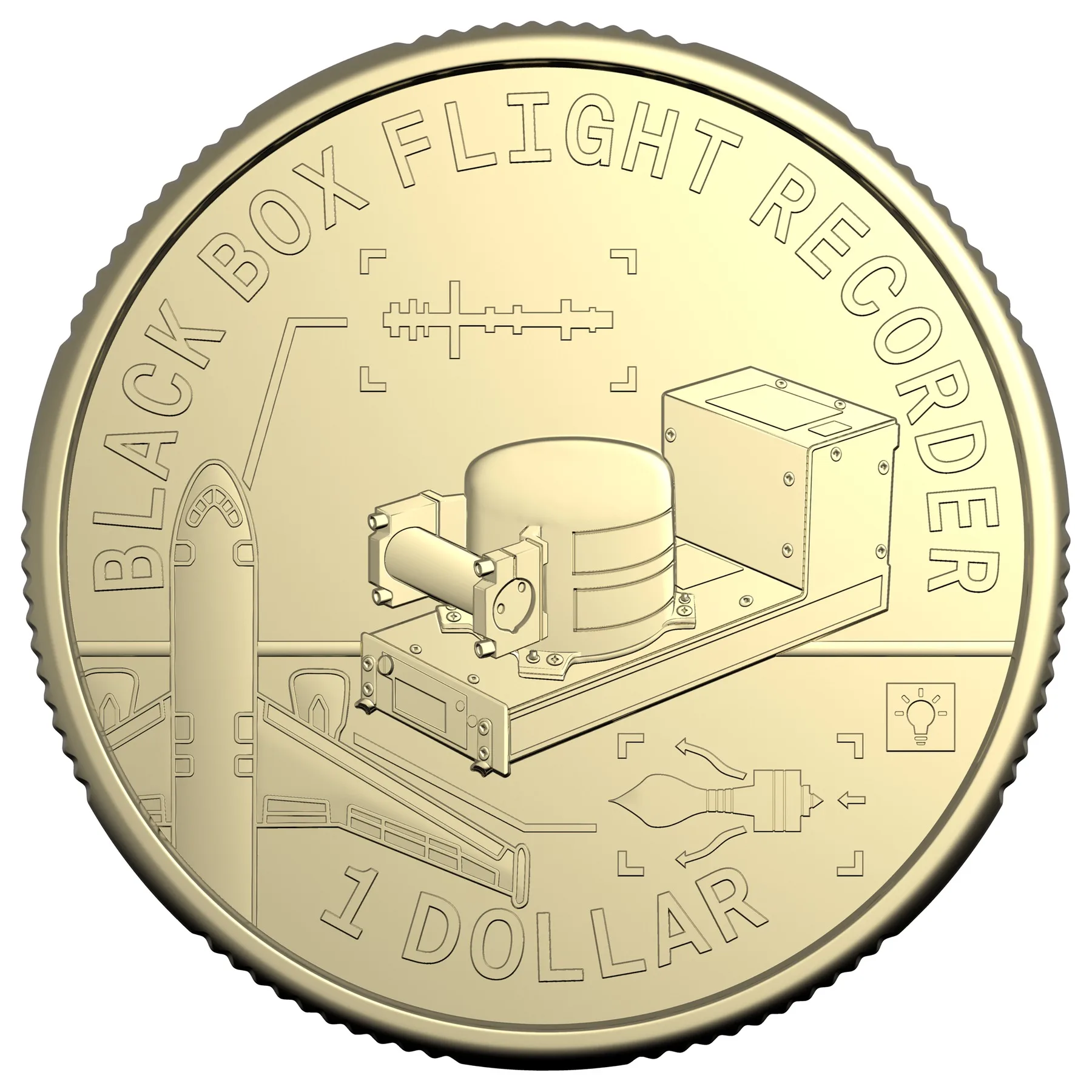
Версия «чёрного ящика» с привимарком в виде лампочки из семимонетного набора $1 и $2 (тираж набора 15 000, упаковка — картонная коробка). Вес, металл и диаметр те же, что у обычной версии.

Description
The flight data recorder, known as the “black box”, was developed in 1953 by the Australian defence scientist Dr David Warren. The device recorded flight parameters and later also cockpit conversations, so that after an accident investigators could reconstruct the last minutes of a flight. The invention changed aviation safety: every crash became a lesson, and conclusions drawn from the recordings lie behind requirements for aircraft and crews. Today such a device is mandatory on every airliner, and the phrase “black box” is known worldwide, although the recorder’s casing is actually painted bright orange to make it easier to find in wreckage. This is exactly the colour reproduced by the coloured version of the coin. “Bright Ideas” is a Royal Australian Mint collection released on 8 October 2026 in partnership with the newsXpress newsagency network. Five Australian inventions that changed everyday life — the stump jump plough, the jaffle maker, the black box flight recorder, the baby safety capsule and high-speed WLAN technology — each received a $1 coin. A sixth coin, the $2 “Australian Inventions”, gathers all five subjects around a light bulb and works as a circulation coin: it was handed out as change in newsXpress stores and slipped into the folder alongside the five dollars for collectors. The face of the campaign was author and presenter Tim Ross, whose book “What a Ripper!” explores everyday objects that shaped Australia.
For this subject the Mint struck two versions: the plain uncirculated one and a coloured one with an orange recorder. The coloured coin turns up in one of every ten coin tubes, which is why collectors regard it as the most desirable of the five. The $1 coin is struck by the Royal Australian Mint in aluminium bronze (92% copper, 6% aluminium, 2% nickel) in uncirculated quality. Diameter is 25.0 mm, thickness 2.5 mm and weight 9.0 g. The edge is segmented: seven reeded segments of 11 grooves each alternate with seven shorter plain ones. The coin belongs to the five-coin “Bright Ideas $1 Uncirculated Collection Folder and Five-Coin Set”, limited to 35,000 folders, which the Mint and newsXpress stores offer together with the $2. It is a collector issue carrying the effigy of King Charles III and the year 2026 on the obverse. The collection is sold in several formats. The main one is a folder of five $1 coins with an extra slot for a $2 coin, which is placed into the folder at the point of sale; the number of such sets is limited to 35,000. For collectors who want varieties the Mint produced a seven-coin set in a folding keepsake box in which all coins carry a light bulb privy mark, as well as a $2 proof coin with a mintage of 10,000. In every tenth five-coin $1 set the usual black box is replaced by its coloured version with an orange recorder. The coins are struck at the Mint in Canberra, and the obverse with the portrait of King Charles III by Dan Thorne is common to all denominations of 2026.
Obverse
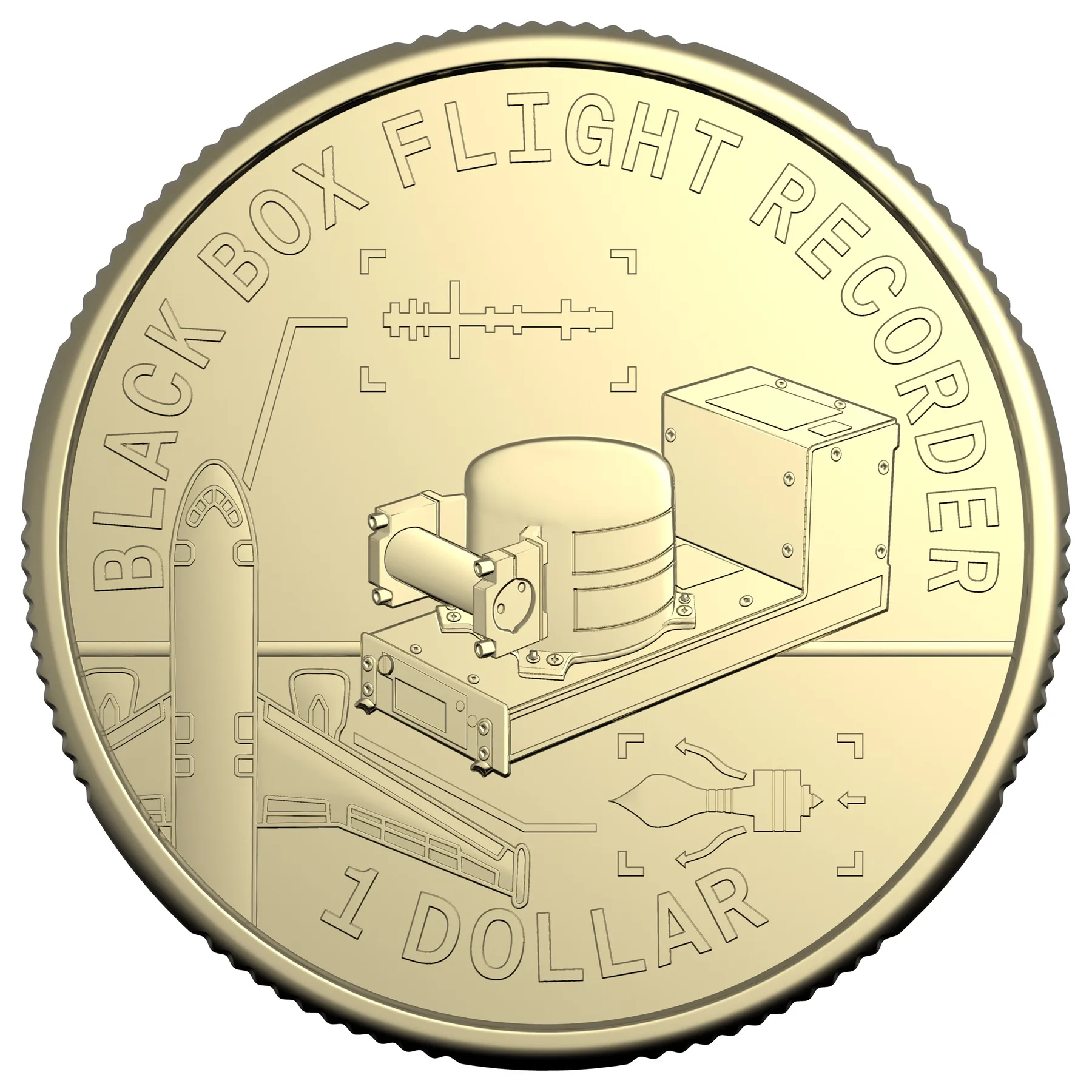
The coin shows a flight recorder with a jet aeroplane to the left and the inscriptions “BLACK BOX FLIGHT RECORDER” and “1 DOLLAR”. The design is by the Mint artist I. Fong.
Reverse
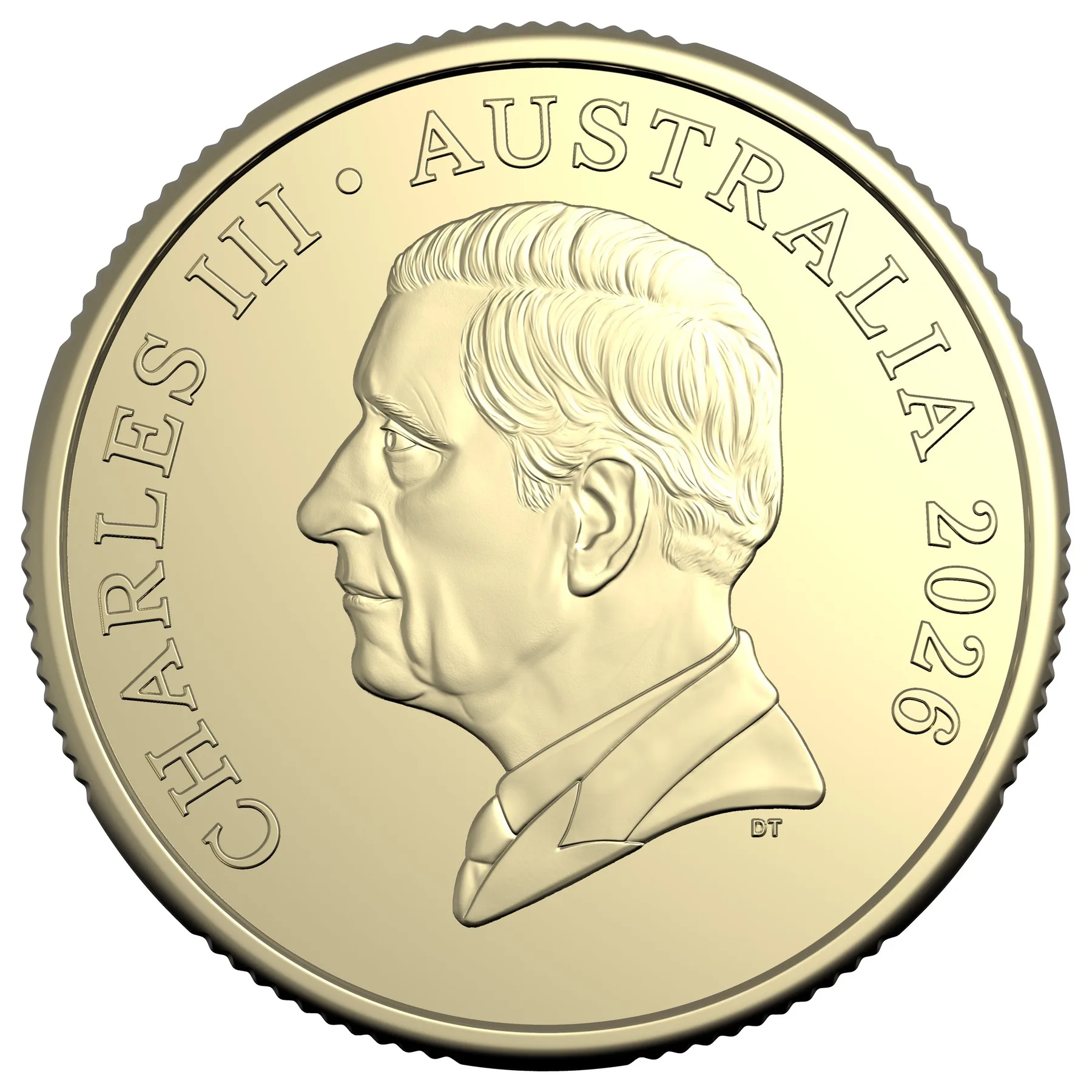
This is the portrait side, the obverse in the Mint’s terminology. It shows an uncrowned portrait of King Charles III facing left, the inscriptions “CHARLES III” and “AUSTRALIA 2026” and the initials “DT” of the portrait designer Dan Thorne.