
High-speed WLAN technology
PDFGeneral information
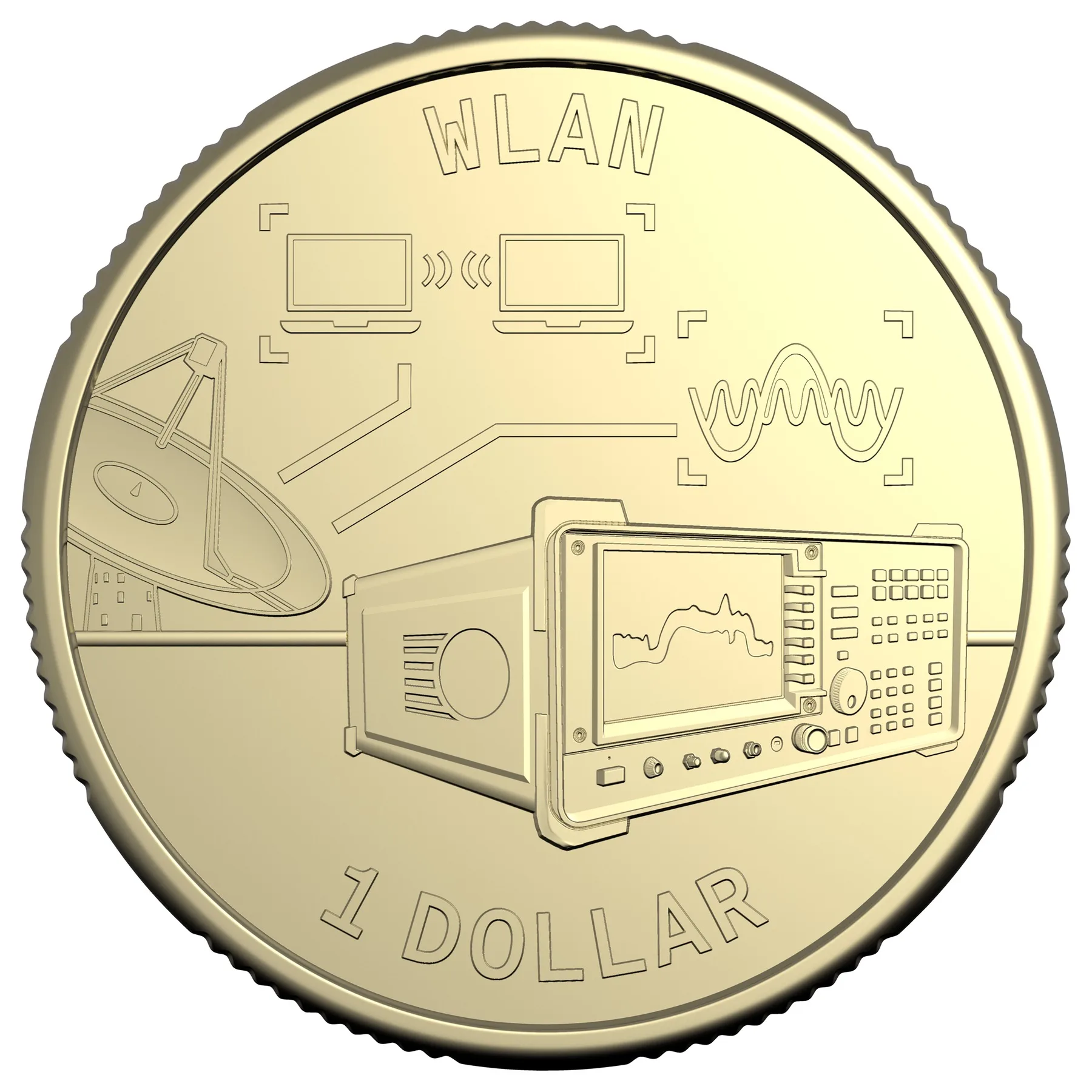
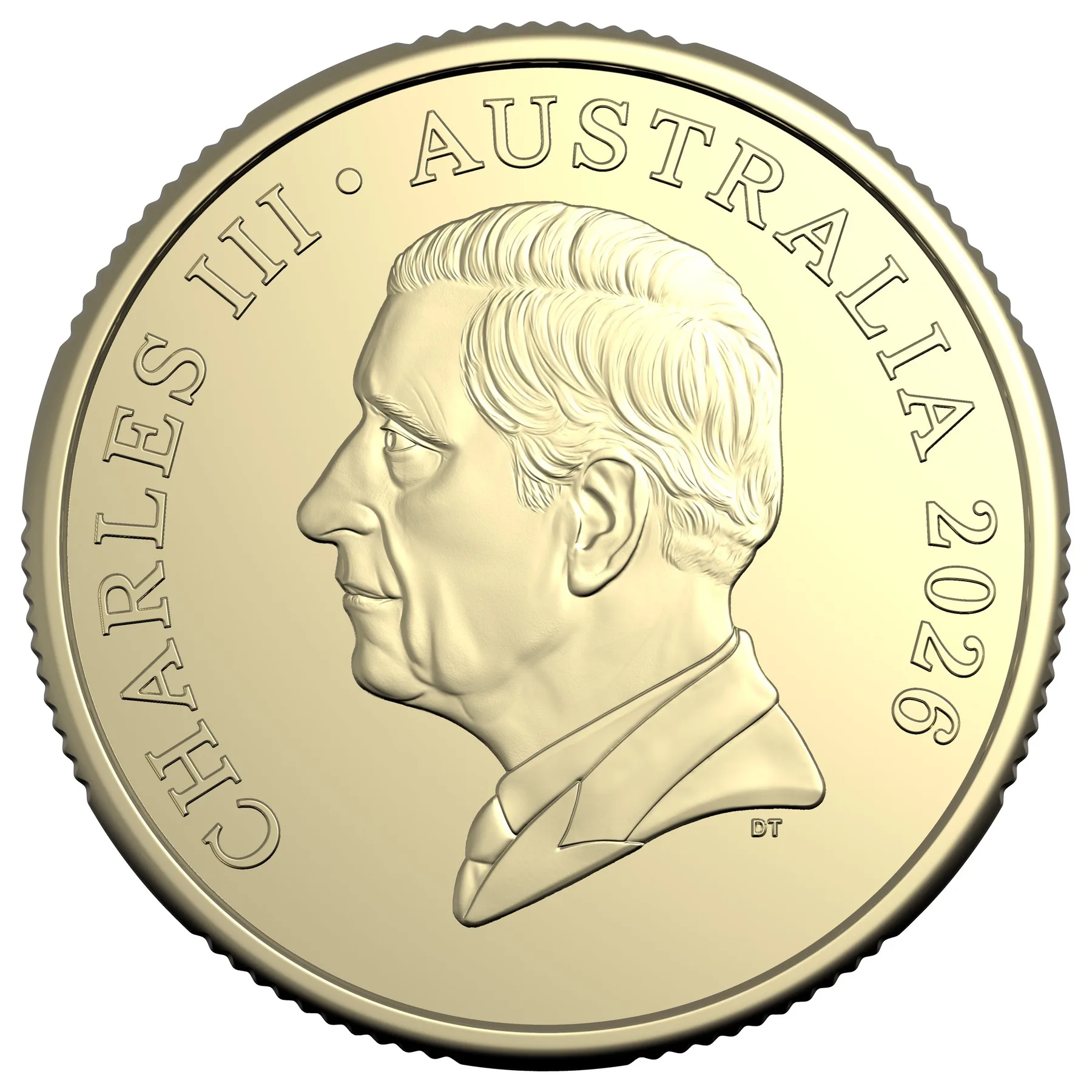

Description
High-speed wireless local area network technology, developed in the 1990s by the Australian national science agency CSIRO, became the foundation of the wireless connection people use every day. Scientists were looking for a way to send data through the air faster and more reliably without the signal degrading as it bounced off walls. The solution they found entered the standards on which modern Wi-Fi is built: in homes, offices, airports and cafés. The technology is barely noticeable while everything works, and therefore it is present unnoticed in the everyday life of millions of people. The Mint chose it as the most digital invention of the set and the best known outside Australia. “Bright Ideas” is a Royal Australian Mint collection released on 8 October 2026 in partnership with the newsXpress newsagency network. Five Australian inventions that changed everyday life — the stump jump plough, the jaffle maker, the black box flight recorder, the baby safety capsule and high-speed WLAN technology — each received a $1 coin. A sixth coin, the $2 “Australian Inventions”, gathers all five subjects around a light bulb and works as a circulation coin: it was handed out as change in newsXpress stores and slipped into the folder alongside the five dollars for collectors. The face of the campaign was author and presenter Tim Ross, whose book “What a Ripper!” explores everyday objects that shaped Australia.
This is the most modern theme of the set: instead of a plough or an appliance it shows an invisible radio signal. The $1 coin is struck by the Royal Australian Mint in aluminium bronze (92% copper, 6% aluminium, 2% nickel) in uncirculated quality. Diameter is 25.0 mm, thickness 2.5 mm and weight 9.0 g. The edge is segmented: seven reeded segments of 11 grooves each alternate with seven shorter plain ones. The coin belongs to the five-coin “Bright Ideas $1 Uncirculated Collection Folder and Five-Coin Set”, limited to 35,000 folders, which the Mint and newsXpress stores offer together with the $2. It is a collector issue carrying the effigy of King Charles III and the year 2026 on the obverse. The collection is sold in several formats. The main one is a folder of five $1 coins with an extra slot for a $2 coin, which is placed into the folder at the point of sale; the number of such sets is limited to 35,000. For collectors who want varieties the Mint produced a seven-coin set in a folding keepsake box in which all coins carry a light bulb privy mark, as well as a $2 proof coin with a mintage of 10,000. In every tenth five-coin $1 set the usual black box is replaced by its coloured version with an orange recorder. The coins are struck at the Mint in Canberra, and the obverse with the portrait of King Charles III by Dan Thorne is common to all denominations of 2026.
Obverse
The coin shows a radio transmitter with a satellite receiver dish to the left and the inscriptions “WLAN” and “1 DOLLAR”. The design is by the Mint artist I. Fong.
Reverse
This is the portrait side, the obverse in the Mint’s terminology. It shows an uncrowned portrait of King Charles III facing left, the inscriptions “CHARLES III” and “AUSTRALIA 2026” and the initials “DT” of the portrait designer Dan Thorne.