
Year of the Sheep (Gold 15 g)
PDFGeneral information

Description
Every sign of the Chinese zodiac has its place both in the yearly cycle and in the daily one. The sheep, according to the farmers' calendar, is tied to the sixth lunar month, midsummer, and its own element is Earth — soft, fertile, nourishing. For a subject about a mother and her young, this kinship is strikingly apt: the soil that gives the harvest and the branch 未 that arrives in the year Dingwei both speak of what grows and is fed beside the home.
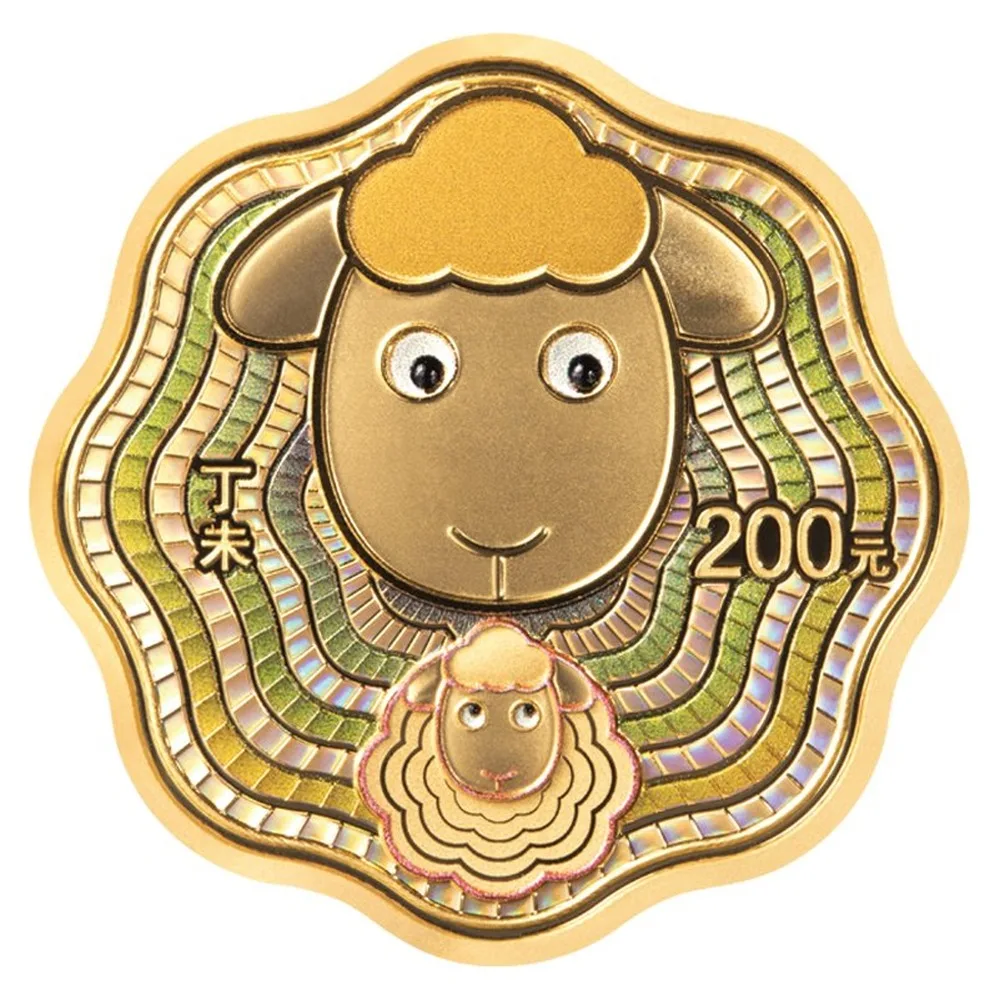
This year's coin is the homeliest of all. It shows a cartoon ewe-mother and a lamb. The drawing is done in the manner of modern children's animation: soft forms, large expressive eyes, good-natured smiles. The mother gently holds her little one, and he nestles trustingly against her. There is no landscape and no distant planes — the composition is concentrated on the pair itself, and that makes the scene especially warm.
The theme of mother and child sounds particularly strong in the Chinese New Year tradition. The Spring Festival is above all a family holiday. On its eve family members, even those who work and study far from home, return to their parents to sit down together to the reunion dinner. In the morning children greet their elders, wish them good health, and receive wishes of success and red envelopes in return. A ewe with her lamb is an image of exactly this holiday: the elder and the younger, care and trust, home.
The subject has one more facet. Chinese commentators link it with the expression 生生不息 — "birth after birth, life that never ceases". In the pair "mother and lamb" there are no sharp corners: one generation passes its care to the next, and a new spring follows. For a zodiac year that opens a cycle of warmth after winter, such a theme seems natural. The sheep sign in Chinese tradition is associated with peacefulness and kindness, and these qualities are shown in the very pose of the characters rather than in any symbolic attributes.
The way the cartoon manner works matters too. It does not reduce the seriousness of the theme but, on the contrary, makes it approachable. Cartoon characters one wants to touch make the subject lively and close. A cartoon mother with her little one is easily recognised by anyone, whether or not they know Chinese culture — such an image speaks a language everyone understands.
The character 羊, as is well known, is part of the words 祥 ("auspicious") and 善 ("good"). In the pair of mother and young these shades unfold most naturally. Care is the simplest form of kindness, and the sense of calm that comes from the two figures huddled together is exactly what the Chinese call auspicious. The year 丁未 will greet us with red lanterns and fireworks, but at the base of this noisy festival lies a quiet thought that the coin conveys: it is good when the home is warm and those dearest are near.
For those who collect zodiac subjects, this coin is interesting as an example of a warm, almost intimate interpretation of the sign. It does not try to astonish with scale and needs no scholarly commentary. A single smile of the ewe-mother is enough to understand what it is about: home, children, and the fact that life goes on.
Obverse
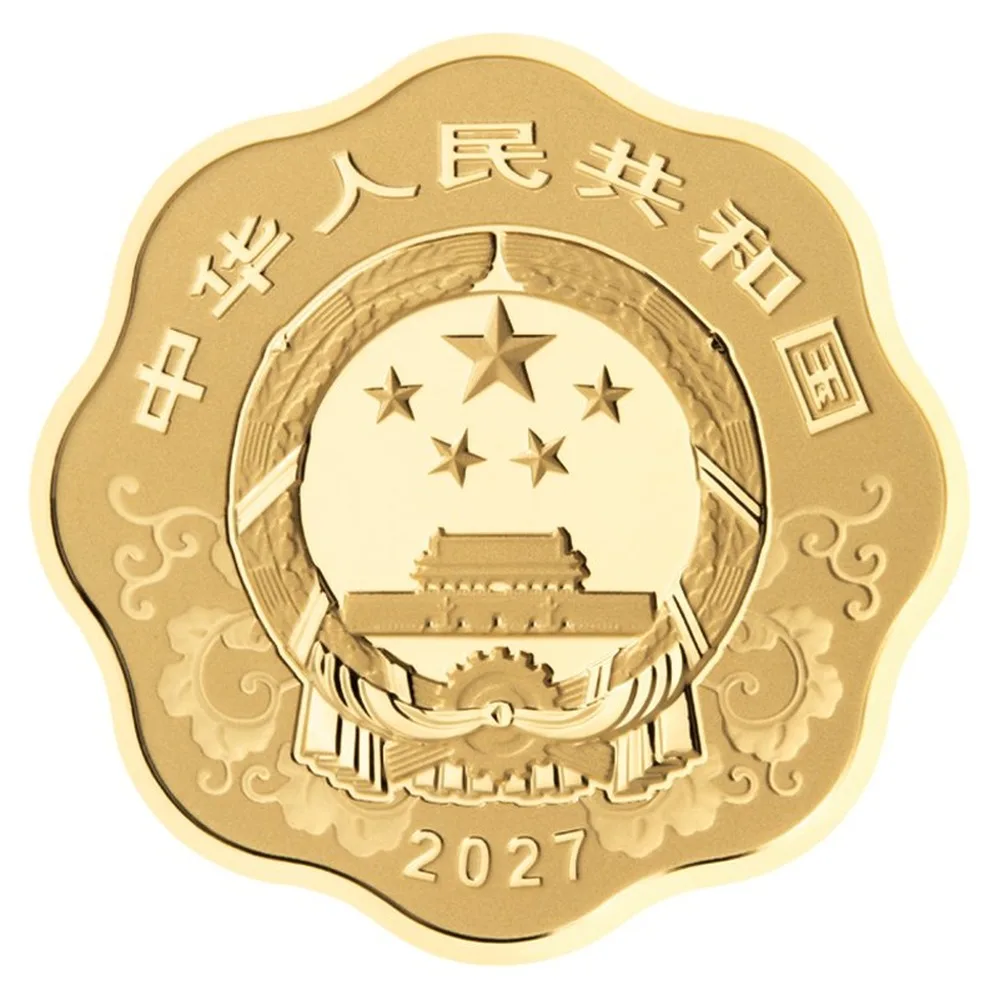
The obverse bears the national emblem of the People's Republic of China. It is framed by traditional auspicious patterns, and beside it are read the inscriptions: the name of the country, 中华人民共和国, and the year, 2027. The design is calm and solemn, the emblem stands out at the centre, and the patterns emphasise the festive character. This strict side serves as a contrast to the tender cartoon subject of the reverse.
Reverse
The reverse shows a cartoon ewe-mother and her lamb. The figures are done in a soft, tender manner: large eyes, kind little faces, warm poses. The mother keeps her little one close, and the whole scene is filled with the comfort of home. The inscription 丁未, giving the year, is placed here as well. The image conveys the theme of family, the continuity of life (生生不息) and peace at home: no sharp corners, no superfluous details — only the care of the elder and the trust of the little one. The cartoon manner makes the scene close and clear at first glance.