
Year of the Sheep (Platinum 15 g)
PDFGeneral information

Description
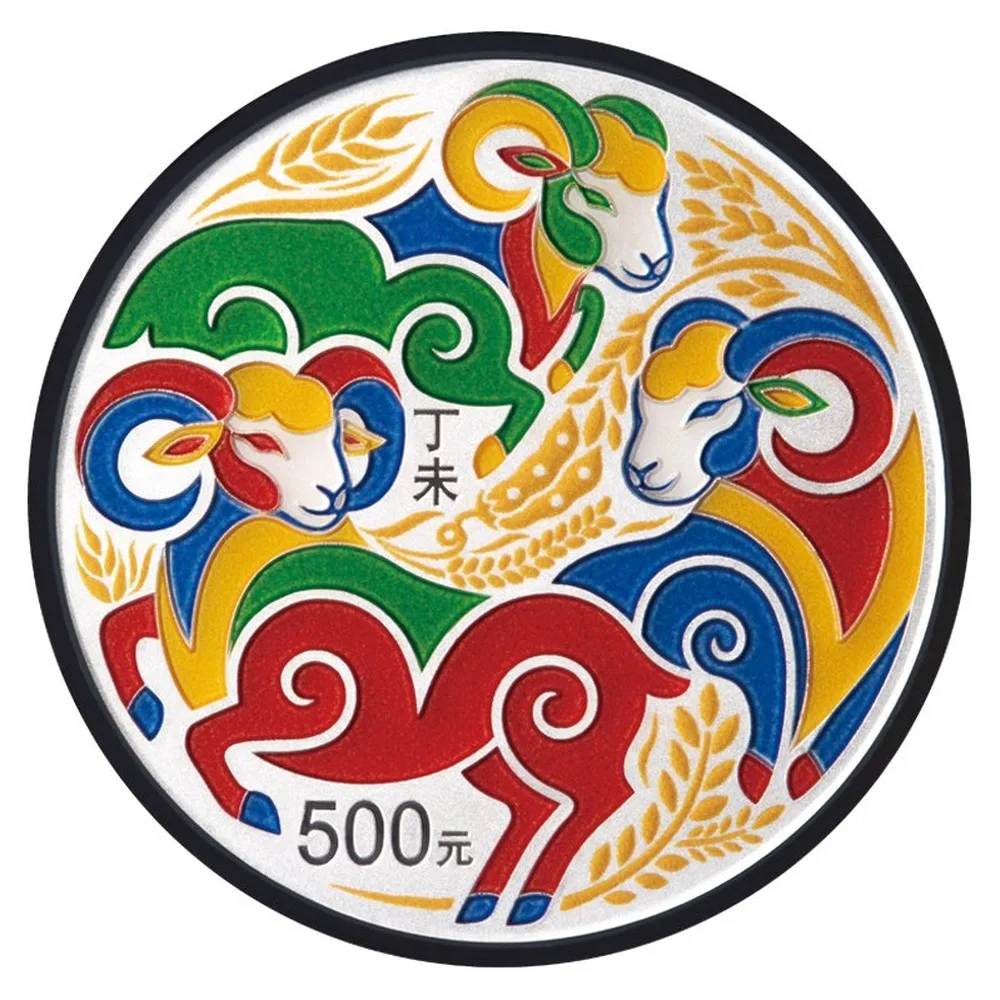
A sheep and ears of grain: that is the whole subject of this coin, and there is nothing superfluous in it. The decorative figure of the animal is surrounded by patterns of cereal plants: ears and grain patterns. For the Chinese agricultural calendar this is almost a complete set: livestock, bread, and the hope that the granaries will hold enough. The review names this detail directly: a symbol of harvest and abundance.
To feel the significance of such a combination, recall what the villagers feared losing at the start of the year. According to the ancient myth retold in the Russian Wikipedia, on the first day of the New Year a monster named Nian arrives, and the word nian means "year". It devours livestock, grain and food stores, and sometimes people. To appease it, food was laid out at the threshold, and later red lanterns, red scrolls and fireworks were devised, from which the monster flees. Well, the coin brings together precisely the valuables for whose sake all of this was undertaken: livestock and grain. A sheep with ears of grain is protected, preserved property that has survived the most dangerous night of the year.
There is another layer. The year Ding-wei, which opens on 6 February 2027, is called the year of the Fire Sheep. Yin fire in the calendar is a soft, domestic, hearth fire, and the hearth is just where grain is cooked and lambs are warmed. If the image is read without excess learning, the result is a simple picture of peaceful abundance: a well-fed home, living lambs, a full barn.
Nor should we forget the word of the sign. The character for the sheep is part of 祥, "good fortune, auspicious", and of 善, "goodness". The ear of grain, for its part, has long been tied in Chinese imagery to a good year in the sense of harvest. So the coin folds two kinds of goodness into one: an animal that brings good news and a plant that confirms it. The drawing is therefore composed not by the laws of a realistic picture but as an adorned sign, and the ornamental ears run around the figure of the sheep the way patterns run around a festive embroidery.
One more touch is the time of day. According to the Russian Wikipedia, the hour of the Goat, from one to three in the afternoon, is the time when goats eat grass. So the link of the sheep with pasture and fodder is built into the very counting of time: at that hour the animal is fed. The ear of grain on the reverse seems to continue the same thought, translating it into the language of bread.
The resulting mood is calm and solid. It is neither triumph nor magic, but that particular Chinese idea of "sufficiency", when a family has everything necessary and a little more. Such a subject greets the Spring Festival well: at the New Year table there is always a dish of grain, and at the entrance a wish that this year the monster Nian will pass by. The sheep and the ears say: it has passed, and everything has stayed in its place.
Obverse
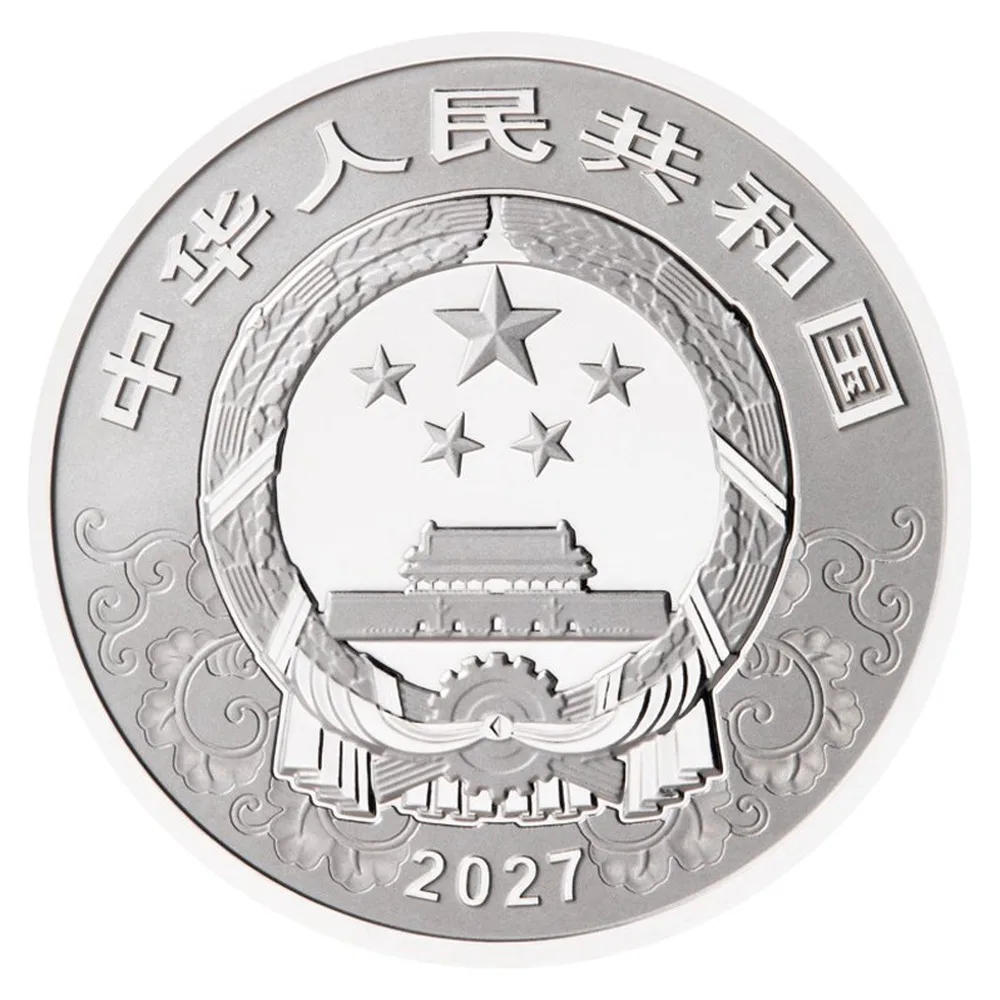
The official side bears the national emblem of the People's Republic of China, surrounded by traditional auspicious patterns. It gives the name of the country, 中华人民共和国 (Zhonghua Renmin Gongheguo), and the year 2027. The emblem and ornament are rendered with strictness and ceremony, and such an obverse balances the more homely, rural theme of the reverse: the state principle on one side, good abundance on the other.
Reverse
The pictorial side shows a decorative sheep beside which lie ears of grain and other cereal patterns. The inscription 丁未 (Ding-wei) denotes the year. The meaning of the composition is harvest and abundance: the animal and the bread gathered into one elegant picture. The figure of the sheep is treated ornamentally, and the grain motifs surround it like a pattern around a festive sign. The soft, balanced composition speaks of a well-fed home and a peaceful year.