
Year of the Sheep (Silver 30 g)
PDFGeneral information

Description
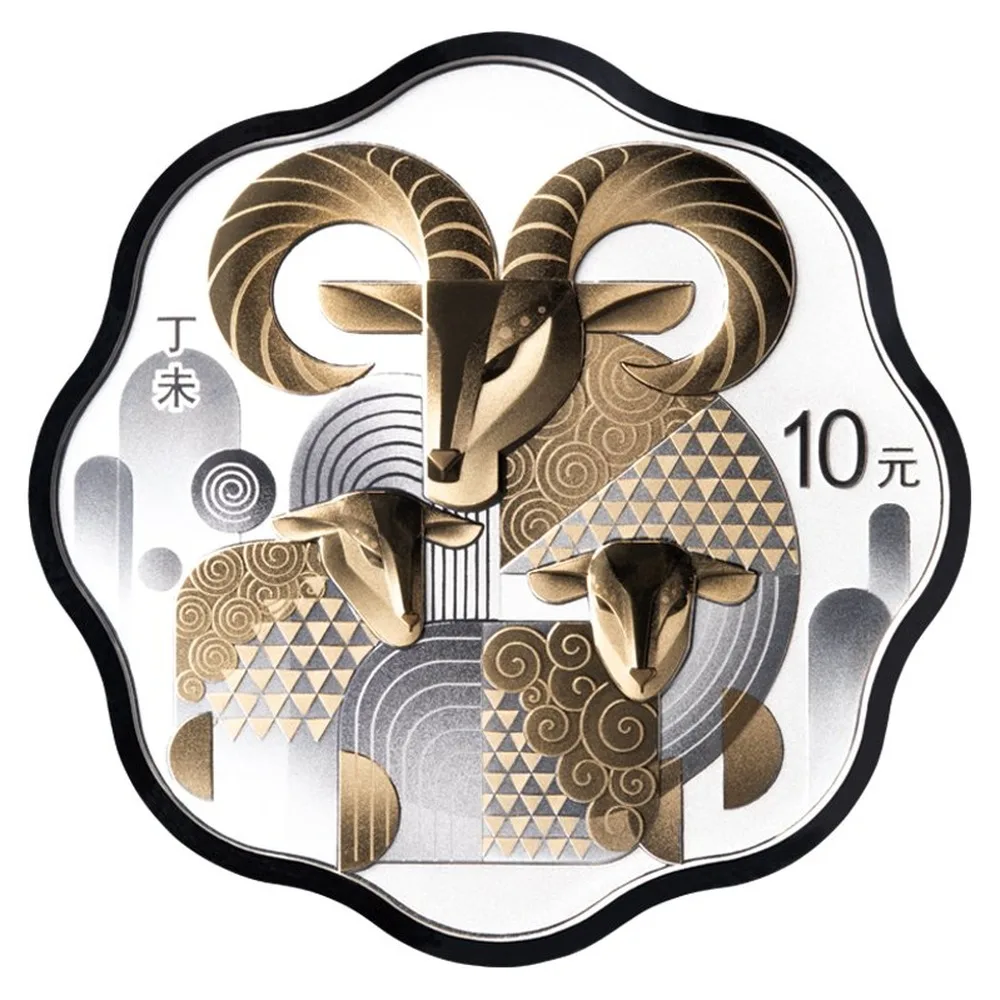
Three sheep are one of the best-loved subjects of Chinese New Year symbolism, and the subject has its own four-character name: 三阳开泰 (san yang kai tai), "three yang open up prosperity". This coin is devoted entirely to it. The sheep here are not drawn but assembled, like pieces of a child's construction set: arcs, triangles and other simple shapes that pass into variations of cloud patterns. That is the main device of the work: a complex wish conveyed in the barest geometric language.
The saying comes from the Book of Changes. As the Chinese Wikipedia describes it, in the system of the twelve waxing-and-waning hexagrams the tenth month corresponds to pure yin, the eleventh brings one bright line from below, the twelfth two, and in the first month, in the hexagram Tai, there are already three unbroken yang lines at the bottom. It is an image of winter leaving and spring arriving: darkness wanes, light grows, and everything turns out well. That is why the formula 三阳开泰 is used to greet the start of the year, and the History of the Song already has the close expression 三阳交泰.
Then language steps in. The words for "sheep" and for "yang" (the bright principle) sound the same in Chinese, and 羊 also echoes 祥, "auspicious". So in folk art three sheep, often three sheep with a sun, became a visual version of the hexagram. In the novel Journey to the West, as the same article recalls, in the ninety-first chapter three sheep are deliberately set out to "answer the words about prosperity" and break up a blockage. The image has, in other words, worked for centuries as a talisman and a congratulation at once.
This explains why the coin is so concise. Three figures instead of one: the count is not accidental. The eye travels from the first sheep to the second and third, and in that rhythm a growth can be read: one yang, two, three. The geometry underlines it: each shape repeats easily, and the passage of an arc into a cloud curl is a reminder that the new spring comes with the sky and the wind.
The timing for such a subject is ideal. The year Ding-wei, the year of the Fire Sheep, opens on 6 February 2027, on the very threshold of spring, and the Chinese New Year is itself called the Spring Festival: on that first day, according to belief, the earth and the seeds of life it keeps awaken. Three sheep promise precisely that the awakening will be full rather than timid.
It is curious, too, that an old subject here speaks in the language of almost modern design. Clean shapes, a rhythm of repeats, deliberate simplicity: it could be the look of a logo or a pictogram. Yet if one looks closely, under that simplicity lies the fabric of a very old culture: the three-sheep pattern adorned Ming-era painting and patterned textiles known from the collection in the Shosoin. The coin holds this whole chain in its hands, from the hexagram to geometry, and reduces it to three calm silhouettes in which a hope for a good year is easy to recognise.
Obverse
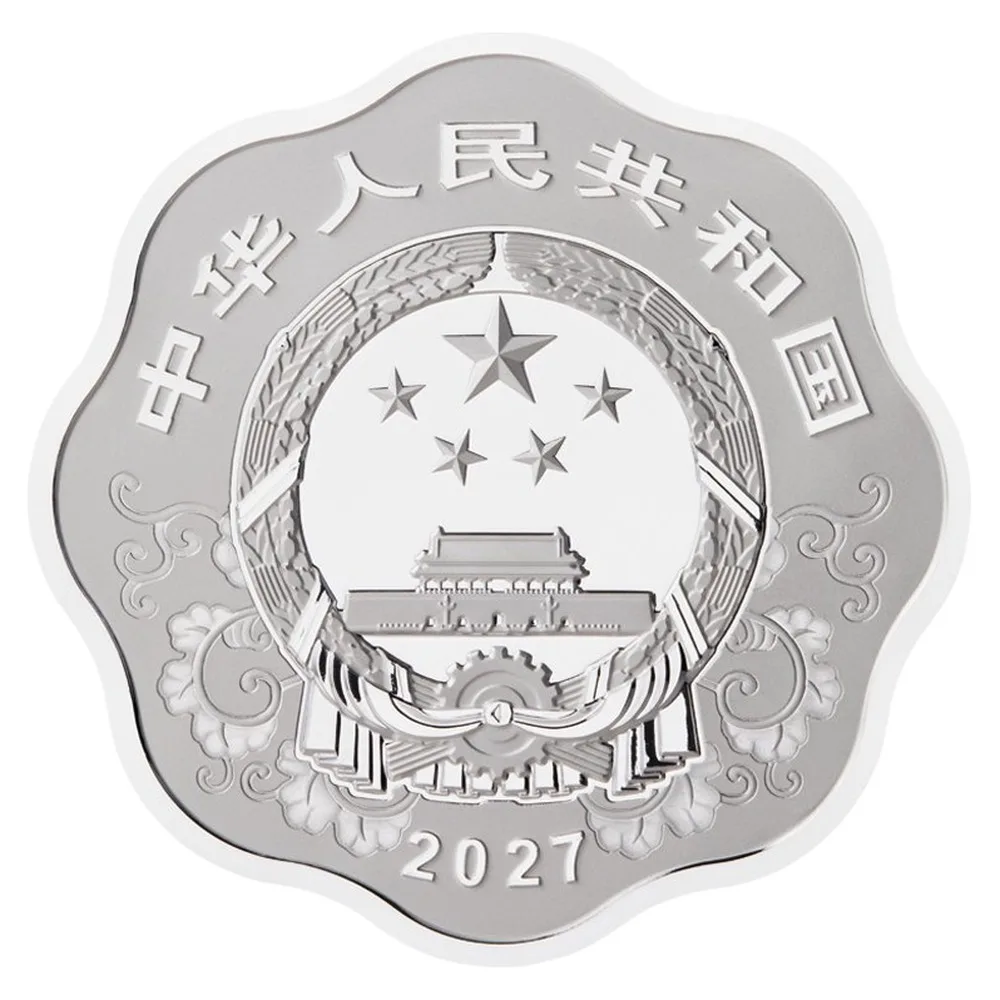
The official side carries the national emblem of the People's Republic of China, surrounded by traditional auspicious patterns. Along the edge are the name of the country, 中华人民共和国 (Zhonghua Renmin Gongheguo), and the year 2027. The ornament around the emblem echoes the theme of the reverse: the same soft arcs and cloud motifs with which the beginning of the year is blessed. The austere central part balances the playful geometry of the reverse.
Reverse
The pictorial side shows decorative sheep against geometric figures. The intention is 三阳开泰: three sheep assembled from simple forms, arcs and triangles, which pass into variations of cloud patterns. The inscription 丁未 (Ding-wei) names the year. The main idea is a wish for prosperity at the coming of spring, expressed in a restrained, almost graphic language, in which the rhythm of repetition and the clarity of line matter more than details of fleece or landscape.