
Year of the Sheep (Gold 500 g)
PDFGeneral information


Description
If the year 丁未 had to be painted in a single colour, it would be red. In the Chinese system of the five elements this colour belongs to fire, and the stem 丁 carries the element of Fire; so the coming 2027 is the year of the Fire Sheep, and red is no mere coincidence. Besides, red is how China greets the New Year itself: the Spring Festival falls on 6 February 2027, and by that day windows and doors are decorated with red paper-cuts and paired New Year inscriptions — chunlian.
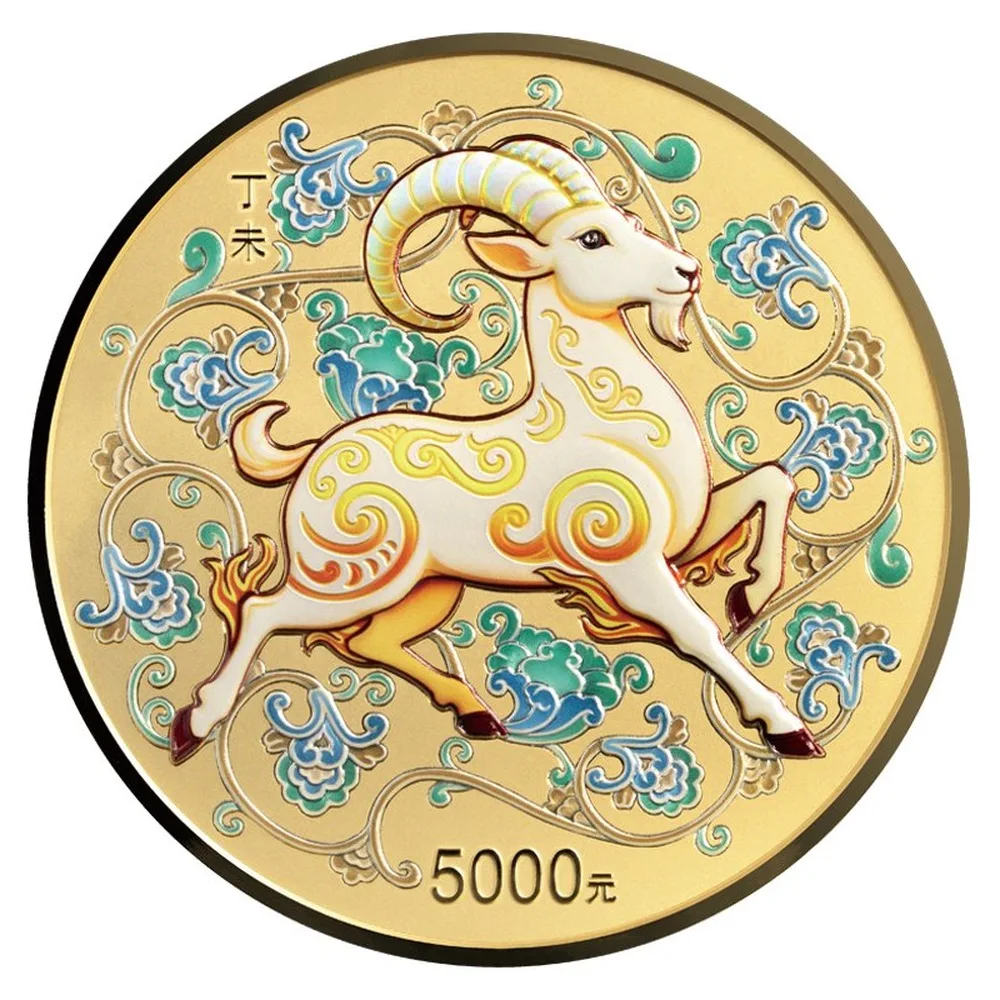
The subject of the coin grows out of this festive decoration. Here is not a realistic sheep in a meadow but a decorative sheep — a conventional, ornamental figure in which every line and curl serves the pattern. Around it are auspicious patterns (吉祥纹饰), the very motifs that have for centuries enlivened fabrics, carving, embroidery and paper-cuts in China. This is not a tale about an animal but rather a sign assembled from symbols — the kind one pastes on a window before the holiday.
Why is the sheep suited to the role of such a sign? Because the word 羊 in Chinese already contains a wish. The character 羊 is a component of the word 祥, "auspicious", and of the word 善, "kindness, virtue", and in antiquity 羊 and 祥 were used interchangeably. The sounds of these words are close, and folk greetings make use of it: to draw a sheep is to wish "xiang", that is, happiness and well-being, in words without words.
The decorative manner is exactly what allows such a play of meanings to be expressed. The pattern can thicken and thin out, can swallow the figure or, on the contrary, pick it out in relief; clouds come from curls, waves from the bends of horns. The animal becomes an image, an ornament and a wish all at once. In traditional Chinese culture the border between picture and pattern was always permeable: what is beautiful is at the same time "for good".
The ornamental approach also underlines one more trait of the sheep in Chinese tradition — a peaceful nature. Goats and sheep there are regarded as peace-loving and benevolent. The decorative sheep neither grazes nor runs: it seems frozen in a solemn pose, as befits a figure to whom happiness is wished. Its calm is the calm of a home where everything is tidied, the table is laid and guests are awaited.
In the New Year days a home in China really is put in order: before the festival it is cleaned thoroughly to sweep away misfortune, and then adorned with red cut-outs and inscriptions. The patterned sheep on the coin seems to continue this custom: it is a ready-made "window decoration" of the year Dingwei, only fitted into the small field of a coin. It needs neither landscape nor plot; it needs signs of happiness around it — and it has them.
Among the other motifs of the year this sheep is perhaps the most "ceremonial". It depicts no scene and tells no story; it acts as a bearer of a wish. The viewer reads it as one reads a greeting card: first taking in the general impression of joy and finery, then starting to examine the details of the pattern, each of which is a separate greeting. For a collector who values folk symbolism, such an image is the most meaningful: it has less narrative and more meaning compressed into ornament.
Obverse
The obverse is adorned with the national emblem of the PRC surrounded by auspicious patterns — traditional ornamental motifs fitting for any festive object. Beside it are the inscription with the name of the country, 中华人民共和国, and the year, 2027. The emblem sits strictly in the centre, the patterned frame repeats its rhythm, and the characters read easily and clearly. This design creates a festive, solemn impression and echoes the ornamental manner of the reverse.
Reverse
The reverse shows a decorative sheep surrounded by auspicious patterns. The animal is stylised: the outlines of the body, the horns and the wool are turned into elements of ornament, and patterned motifs spread around the figure, giving the composition a festive air. The inscription 丁未, pointing to the year of the Fire Sheep, is here too. The image turns out symbolic rather than everyday: it is a wish expressed in pattern more than a portrait of an animal.