
Year of the Sheep (Silver 15 g)
PDFGeneral information

Description
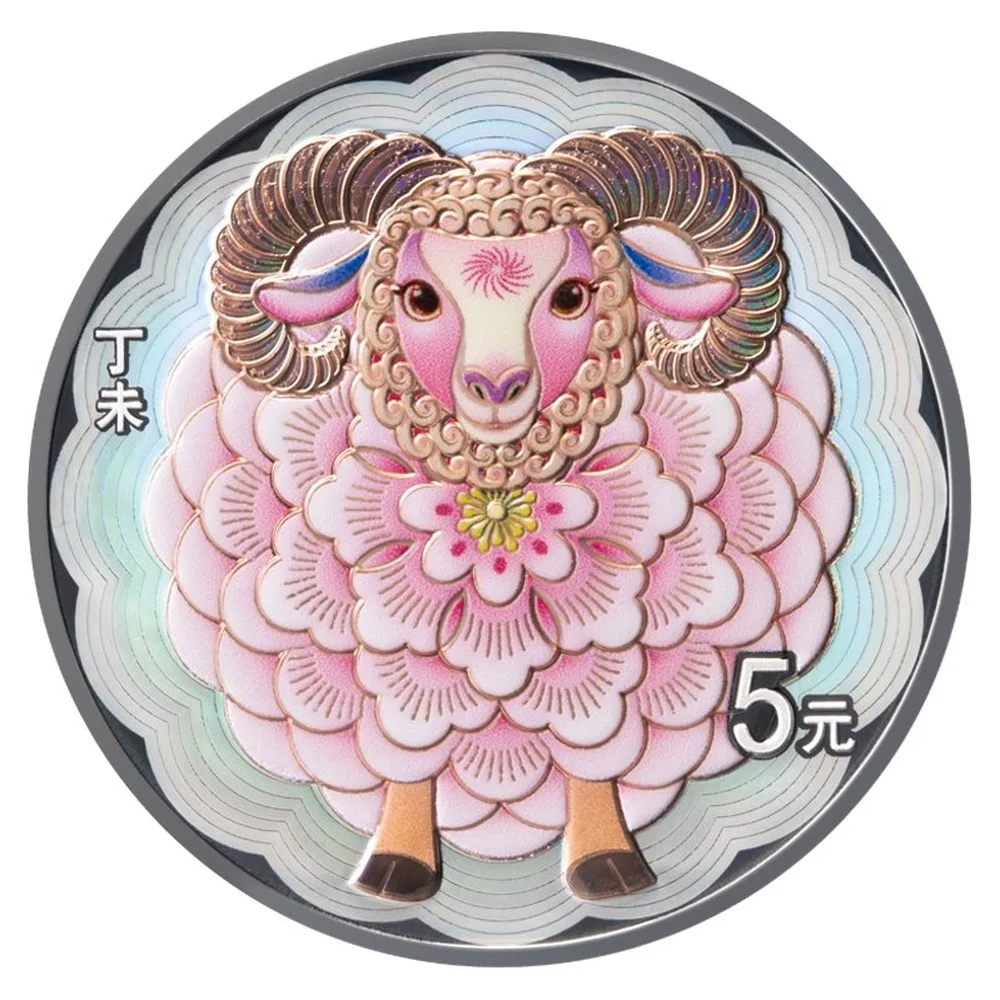
The outline of a sheep that opens like a flower: that is how this coin can be described in a single phrase. The silhouette of the animal is not merely decorated with petals; it is itself turned into layers of petals, and these layers seem to spread apart one after another, revealing the heart. The review connects the image with the wish 花开富贵 (hua kai fu gui), "may flowers bloom and wealth come". We deliberately add nothing to this that is not in the description: the composition itself says enough.
Why do a sheep and a flower meet so naturally on one coin? Let us begin with time. The year Ding-wei arrives on 6 February 2027, and that day coincides with the Spring Festival. The Chinese call their New Year that for a reason: according to traditional ideas, on the first day of the year nature wakes, and the earth and the seeds hidden in it come to life. The New Year in China is spring by the calendar before it is spring by the weather. For it, the image of an opening bud is the most direct one.
Now the sign. The sheep stands eighth in the twelve-year circle, and in Chinese thinking it is generally regarded as an auspicious animal: the word "yang" is a component of the character 祥, "good fortune, blessing". Put these two facts together and a simple, beautiful thought appears: the auspicious animal of the year, the year of the start of spring, the start of blossoming. A sheep-flower reads as a very compact formula for a good beginning.
The graphics are interesting in themselves. The layered structure of the petals creates a feeling of movement although the form is still: the eye passes from the outer layer to the inner one, as if following the opening. Because of this, the coin is not a ceremonial portrait but a moment of a process. There is no landscape here, no grass or pasture; all of the "nature" is contained in the figure itself, and no detail distracts from the main motif.
The petal motif fits the theme of the year well. The Fire Sheep is a year of yin fire, and the fire can easily be read here as the warmth from which a flower opens. This "fiery" blossoming, however, is only one possible interpretation, and in fact a Chinese viewer needs only the key words: sheep, petals, 花开. The rest is filled in by the memory of New Year decorations and the wishes exchanged in the first days of the year.
In the end the coin tells a very simple story, but tells it elegantly. First the viewer sees a sheep, then notices that it is made of petals, and remembers that the year begins precisely in spring. The symbol turns out double: a zodiac sign and a wish for a blossoming life have merged into one silhouette. For those who choose a coin not by erudition but by mood, this is the brightest option: an image one wants to set on the table beside real spring branches.
Obverse
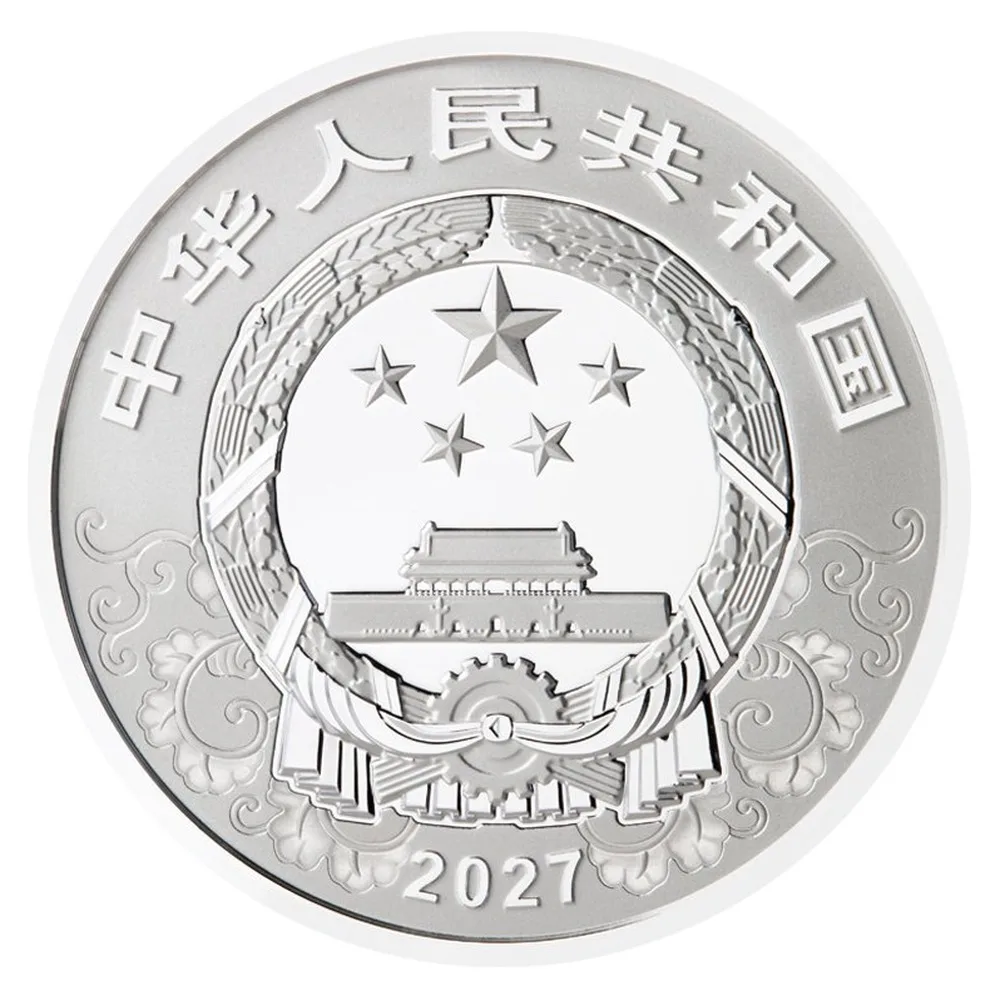
The official side is occupied by the national emblem of the People's Republic of China. It is framed by traditional auspicious patterns, which give the obverse a festive look. Beside it are the name of the country, 中华人民共和国 (Zhonghua Renmin Gongheguo), and the year, 2027. The restrained state design underlines the contrast with the soft, floral modelling of the reverse and so prepares the eye for it.
Reverse
The pictorial side shows a decorative sheep whose outline is turned into multi-layered, opening petals. It is the image of a flower from which the figure of the animal emerges and, at the same time, the wish 花开富贵 (hua kai fu gui), for blossoming and wealth. The inscription 丁未 (Ding-wei) names the year. The peculiarity of the composition is that figure and flower are not separate: the sheep does not stand against a flower but is one itself, and the whole drawing is built on the rhythm of rounded layers.