
Cup
PDFGeneral information

Description
Before the present Cup appeared, world champions received a different trophy, the Jules Rimet Cup. It was made at the order of FIFA by the French sculptor Abel Lafleur: a gilded statuette of Nike, the goddess of victory, held a bowl above her head on a base of lapis lazuli. The trophy bore the name of the FIFA president Jules Rimet, who was the inspirer of the first championships, and was contested from 1930 to 1970. The rule was simple: a team that won the tournament three times kept the cup. So in 1970, after its third victory in Mexico, Brazil received it.
The story of this trophy reads like a detective novel. In 1966, before the championship in England, the cup was stolen from an exhibition in London, and a week later a dog named Pickles found it, sniffing a parcel under a bush in a garden. The English won the championship before the eyes of the Queen. In 1983 the Rimet Cup was stolen once more, this time from the building of the Brazilian federation in Rio de Janeiro, and it was never found; it is assumed to have been melted down. Today a copy is kept in Brazil.
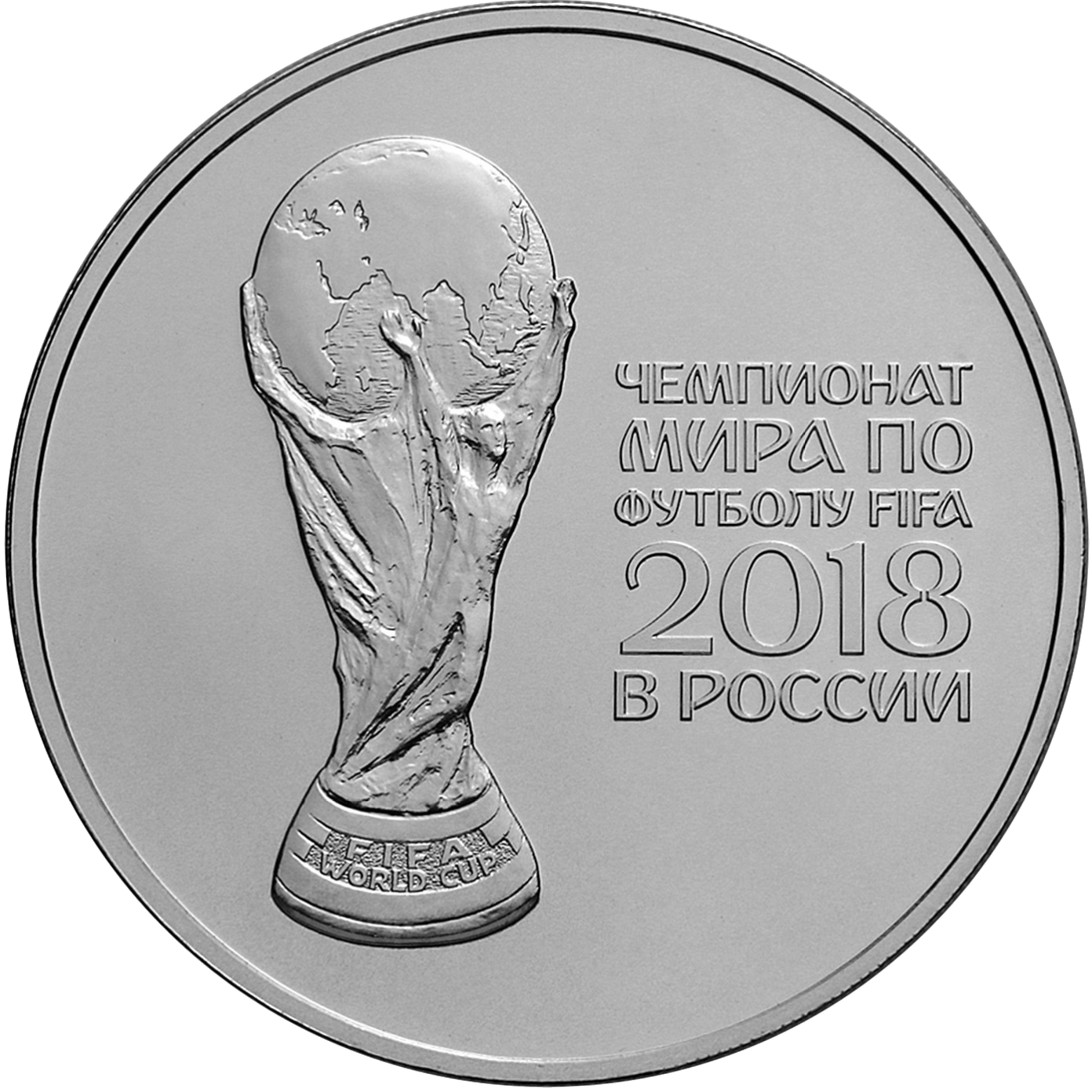
After that FIFA announced a competition, and the new trophy designed by the Italian Silvio Gazzaniga became the main prize from 1974. It is the one shown on the coin: the Cup on the right is accompanied by an inscription in five lines, CHEMPIONAT MIRA PO FUTBOLU FIFA 2018 V ROSSII. The history of the two cups shows how long and difficult the road of the main prize of world football was.
For Russia, which hosted the championship in 2018, the symbol of the Cup was especially important: the trophy tour passed through cities of the country, and many people could see it with their own eyes rather than on television.
Brazil, which received the Rimet Cup for good, won it in 1970 in Mexico, beating Italy 4:1 in the final. That team was led by coach Mário Zagallo, and its leader was Pelé, the only footballer to become world champion three times. It was the first championship with colour television coverage around the world, and the team in yellow shirts became the symbol of the tournament.
For collectors the story of the two cups is a ready-made subject: bronze copies, gilded replicas and genuine trophies are often confused, but the difference is clear from history. The Rimet Cup was the prize of the first decades and belonged to world football like a family relic, while Gazzaniga's Cup became the symbol of the era of television and the global fan.
For collectors a coin with the sign of the Cup and a five-line inscription looks especially laconic: it has neither superfluous details nor a complicated background, and all the viewer's attention is concentrated on the main symbol of the tournament.
Obverse
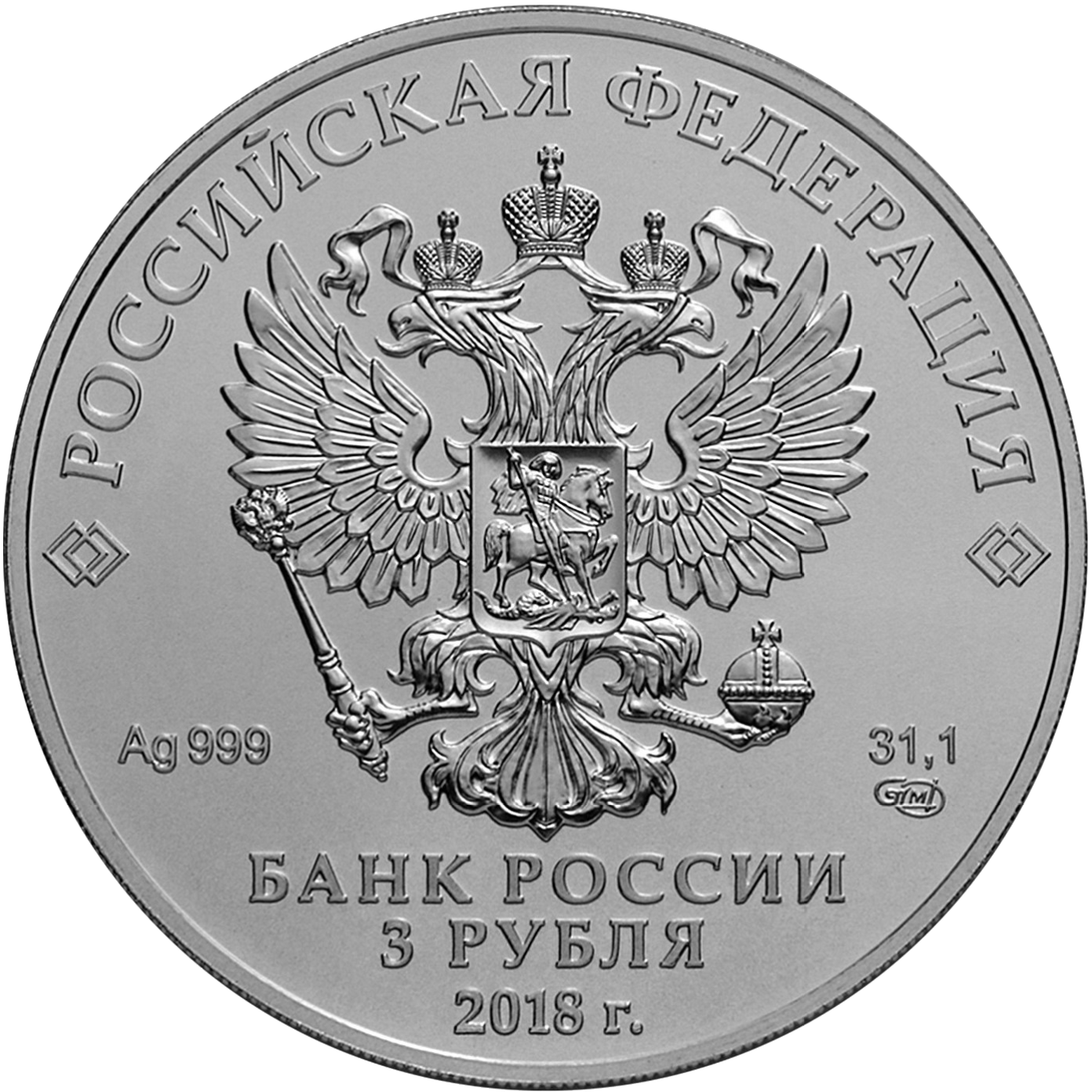
The obverse is occupied by the state coat of arms of Russia in relief, a double-headed eagle beneath crowns. Along the upper edge, in a semicircle, stretches the inscription RUSSIAN FEDERATION, with two rhombuses on either side of it. In the lower part, in three lines, is struck BANK OF RUSSIA, with the denomination and the year of issue shown, and beside the arms the trademark of the mint is visible. The artist E. V. Kramskaya and the sculptor A. A. Dolgopolova worked on the obverse.
Reverse
The reverse shows the relief image of the FIFA World Cup Trophy; on the right is an inscription in five lines, CHEMPIONAT MIRA PO FUTBOLU FIFA 2018 V ROSSII. A. A. Brynza drew the reverse and O. G. Shepel modelled it.