
Volgograd
PDFGeneral information
Description
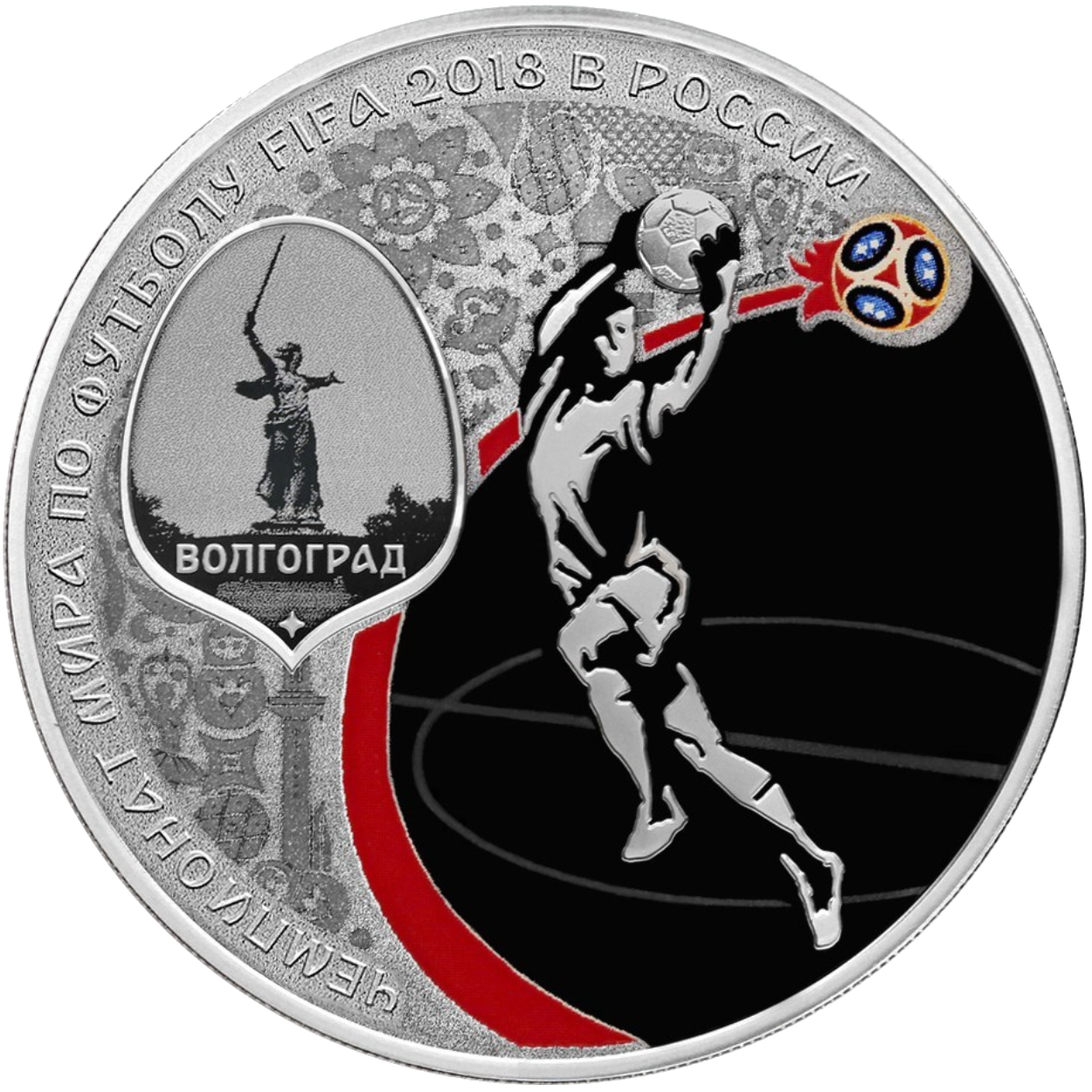
On this coin Volgograd is represented by the monument The Motherland Calls on Mamayev Kurgan. The sculpture was created by Yevgeny Vuchetich with the engineer Nikolai Nikitin and unveiled on 15 October 1967. A female figure with a raised sword strides forward as if calling people to meet the enemy; when it was erected it was the tallest statue in the world. The monument crowns a memorial complex devoted to the Battle of Stalingrad. Visitors climb to it along alleys and steps, and the path itself recalls the route of the soldiers who held this hill in 1942–1943.
The Battle of Stalingrad lasted from 17 July 1942 to 2 February 1943 and became the turning point of the Great Patriotic War: the encirclement and defeat of Paulus's army showed that the German advance could be stopped. The city on the Volga was founded in 1589 as the fortress of Tsaritsyn, from 1925 to 1961 it was called Stalingrad, and then received its present name, Volgograd. Since then Mamayev Kurgan has been one of the most visited memorial places in the country.
For the World Cup the Volgograd Arena was built on the bank of the Volga, on the site of the former Central Stadium. England beat Tunisia 2:1 here with a stoppage-time goal by Harry Kane, Nigeria defeated Iceland 2:0, Saudi Arabia won against Egypt 2:1, and Poland beat Japan 1:0. The silhouette of the Motherland on the coin makes this issue the most austere and memorial among the coins devoted to the host cities.
By the time the championship opened, fans from dozens of countries had come to Russia, and attendance in the stands exceeded three million. Thirty-two teams took part, and each found a home in its own city, with teams based in different regions. Iceland and Panama made their World Cup debuts; Iceland remains the least populated country ever to reach the finals. Germany, the champion of four years earlier, was eliminated already in the group stage. The matches mattered even more to Volgograd because the city on the Volga was used to seeing itself as a city of memorial remembrance, and now it also became a city of fans.
On the reverse, beside the monument, there are the coloured trajectory of the ball and the figure of a footballer: the contrast between the memory of war and the sporting festival is deliberate. Football in Volgograd was seen as a continuation of the life for the sake of which the city once stood firm.
Obverse
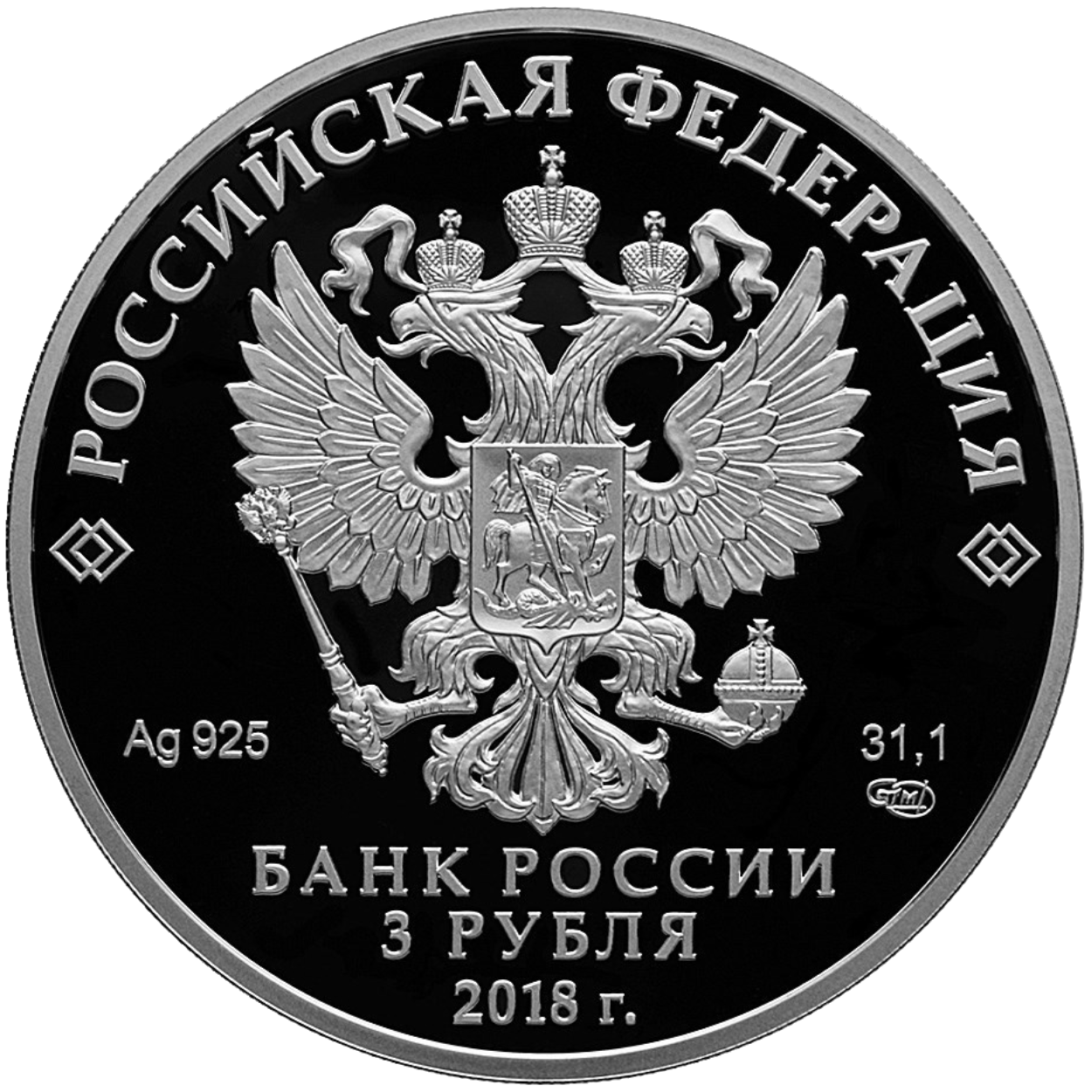
On the mirror field of the disc — the relief image of the State Emblem of the Russian Federation with the double-headed eagle. Along the upper edge, in a semicircle, stretches the inscription RUSSIAN FEDERATION, with two rhombuses on either side of it. Beneath the arms the institution that issued the coin is named, BANK OF RUSSIA, in three lines; the denomination, the year and the mint mark are given there as well. E. V. Kramskaya drew the obverse and A. A. Dolgopolova modelled it.
Reverse
The reverse presents a cartouche with the Motherland monument and the name VOLGOGRAD. The background is made of folk patterns and football motifs. A bright coloured arc, the trace of a flying ball, divides the cartouche from the player. The inscription CHEMPIONAT MIRA PO FUTBOLU FIFA 2018 V ROSSII (FIFA World Cup 2018 in Russia) runs around the circumference. A. A. Brynza drew the reverse, and the relief was made by computer modelling.