
Kazan
PDFGeneral information
Description
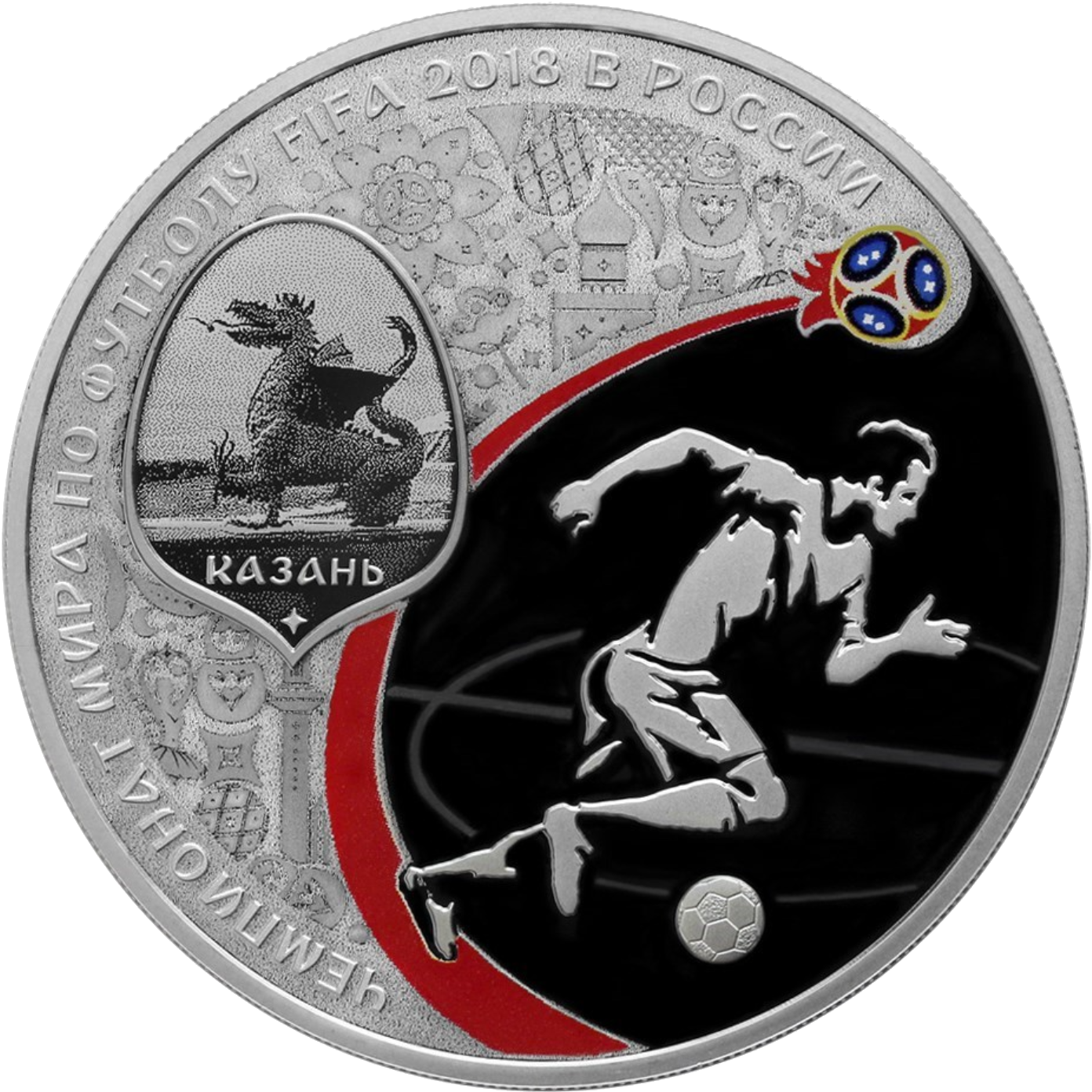
Kazan on the coin is the monument to the dragon Zilant. The winged serpent Zilant is the legendary guardian of the city and one of its main symbols: it appears on the coat of arms of Kazan. According to the legend, the monster lived on a hill that later took its name and long threatened the local people until it was defeated. The sculpture on Bauman Street was installed in 2003 for the millennium of the city; its author is the Kazan sculptor Marat Gubaydullin, and the commission came from city patrons. The dragon with its spread wings has long been a backdrop for photographs of the guests of the city.
Kazan first appears in chronicles in 1005; later it was the capital of the Kazan Khanate until in 1552 the troops of Ivan the Terrible took the city by storm. Today it is the capital of Tatarstan, where the Kul Sharif Mosque and the Orthodox Annunciation Cathedral peacefully stand side by side within the walls of the Kremlin. The multinational culture has made Kazan a favourite city of travellers.
The Kazan Arena was built for the 2013 Universiade and in 2018 hosted matches of the World Cup. Here Germany unexpectedly lost to South Korea 0:2, Poland lost to Colombia 0:3, Iran lost to Spain 0:1, France beat Argentina 4:3 in one of the highest-scoring matches of the round of sixteen, and in the quarter-finals Belgium knocked out Brazil 2:1. The dragon on the coin joins an ancient legend to a modern football festival.
One of the main surprises of the championship was the exit of Germany, the reigning world champion, in the group stage, and it happened precisely in Kazan, where the Germans lost 0:2 to South Korea in stoppage time. For Kazan that evening became an event of world scale: reporters from all over the world discussed how such a thing was possible. The round-of-sixteen match between France and Argentina, in which Kylian Mbappé's decisive goals played a key part, also entered history: it gave the French their path to the title. For Kazan the championship supplied several of the main stories of the tournament, and the coin with the dragon recalls them.
The image of the dragon also suits football: in the legends Zilant is the guardian and defender of the city, and in football the role of defender is also much valued. This parallel makes the subject of the coin especially vivid.
The dragon subject is especially popular with children: against the strict architectural views of the other coins Zilant looks lively and fairy-tale. For the people of Kazan it is an image that recalls their native history and unites generations.
Obverse
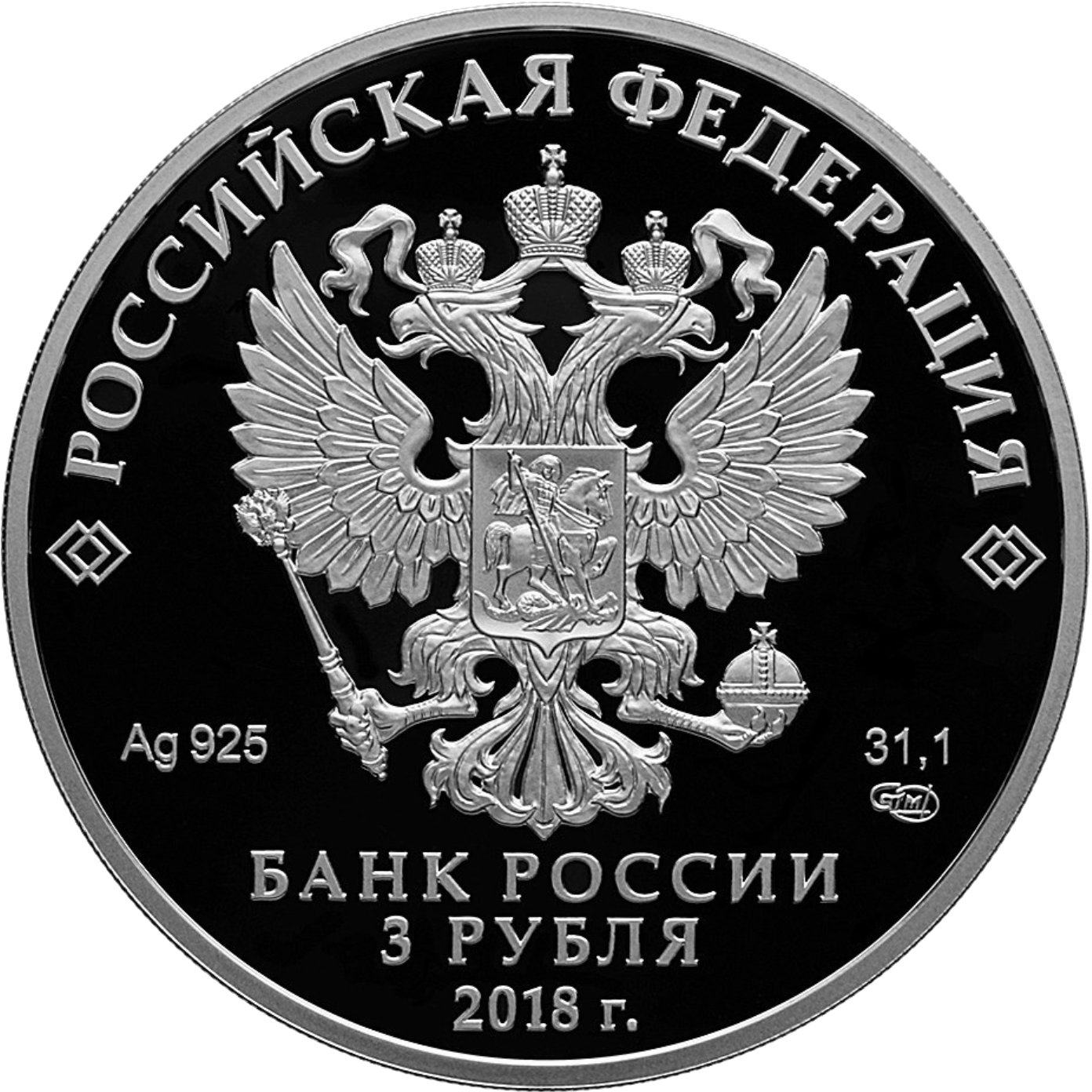
The main element of the obverse is the relief state emblem of the country, placed on the mirror field of the disc: an eagle with raised wings beneath three crowns. At the top, along the very edge of the disc, the name of the state, RUSSIAN FEDERATION, is placed, with rhombuses at the sides. Lower down, in three lines, is written BANK OF RUSSIA; next to this inscription the year and the denomination are shown, and the mint mark sits to the side of the emblem. The artist E. V. Kramskaya and the sculptor A. A. Dolgopolova worked on the obverse.
Reverse
On the back of the coin there are a cartouche with the monument to the dragon Zilant and the name KAZAN. The ornament around them joins folklore and football. A coloured flight path of the ball separates the cartouche from the figure of a footballer. The name of the tournament is struck around the circle: CHEMPIONAT MIRA PO FUTBOLU FIFA 2018 V ROSSII. The reverse design was created by A. A. Brynza; computer modelling took the place of a sculptor here.