
Kaliningrad
PDFGeneral information
Description
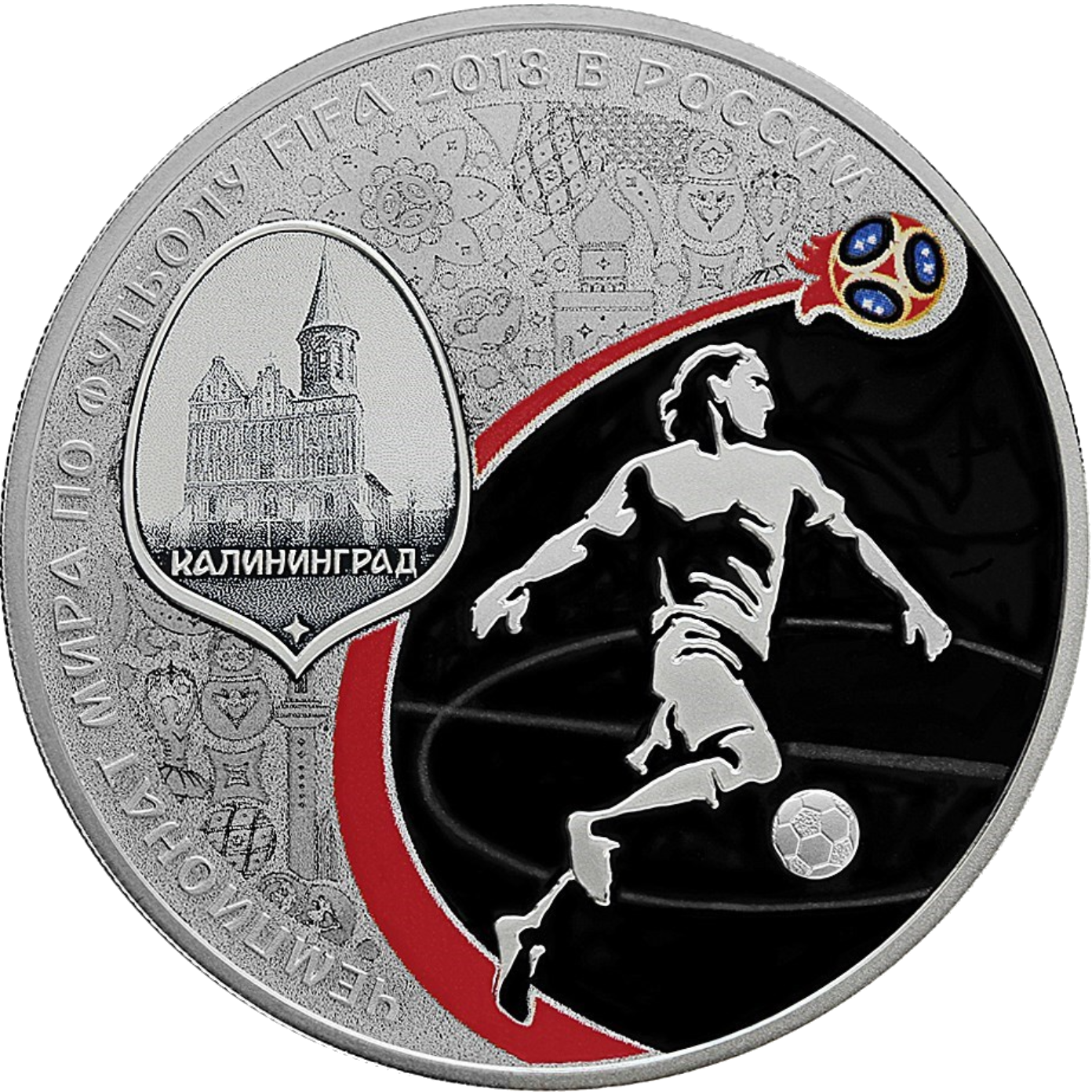
Kaliningrad on the coin is represented by the Cathedral standing on Kant Island. The Gothic brick church was founded in 1333 in Königsberg and completed over several decades; in 1804 the philosopher Immanuel Kant was buried by its north-eastern corner; later a mausoleum appeared over the grave. In August 1944 a British bombing turned the cathedral into ruins, and only in the 1990s did its revival begin; today it houses a museum and a concert hall with an organ.
The city was founded in 1255 by the knights of the Teutonic Order as a castle and named in honour of the Czech king Ottokar II: Königsberg. After the war it was transferred to the USSR, and in 1946 it received the name Kaliningrad in honour of Mikhail Kalinin. The region is cut off from the rest of the country by the borders of Poland and Lithuania, which is why Kaliningrad is called the westernmost and most special city of Russia.
The Kaliningrad Stadium was built from scratch on Oktyabrsky Island next to the cathedral. Here Croatia beat Nigeria 2:0, Spain drew 2:2 with Morocco, Serbia lost to Switzerland 1:2, and Belgium defeated England 1:0 in the last group match. The view of the cathedral on the coin recalls that the championship reached the westernmost point of the country.
Initially Kaliningrad received not the loudest matches, but it was here that the most varied crowd gathered: fans from England, Belgium, Croatia, Nigeria, Spain and Morocco. The city is closer to Europe than the others: Poland and Lithuania are a few dozen kilometres away, and many guests came here by car and train from neighbouring countries. Belgium beat England only 1:0 because both teams were saving energy for the knockout stage, and at the end of the tournament it was they who met once more in the third-place match. The coin with the cathedral on Kant Island underlines the European, Gothic character of the city.
The Gothic spires of the cathedral, seen across the Pregolya River, have long been the postcard of the city. In the design of the coin the cathedral with Kant Island, the sculpture park and the bridges joined the Prussian heritage with the new history of Kaliningrad.
The most famous inhabitant of the cathedral is Immanuel Kant: the philosopher, born in Königsberg, spent almost his whole life there and never left the city for long.
Kant Island, where the cathedral stands, is considered one of the most beautiful places in Kaliningrad: a museum works here, park trees grow, and bridges lie all around. During the championship whole groups of fans from Europe came here.
Obverse
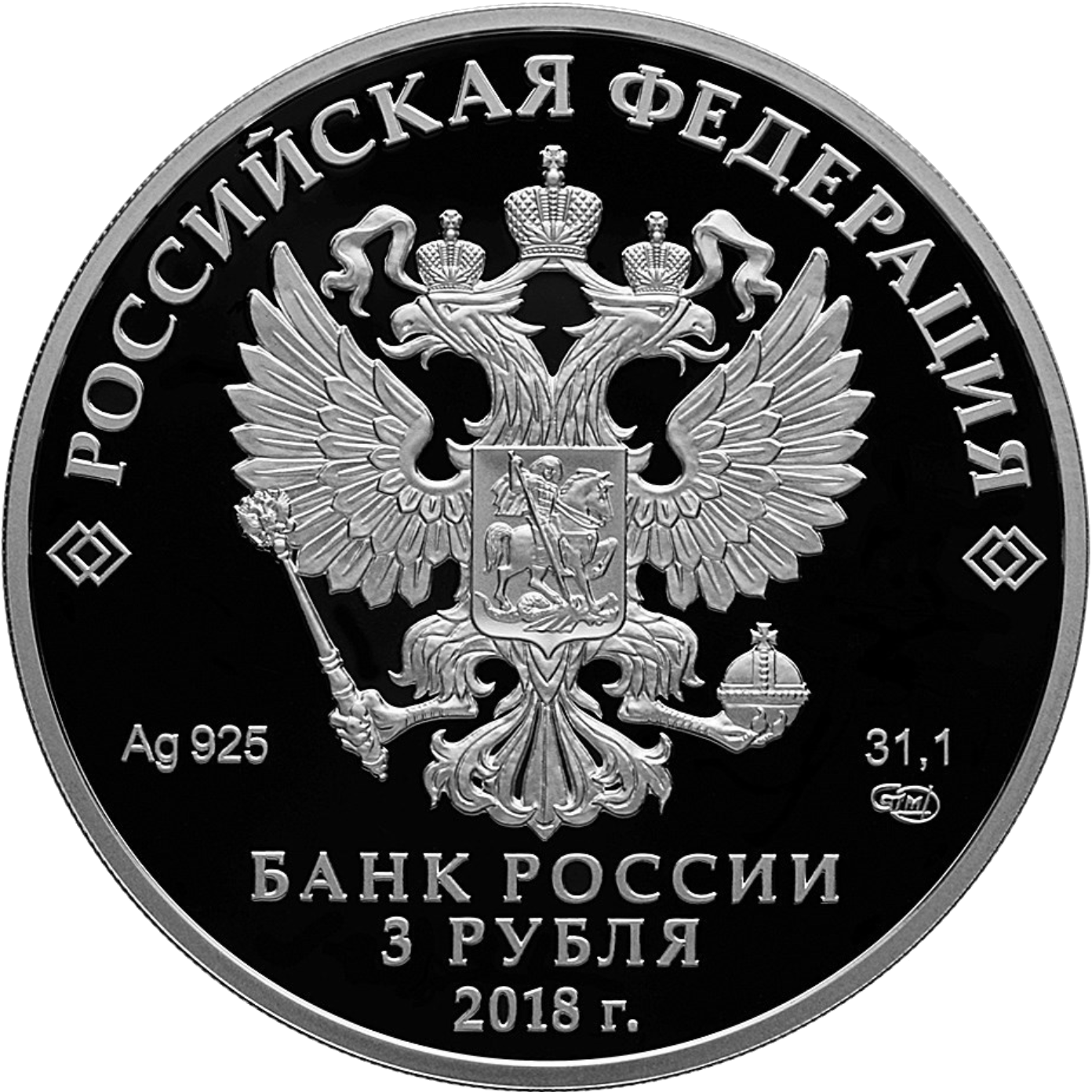
On the mirror field of the disc — the relief image of the State Emblem of the Russian Federation with the double-headed eagle. At the top, along the very edge of the disc, the name of the state, RUSSIAN FEDERATION, is placed, with rhombuses at the sides. In the lower part, in three lines, is struck BANK OF RUSSIA, with the denomination and the year of issue shown, and beside the arms the trademark of the mint is visible. The author of the obverse design is E. V. Kramskaya; the sculptor is A. A. Dolgopolova.
Reverse
The reverse shows a cartouche with the Cathedral and the name KALININGRAD. The cartouche is set against an ornament that joins Russian cultural and folklore heritage to the world of football. A ball's trajectory executed in colour crosses the composition, and behind it the silhouette of a footballer is seen. Along the edge one reads CHEMPIONAT MIRA PO FUTBOLU FIFA 2018 V ROSSII. The reverse was designed by A. A. Brynza; its relief was produced by computer modelling.