
Samara
PDFGeneral information
Description
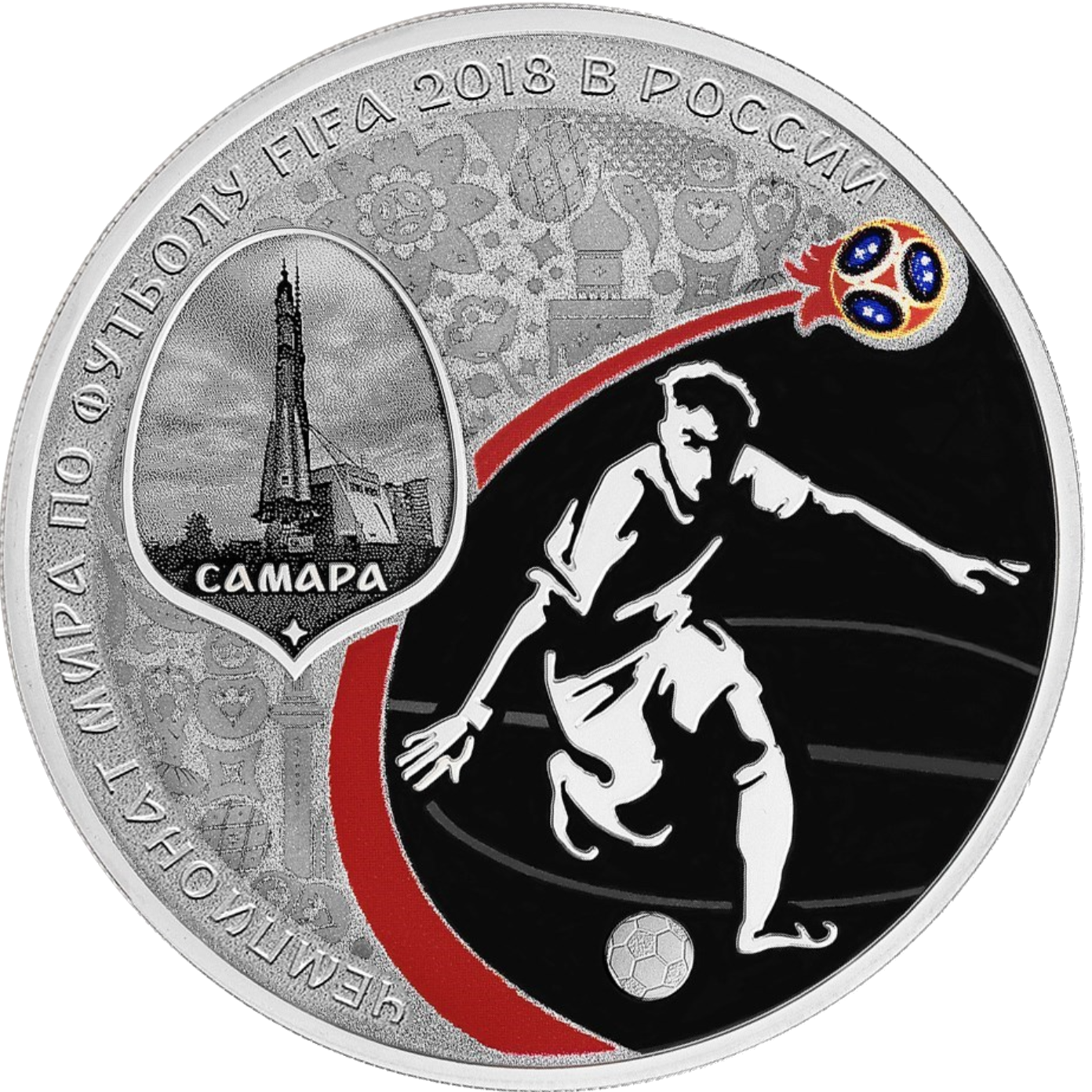
Samara on the coin is the Soyuz launch vehicle. For the city this is more than a monument: rockets of the Soyuz family trace their line to Sergei Korolev's R-7, which lifted Yuri Gagarin into space in 1961, and they were mass-produced in Kuibyshev, as Samara was called from 1935 to 1991, at the Progress plant. A rocket monument stands near the Korolev space museum, a vertical silvery arrow visible from afar. For the locals it is a symbol of professional pride, and Samara is often called the space capital.
The city was founded in 1586 as a fortress on the Volga; later grain was traded here, and in 1941, when the Germans were approaching Moscow, government offices and foreign embassies were moved to Kuibyshev, which is why it was called the reserve capital of the country. The long Volga embankment, one of the longest in the country, is a favourite place of the townspeople.
The Samara Arena looks like a glass dome, and the name Cosmos Arena refers to the rocket history of the region. Here Uruguay beat Russia 3:0, Costa Rica lost to Serbia 0:1, Denmark drew 1:1 with Australia, Brazil won against Mexico 2:0, Sweden beat Switzerland 1:0, and Sweden then lost to England 0:2 in the quarter-finals. The rocket on the coin fits the name of the arena well.
The football on the coin flies along a coloured trajectory, and this sign echoes the space theme of the Samara issue: the path of a rocket and the path of a ball on one coin read as two flights. It was in Samara, at the Cosmos Arena, that the Russian team suffered its heaviest defeat of the tournament, yet a week later it went out to face Spain. Samara also welcomed fans at a festival by the Volga embankment, where matches were shown on big screens. The championship left behind an arena that is used for regional matches and concerts.
Among the people of Samara the championship also stayed in memory because the city rediscovered its space history: the museum, the rockets and the production that many knew only by hearsay were for a few weeks the centre of attention of visitors.
The name Soyuz is known to anyone who has followed space launches: spacecraft of this family have for decades delivered crews to orbital stations. That is why the image of a rocket on a football coin reads without explanation and underlines what the city is proud of.
Obverse
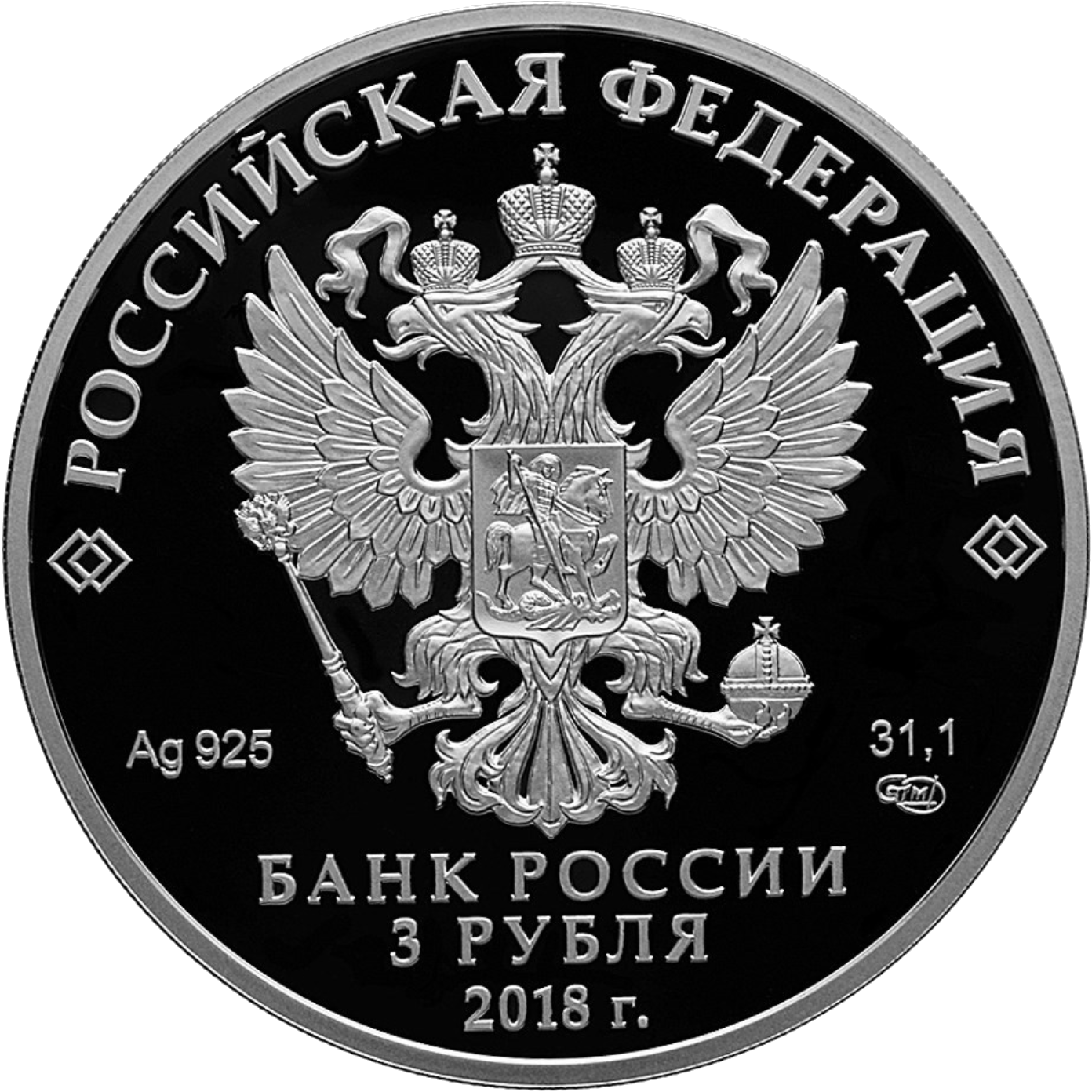
The main element of the obverse is the relief state emblem of the country, placed on the mirror field of the disc: an eagle with raised wings beneath three crowns. Along the rim above the arms one reads RUSSIAN FEDERATION, bordered on both sides by paired rhombuses. Beneath the arms the institution that issued the coin is named, BANK OF RUSSIA, in three lines; the denomination, the year and the mint mark are given there as well. E. V. Kramskaya drew the obverse and A. A. Dolgopolova modelled it.
Reverse
The reverse presents a cartouche with the Soyuz launch vehicle and the name SAMARA. The background is made of folk patterns and football motifs. A bright coloured arc, the trace of a flying ball, divides the cartouche from the player. The inscription CHEMPIONAT MIRA PO FUTBOLU FIFA 2018 V ROSSII (FIFA World Cup 2018 in Russia) runs around the circumference. A. A. Brynza drew the reverse, and the relief was made by computer modelling.