
Rostov-on-Don
PDFGeneral information

Description
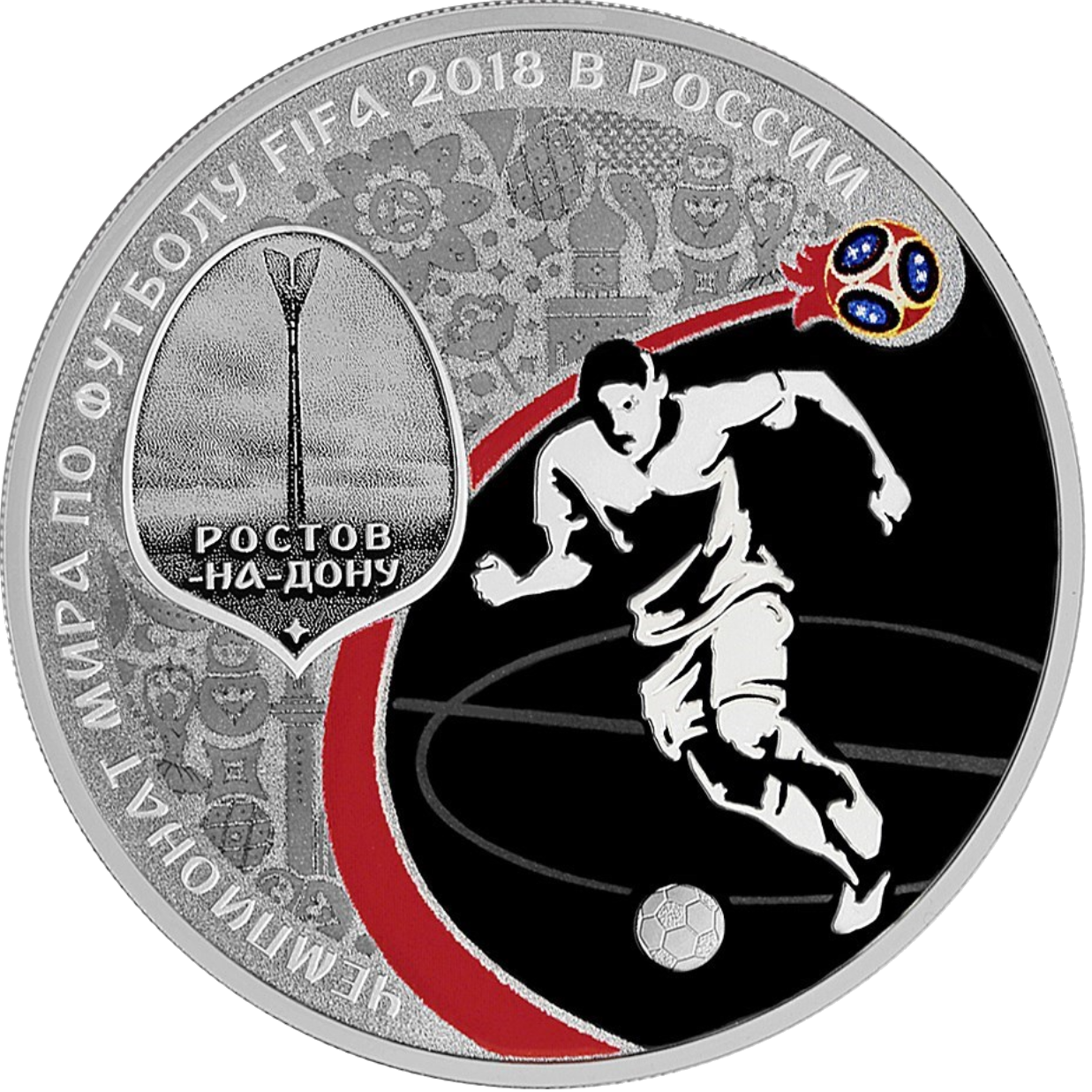
On this coin Rostov-on-Don is represented by a memorial stele, as this element is named in the official description of the Bank of Russia. It is a strict vertical sign of remembrance and reflects well the military biography of the city, which bears the honorary title City of Military Glory. In November 1941 the Red Army liberated Rostov from German forces: it was the first major victory of the initial period of the war. The bank's description does not specify which city monument served as the prototype, so it is not named here. The name of the city appears on the coin in two lines, Rostov-na-Donu, beside the stele in the cartouche.
The city grew out of a customs house established in 1749 by decree of Empress Elizabeth and the fortress of St Dmitry of Rostov, built in 1761. Later Rostov became a major trading and industrial centre of the south, the Gateway to the Caucasus, and in popular speech it earned the nickname Rostov-Papa. The Don River and Cossack traditions shaped the character of the region, and the broad embankment became a favourite promenade for locals and for guests of the championship.
The Rostov Arena was built on the left bank of the Don, facing the historic centre. Brazil drew 1:1 with Switzerland here, Uruguay beat Saudi Arabia 1:0, Mexico defeated South Korea 2:1, Iceland lost to Croatia 1:2, and in the round of sixteen Belgium came from two goals down to beat Japan 3:2 in a tense match. It was one of the most memorable games of the championship.
For the design of the commemorative coins devoted to the tournament the Bank of Russia chose a characteristic method: in a round cartouche stands a recognisable landmark of the city, and around it runs an ornament made of elements of Russian culture, folklore and the world of football. The coloured flight path of the ball separates the cartouche from the figure of the footballer. This design repeats on all the coins with cities, and they differ only in the main object in the cartouche. For Rostov it is a stele; on the neighbouring coins it is a cathedral, a kremlin, a rocket or a monument. The idea is to show viewers from different countries that the championship took place not in one place but in eleven dissimilar cities, from the Baltic to the Urals.
Rostov is well known as the southern gateway of the country: for centuries trade routes to the Caucasus and the Black Sea passed through it. This shaped the character of the city, noisy, hospitable and fond of festivals, and that is how the participants and guests of the tournament saw it.
Obverse
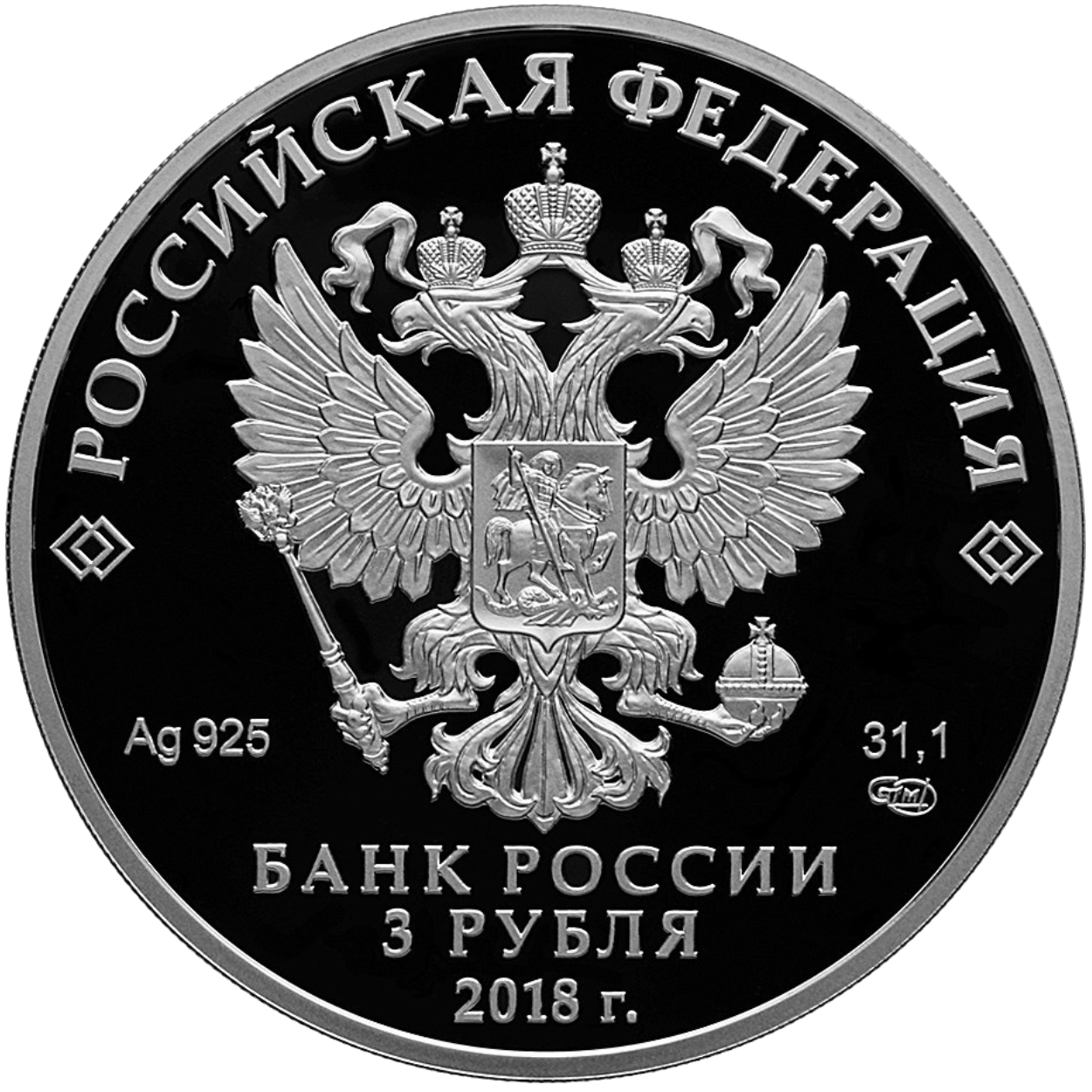
On the obverse on the mirror field of the disc sits the relief coat of arms of the Russian Federation with its double-headed eagle. At the top, along the very edge of the disc, the name of the state, RUSSIAN FEDERATION, is placed, with rhombuses at the sides. In the lower part, in three lines, is struck BANK OF RUSSIA, with the denomination and the year of issue shown, and beside the arms the trademark of the mint is visible. E. V. Kramskaya drew the obverse and A. A. Dolgopolova modelled it.
Reverse
The reverse shows a cartouche with a memorial stele and the name ROSTOV-NA-DONU in two lines. The cartouche is set against an ornament that joins Russian cultural and folklore heritage to the world of football. A ball's trajectory executed in colour crosses the composition, and behind it the silhouette of a footballer is seen. Along the edge one reads CHEMPIONAT MIRA PO FUTBOLU FIFA 2018 V ROSSII. The reverse was designed by A. A. Brynza; its relief was produced by computer modelling.